 All Entries Tagged With: "miners"

End of the summer heater

Koral Delatierra wails on Saturday night at the KBUT Big Blue Festival held at the IBar Ranch in Gunnison. Lead singer for the Telluride band Niceness, she belts out reggae in audience with the full moon. Ten bands and an assortment of festival fanatics roamed the grounds for two days, camping, eating, drinking and dancing. A fine job all around.
—Apology—
The San Juan Horseshoe Semi-annual Fly Swatting Seminar has been officially rained out and rescheduled for mid-October. Baiting, although considered extreme and crude by most professional swatters, will be permitted due to weather and time constraints. Rolled up newsprint, umbrellas and zappers are not acceptable and restricted from the premises at all times during the competition.
Interested participants should register by mail and remember to bring a big ball of water to be placed at the door, fly clothes, wing files, steel shoes, ear plugs, gauze head gear, face mask, dissection paraphernalia and plenty of drinking water.

Action at the 2017 event
“Nobody expects players to sprout eyes in the back of their heads but they must be aware and ready to retreat at the slightest movements,’ said head fly terminators. “We are interested in style and delivery, not body counts and messy backhands.”
As usual, no perfume wearers or smokers will be admitted. Dogs and alcohol are fine. The seminar will conclude with information on group hunts, organic interface, canning and taxidermy. An impressive display of different swatter models on the market for 2019 is also slated for afternoon sessions all week.
Tourist Tip # 611: Don’t you dare miss the daily Changing of the Flies at the Wimpton Landfill. It is listed as #4 in Things To Do Outside for the summer.
—Apology—
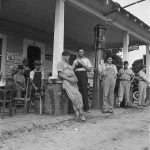
O’Toole hits into record pace 93 double plays
Melvin “Breakfast Meat” O’Toole hit into a record 93rd double play this afternoon, breaking ancient records dating back to Doubleday. The Mañana Ayers Double Dip Digit League standout performed the feat with 40 games left on the schedule.

Toole hanging in Manana, 1920
“It is unfathomable for a player to continue at this pace,” said Mona Byrnes, proprietor of Heart Byrnes Food Truck, which is often parked in front of the popular keystoner’s locker. “Imagine what he could do in 200 games!”
During the cycle O’Toole was repeatedly clocked at under a minute from home to first. Despite his catty ways at the plate his speed didn’t help his stats much. Some say he would have turned in even better numbers between second and third but, in his lengthy and distinguished career, he has never been to second or third.
“A hard grounder is a hard grounder…6 to 4 to 3,” said Byrnes between sausages and pizza. “It’s a lot like these nachos here. Without the salsa they’d never make it to first base.”
O’Toole is also famous for the introduction of a 200 mile-per-hour knuckle-curve back in 1919, which was subsequently banned in 1920 due to damage to backstops and injuries to batters, catchers and umpires.
– Susie Compost

Colorado rescinds mandatory dog ownership
“It’s OK not to have a dog.”
(Crested Butte) The state of Colorado has overturned a decades-long ruling with a sticky provision that had required each new mountain resident to acquire a dog upon arrival to the specific town. The revocation frees residents from canine stipulations and allows for a dog-free household depending on human preferences, needs and capabilities.
The old law, that states clearly that all mountain town residents be required to “own” a dog, was seen by many as a dinosaur that needed to be put to rest. Progressives and conservatives have called the focus on new occupants unconstitutional.
“The law first emerged when there were only a few people around,” said one old timer. “We needed dogs to guard against bear and mountain lions and lord only knows what else is out in these woods. Now there are far too many. Now we have draconian leash laws that make a mockery of running free in the wilds.”
The legislation, which goes into affect in 2019, did not undress the irresponsibility of humans, pooper scooping, dogs-at-large or the price of pet food at the local market.
“What a relief,” said one dog owner. “Now people in mountain towns can choose whether they want a dog or not. It’s OK not to have a dog. It doesn’t mean you are insensitive or not tuned into our mute friends. You can still have dogs that are your friends without the closer relationships brought on by such social arrangements as dependence, co-habitation and dramas with cats (if there is one on premises).”
Most people here in the upper Gunnison Valley say the new law will not affect them since they have a dog and everyone seems pretty happy with the day to day exchanges between human and canine. Many feel dogs will enjoy more freedom if there are fewer living here.
– Kashmir Horseshoe

THE RAZOR’S EDGE: A short peek at shaving
In honor of NATIONAL HAIR MONTH
Stubble in the form of whiskers has been with us almost since the invention of the face. As cultures have changed throughout history, so have people’s attitudes toward whiskers. The early people of the Fertile Crescent wore their facial hair proudly. Artifacts have been uncovered that show a proud Sumerian man with his beard adorned with oil and chicken bones and bits of parsley, although some scholars suggest that these findings merely showcase sloppy ancient eaters.
An early legend tells of a man with his beard decorated with many bits of bread. The story says that, even though this was very attractive to ancient females, the man had a perplexing problem of birds swooping constantly upon his beard. This so annoyed him that he took to pulling large chunks of his beard out until the clean-shaven look was born. Today’s modern men (and even some women) would never consider this gruesome method to be a proper removal of unwanted facial hair.
Actual shaving was done some years later with pottery shards. Many archeological digs reveal literally truckloads of pottery shards. For years archeologists thought these were bits of broken ceramic vessels, but now many believe these shards to be, not broken bits, but original shaving tools. Some scientists believe that the shards even say, “bic” on the back.
As hygiene evolved, new and better tools came along. Finally, a sharpened razor blade with a handle was invented by a Greek inventor named Idios. Idios also invented an electric razor, but electricity was unfortunately not available for 2200 more years. But the razor blade was plenty exciting enough for people akin to using pottery shards.
In fact shaving got to be such a joy that even woman and children got into the act. Thus up until this century children were sometimes affectionately called “little shavers.”
Today stubble removal is easier than ever. Still it requires time and daily attention. If a man spends 3-5 minutes every day shaving then over the course of his lifetime this could add up to hundreds of years. Little wonder then that many men prefer to let at least some of their facial hair grow, the hair above their top lip, or on their chin, or all the hair on the left side of their face for example.
So then what of the future of shaving? Some analysts forecast a time in the near future when men can get a shave over the internet. A technology institute in Germany is currently experimenting with a hat that projects a holographic image over the wearer’s face so that he appears to be clean- shaven at all times. Holograms, on-line shaving, who knows what’s in store? Call me old fashioned, but I like hot shaving cream, a straight razor and barber shop aftershave.
“I don’t really want to do anything, I just want to own.”
– Gen. Worthington Bulbous, Military Industrial Complex
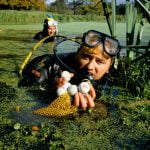
Deadline nears to write off lost golf balls
 The Internal Revenue Service reminds us that Friday marks the termination of an innovative program that allows golfers to deduct the cost of lost golf balls from their 2018 federal income taxes. You may cheat at golf but now you won’t feel compelled to cheat at income taxes.
It’s pretty simple. Golfers can now embrace legal linkster subtractions from their bottom line when filing 1040s. In that once shameful arena called tax loopholes we see law-abiding taxpayers where we once saw crooks.
Losses must be documented according to a loosely fitting national tax code, although three balls per hole is the limit. Empty boxes and lengthy searches will not be accepted as validation of deficit or shortfall. Insiders say it is a windfall for sportsmen…much like how anglers enjoy trout credits and skiers profit with tight boot points.
Critics here in Colona say the programs aid only the rich and elite who already have the money for these pastimes. They say poor people who are actually in need of financial relief will never engage in golf, skiing or fly fishing due to prohibitive costs attached to the sports.

Look what I found!
“We’ll just throw them a soccer ball with their daily meat allotment and they’ll carry on like before,” said the wealthy author of many entitlement programs benefiting upper tier.
In other news:
Tattoo bans lifted by many local courses.
Controversial tattoo laws that have clouded the fairways this summer may be a thing of the past. Today three leading courses said they would drop the ban on weekdays for the fall.
Tattoos are still prohibited on many public courses and often frowned on at high dollar, malingering private clubs in Colorado.
“If they are stupid enough to pay our annual fees they can come play golf in a frilly lampshade and pearl-studded flippers for all we care,” said Efram Pennywhistle, heir of the Want to Be Rubber fortune and veteran sand trap marshal.
Golfers playing through November are reminded that whack points awarded for hitting other golfers do not include those over 90 who are not really moving. These bonus gift points can only be accumulated in the summer and in no way reflect handicaps.
Also: Golfers who walk courses rather than ride carts could attain the coveted surfer status by the first snowfall whether it arrives in November or May. Although provisional, the recognition is final only after riding a slicing riptide across the Pacific to China.
-Alfalfa Romero


