 All Entries in the "Reflections on Disorder" Category

TWO UTES FISHING
It was one of those classic Rocky Mountain mornings in the early 1700s. It was a time that would be captured on some future picture post card that would be mailed back East or to Europe summoning the hordes, luring the White man West, defining someone’s concept of civilization. It was one of those cool, crisp spring mornings where fish leaped skyward and the forests teemed with game. It was quiet.
Two Ute braves, Crooked Sky and Spread Eagle sat contentedly at the confluence of the mighty Yampa River and its overachiever cousin, Mad Creek. They were weighed down with nets, bait and long poles fashioned from the limbs of a less than enthused quakie which had the unfortunate luck to be rooted on a nearby bank. The two had graduated to a higher level of fish harvesting than that practiced by their brother the Grizzly. They watch patiently as hundreds of rainbow trout engage in a feeding frenzy oblivious to the uninvited dinner guests who stalk them on such a fine day.
“There, the big ones hang back by the bank hoping to elude our line, my friend,” started Crooked Sky. “Caste out farther and you will distract them with one of these tasty grasshoppers.”
“They are far too well fed to be snapped up,” said Spread Eagle. “Better the elk munch on the grass beneath my lodge or drink the water hauled by my wives.”
Both braves sit quite still, staring into the water. If the fish do not bite this morning there is always tomorrow. Many pounds of berries are still stored away and there is enough buffalo jerky to last well into the summer. Crooked Sky and Spread Eagle are simply more interested in trying out their new poles than in catching a fish.
“It was that large nosed Pawnee that showed us how to fashion the pole,” laughed Spread Eagle. “He should finish the job and hook a fish for us at least! I did not like him much and after he had gone I noticed that I was missing a fine arrowhead that I had carried for many weeks.”
“Maybe his magic is only in design,” said Crooked Sky. “He was a strange one, especially considering his stories of the square house builders from across the great water,” frowned Spread Eagle. “He says the white settlers shoot game for sport. He says they crop their hair and wear too many clothes, even in the summer. This can not be true. Why would someone do that?”
“If this is true then they appear to be a very unhappy people,” Spread Eagle mused. “I just hope they stay are content to stay where they are. Our hunting lands have no need of their footprints. These whites, if they really exist, appear to be bad medicine. They have little honor,” he continued, “and are said to cut down the forests, bleed the rivers and trap game for money.”
“I think that Pawnee was pulling our leggins, either that or he’s smoking too much kinick-kinick,” stressed Crooked Sky. “Why would these whites come here? What is here for them? How could they ever get here? The mountains will protect us from these devils just as they have protected us from the Cheyenne and the Comanche.”
“Our Pawnee friend insists black-haired whites in armor have already stirred up trouble throughout the land of the Bannock, the Shoshone and the Navajo,” said Spread Eagle. “It is only a matter of time before they come over these mountains. He says they seek the yellow rock and dig for other treasures. I have seen such rock,” he added. “They also carry idols on crosses and diseases.”
Crooked Sky then smiled and told his friend not to worry.
“I thought we came here to fish,” he said.
********
One hundred years later, lodged in a small clearing in the shadow of Gore Pass are mountain men William Sublette, Jim Bridger, Thomas Fitzpatrick and John Colter. While waiting for the arrival of compatriots in the fur trade Old Bill Williams, Jedediah Smith and Kit Carson, they have become distracted by a large jug of corn whiskey which serves as a spirituous campfire. It is rendezvous time in the Rockies.
“Where the hell are the Utes?” asked Bridger as he spat a wad of chew from somewhere behind his long, shanty beard.
“They don’t like to show up too early,” answered Sublette. “They always get into a fight with the other tribes. Those guys are spooky but they aren’t much at haggling. Last year over on the Green River I traded them three broken down horses for a slew of beaver pelts. Then a few of them got mad and wanted their pelts back,” he said. “I had to whip three of them just to get back to my camp!”
The group looks up to observe the arrival of about twenty Sioux warriors loaded down with an assortment of furs and provisions for at least a month. The contingent carefully picked its way down a steep ledge and meandered into the clearing.
“They’re watching us,” whispered Colter, “out of the corner of their eyes. Indians braves watch that way. They never look straight at anything, be it game, horses or adversaries. That’s the best way to deal with women too,” he laughed.
“Here comes Old Bill and Kit Carson,” said Sublette. “That bastard Carson is all dressed up in his soldier outfit. He thinks he runs these mountains. What a clown.”
“Where is Jedediah?” asks Bridger. “He hasn’t missed a rendezvous in years.”
“I hear he’s having trouble with his Cheyenne squaw,” explains Sublette. “She wants him to give up his wandering and stay closer to home. I think he’s getting old.”
“That’s why I change squaws every year whether I need to or not,” smiled Bridger. “It keeps life more exciting. The last thing I need in the summer is some squaw on my ass. I had this woman in St. Louis who was crazy about me but…”
“We’ve heard it all before, Jim,” sneered Fitzpatrick. “Tell us something new.”
“I’ll tell you something new,” offered Sublette. “When I was in St Joseph last spring I saw at least 20 wagon trains packing up and headed our way. It’s gonna get tougher to stay out of the way of progress,” he added. Maybe in a few years we’ll have to prowl around in Canada.”
“From what I can tell the fur business is just about dead anyway,” said Fitzpatrick. “Silk hats are in vogue now, and the farmers are cutting down the forests and chasing the game north to the Tetons anyway.”
Carson and Williams arrive at the campsite and exchange greetings with their fellow trappers. Williams appears already quite drunk and his mumbling something about city folk. Carson begins a cavalier monologue that describes the situation on the plains.
“On the other side of the Missouri the roads are packed with Conestogas and pilgrims from the east,” he preaches. “Sooner or later they’ll arrive here and ruin it for the rest of us.”
“So what!” mimics Colter. “We’ll all be six foot under by then. The sod busters can have the place if they want it. Just let them try to grow anything worth eating, the fools!”
“You’re all nuts,” says Fitzpatrick waving his arms in rebuttal. “This country is too severe for those pansies. They haven’t got what it takes to survive these winters or get along with the Indians. They’d starve after a month.”
“Don’t be so sure of that, Tom,” says Carson. “You haven’t been back east for a decade. Those folks have their eye on land, my friend, and their greed will not subside until the entire frontier is harnessed and plowed under.”
“Different kind of folks, ain’t they,” quipped Sublette. “Once they find what they think they’re looking for they do everything they can to change it back to what they left behind.”
*******
Three tired coal miners have just completed their respective shifts and are sitting in a small bar on Lincoln Avenue in downtown Steamboat Springs. It is September of 1939 and they are preoccupied with developments in Europe. The Germans have invaded Poland and the Japanese are on the move in the Pacific. The nations of the world are choosing up sides and the much-feared conflict is on. Being of draft age the three are concerned with more than the war’s affect on the price of coal.
“We’ve had it pretty easy here, compared to a lot of those people in Europe,” said one miner, a red-headed man named Jim Noyce, whose uncle was killed at Belleau Wood in 1917. “This valley is strategic only to those who call it home. The rest of the madmen don’t even know we exist.”
“I hear there are about 200 miners moving here as part of mobilization and the war effort,” offered a second man, named Milo Kopcek who voiced concern over relatives still living in Moravia. “I see this war spreading all across the globe. The coal companies have already announced plans to strip mine that country west of Oak Creek and down into Twenty Mile Park. We could be in for the long haul,” he frowned.
“And some of them are even talking about skiing,” said a third miner, a tall, thin Swede who had lost his ranch near Phippsburg during the Great Depression. “Not just skiing to get around, mind you, but skiing for recreation. It’s big in Europe and they say we have much better snow than the Alps.”
“That’s crazy,” said Noyce. “Who in their right mind would travel all the way to this valley to ski down a hill or two? I think these skier types will all be back in Denver by spring. This is a mining town and that’s all it will ever be,” he added. “Take it or leave it but you’ll never change it.”
*********
Brightly clothed figures stack firewood outside an abandoned shack near where Mad Creek meets the Yampa. Although they look ragged they take pride in the fact that they are surviving off the land with an occasional subsidy from a worried parent back east. It looks like snow.
“Steamboat is the ultimate rejection of the urban experience,” said one long-haired boy in his early twenties. “The world won’t find us here. Just look at the shacks, the dirt streets and the cold weather.”
It was 1968 and another war was raging, this time in Southeast Asia. These were the children of the Fifties that had begun to descend on Steamboat Springs, and the Rockies in general. They had arrived with a few belongings crammed into micro buses and Jeeps, a copy of Walden Pound stuck securely in their backpack. They were mesmorized by the mountains and quickly engaged in systematic squatting despite the grumbles of longtime residents who saw them as an annoyance.
“It takes a certain kind of person to live in the mountains,” added a young girl who appeared to be stuck in her teens. “But we must preserve this beautiful place. I’m worried about people coming here and ruining it for those of us that are already here,” she sighed. “When I was in Denver for the Dylan concert last weekend I heard lots of people talking about establishing a large commune up Quarry Mountain.”
“So what,” snapped a beaded, bearded man who looked a lot like John Lennon. “As long as they are hip they should be welcomed. We need people who think like us in this valley if we are to take control of our destiny here,” he explained. “Things must first change in the Rockies before they will change on the rest of the planet.”
“How many more?” asked the first man. “How many more before the place turns into what we left behind?”
“That’s an absurd question,” answered the bearded man. “There’s plenty of room here for everyone if we live right and work together for the common good.”
“Right on!” shouted the teenage girl. “Together we can build a utopia where everyone has enough to eat, enough dope to smoke and a house to live in. Sooner or later even the old timers will come around.”
“The key is to encourage a society right here where greed is given no quarter,” said the first man. “If we are committed we will reap the harvest of peace and harmony for all. It is attainable here, far away from the insanity. Just look at the river. It hasn’t changed since the Indians first fished it for trout,” he stressed. “Our future is only as bright as we want to make it.”
“It is our future,” said the girl. “We can carve a perfect society, like the Indians had, out of the wilderness. Look,” she chirped, “I found an arrowhead!”
*****
Just a stone’s throw away sit the ghosts of Crooked Sky and Spread Eagle. Both just shake their heads.
“These whites are as silly as the first ones who came here centuries ago,” said Crooked Sky. “They still think they are the first to discover this valley and they still think everything is oh so pristine. They will learn like those before them,” he added.
“Hey, I think that young maiden found my arrowhead,” said Spread Eagle. “I lost it fishing right here a long time ago.”
-Kashmir Horseshoe
Navajo Conduct Nuclear Tests
(Tuba City) The Navajo Nation announced yesterday that it had tested nuclear weapons at an undisclosed spot on its Arizona reservation. Although no results were documented, it is believed that the explosion(s) went according to design.
“We expect the Navajo to begin throwing their weight around the Southwest real quick,” said Melvin Toole, Bureau of UnIndian Affairs in Window Rock. “At the present we are alarmed by the development but really don’t know how to respond. After all precedent was set way back in 1945 over in New Mexico.”
Toole and others are concerned that the Navajo will use the weapons against ancient enemies, the Hopi who, at last inventory, had stockpiled six shotguns, three sling-shots and a 36-inch Louisville Slugger with which to defend their sacred lands against penetration from the outside.
“We’re very apprehensive as hastily constructed missiles are said to be aimed at cultural centers such as Albuquerque and Gallup in what could be construed as factional disharmony within the Navajo tribe itself,” gasped Toole. “One smuggled bit of data suggests that the Navajo may have the capacity to hit Washington DC by the year 2018.”
A representative for the Navajo Nation told The Horseshoe that his people were sick and tired of losing to the cowboys. They are weary of getting shot off horses in old Western movies and of being portrayed as peaceful rug and pottery makers while the rest of the world takes what it wants.
“No more Mr. Nice Guy,” said one Navajo scientist. “Now even Kit Carson will have to listen.”
– Kashmir Horseshoe
Navajo realizar ensayos nucleares
(Tuba City) La Nación Navajo anunció ayer que había probado armas nucleares en un lugar no revelado en su reservación Arizona. Aunque no hay resultados fueron documentados, se cree que la explosión (s) fue de acuerdo con el diseño.
“Esperamos que el navajo para comenzar a lanzar su peso alrededor de la rápida verdadero suroeste”, dijo Melvin Toole, Oficina de Asuntos UnIndian en Window Rock. “En la actualidad estamos alarmados por el desarrollo, pero realmente no sé cómo responder. Después de todo precedente se creó allá por 1945, más en Nuevo México.”
Toole y otros están preocupados de que los navajos a utilizar las armas contra los enemigos ancestrales, los Hopi que, en el último inventario, había acumulado seis escopetas, tres tiros de honda y un bateador de 36-pulgadas con Louisville para defender sus tierras sagradas contra la penetración de el exterior.
“Estamos muy preocupados porque los misiles construidos apresuradamente se dice que están dirigidas a centros culturales como Albuquerque y Gallup en lo que podría ser interpretado como falta de armonía entre facciones dentro de la tribu Navajo sí mismo”, exclamó Toole. “Un poco de contrabando de los datos sugiere que los navajos pueden tener la capacidad de golpear Washington DC en el año 2018”.
Un representante de la Nación Navajo dijo a The Horseshoe que su gente estaba enfermo y cansado de perder ante los vaqueros. Ellos están cansados de recibir un disparo de los caballos en las viejas películas del Oeste y de ser retratado como alfombra pacífica y fabricantes de cerámica, mientras que el resto del mundo toma lo que quiere.
“No More Mr. Nice Guy”, dijo un científico Navajo. “Ahora incluso Kit Carson tendrá que escuchar”.
– Horseshoe Cachemira
The Travelers and the Selkie
He stood among a crowd at Drumahair;
His heart hung all upon a silken dress,
And he had known at last some tenderness,
Before earth took him to her stony care…
From The Man Who Dreamed of Faeryland
by W. B. Yeats
Since before Cuchulain and the raids of Finn McCool the grey sands of Drumcliff Bay had been pounded to fine-grain powder by wizard’s winds off the Dartry Mountains and the indignant surf of the North Atlantic. Relentless beggars in rags, these two and more, had banged against the cottage door all winter in hopes of a vile handout from peat-fired peasants resigned to another morning’s hunger. They’re here again today. He’s here again tonight. She’s gone now.
Away on that far beach, near Sligo town, a myriad of polished pebbles spews flattery onto haughty, highborn driftwood, all dressed up in the lace of sultry seaweed for the sailor’s ball. Enchanted seals, specks of black from the beach, wait for a moment of sunshine. The dance goes on all day, all night, then circles back around for more while freebooting revelers gasp, coming up for a breath of air.
The heavy waves cry out for company, all a constant haze and gaze of the endless luster, the white-eyed sky…only ever blue with a child’s imagination. Laughter wasted on the hardened hide of the planet, a painful monotony to some, and a jousting drama to the rest. Is this the end or only the very beginning of act one?
Looking to the horizon there is no separation from the sea. It all comes together like salty crepe paper hung mindlessly in apprehension of the grandest of social occasions…but some were not invited. They are the tinkers, the gypsies that travel in brightly painted wagons, faery spells and dark, curious behaviors. Music to soothe, poteen to swallow, feet to dance ancient troubles away.
That eerie, earthborn mist seldom blessed by a bashful Irish sun, a reluctant cameo call, as satin spring flows green into summer. Slick, violent ledges drop to the beach. Rocky spired spirits jutting out into the brine. Puddled pockmarks carved into rock, home to eternal sea creatures eaten only in desperation by people deprived of lamb, sausage or pork with their praties.
She used to sit here on the beach and stare for hours into the surf, your mother, but now, son she’s away. The father sadly put his arm around the shoulder of his only child; attempting to say just the right thing, feel the right feel. How could a boy of five even begin to understand what had transpired here. But where has my mother gone? Is she in heaven? Yes, in heaven and away*.
Three weeks ago Maureen had disappeared. She was perched above the beach in her familiar posture staring at something out in the water. She often came to this spot in search of peace in the shadows of her skeletal existence. They were always hungry despite her efforts to collect the treasures of the sea, in treacherous boiling pots, survival on the half-shell. One day she just went mad and, wandering down the canting beach in the direction of Carney, was never seen again, a mirage to the fretful tide.
It is common among the tinkers to run off and not face what is real said the townsfolk. The travelers were not to be trusted. They were thieves and liars…and they had no land of their own. They trusted in leprechauns and selkies. Were they blood gypsies from Romania or orphans of Cromwell’s wars? No one knew and after three centuries what did it matter?
I remember your grandmother talking of Irish orphans sent to the New World, to the Caribbean, to work for the planters. Blue eyes, African skin, and a lilt in the speech…indentured slaves to a heartless empire run by men with vest-splitting bellies and rum-soaked cigars.
Maybe she’s with them in Jamaica asked the child, his eyes drawn to the sea. What do you see out there, my beautiful lad? A lovely seal, father.
Why do they hate us, Da? Are we bad people as they say?
No, son, no worse than any. They hate us because we are free, we are different…because they see us in league with the faeries. They fear our music, our connection to what is beyond their tiny imaginations. They are chained to the land and we are wanderers.
You were too young to remember, but two years ago gypsy caravan stopped at a fine hotel in Ballysadare inquiring as to the lease of a hall for a large wedding uniting two families from Lough Gill. The proprietor would have none of it and ran us off with the aid of several local bullies. They told us never to come back. Where should we go? This is our land, the land of our ancestors. Shall we cross the Irish Sea to Britain? Shall we embrace the devil? Cursed to travel the roads repairing pots and pans, sharpening knives, acting as midwives, spinning reels on the fiddle. But where is our lullaby?
What happened then, Da?
We went back into the forest and held the wedding under the blackthorn trees. It was quite the celebration. It was then that I danced with your mother for the first time. We were safe from harm in the woods. The gommach (fools) would never follow us there. We were under the protection of the pookas and the townspeople were afraid. That night the slooa shee (host faeries) burned the hotel to the ground. Despite the fact that there was not a tinker within sight of Ballysadare we were unjustly blamed. Now even a fool knows there’s a time for dancing and a time for hotel burning.
There is no peace, no right in the life of a Traveler…just months spent going in circles in search of another meal, a place to sleep for the night…and no escape from the sadness at seeing another poor child come into the cold, wet world of their grand and glorious Gaeltacht!
The boy looked like his mother and had the same penchant for salty meditation. He looked to the sea as his father spoke. Look, Da, the seal!
Ever since I was a boy we have been methodically cut off from the rest of Irish society. Farmers with pig shit on their boots, pub owners smelling of stale beer, ladies in second-hand finery look down their noses at the Travelers. The righteous ones run and the unforgiven seek to taste our fruits and drink our poteen, then they go back to their fields, their sod huts, their priests, their churches…
The boy was spellbound, mesmerized by the seal that had now come closer. But why can’t the faeries save us?
They are only powerful below the ground and cannot affect change in those who do not recognize them. They prefer to play with us, to sing with us…to dance the jigs of the deeneeshee (the spirits). They see our fate as temporary and harshly amusing. The magic is only for those who will reach out and grab it, then hold it like there is no tomorrow, no yesterday.
Then the father hung his head. I could not give your mother peace and now she is away.
The boy continued to search to waves resting his eyes on a solitary seal that had landed on a massive rock cropping on the north side of the bay. It looked back at the father and son, lingered for a moment then dove into the surf. The boy continued to stare. Soon the seal emerged again and came even closer, through thickets of kelp and mounds of ancient stone. Then there came a whisper:
It is your wife and mother. I hold peace and now you must join me in my paradise. Do not hesitate. You have only an instant to decide. Come to me. I cannot linger and I cannot bring myself to come back to your sad world. The sea is the matriarch where the deeds of evil men are washed away. No tinkers, no kings. Take on the pelt. As I could walk upon the shore as human, you must come into the sea. Come into the water.
Taking his father’s hand the boy stood up and walked toward the water. Come Da, the tide is rising and my mother awaits us. We are now the children of Fata-Morgana***. Accustomed to the ways of the selkie** and true believers in the faeries, both father and son held on to each other and then waded into the water until they could be seen no more.
– Kevin Haley
A great man in his pride, confronting murderous men
Casts derision upon super session of breath;
He knows death to the bone—Man has created death.
– Yeats
* According to Celtic legend, sudden or unexplained death was seen as only a temporary departure, often brought on by madness. In some cases, the soul would take on another form until it had decided it was prepared to enter the afterlife.
**Selkies are seals that can shed their pelts and walk ashore as humans. They are known seduce desired lovers into the sea.
***goddess of the sea
ST. ROSCOE APPEARS TO WAL-MART SHOPPERS
(Montrose) The patron of excessive consumerism, St. Roscoe of Mesquite, reportedly appeared to several hundred Wal-Mart enthusiasts as they blindly left the outlet Friday. The change of season generates colossal throngs of witless vendees and countless millions of dollars for the Arkansas- based discount house as mindless shopping herds get ready for summer.
St. Roscoe urged the faithful to spend more money, often physically pushing some of the fringe element back into the store. He assured late arrivals and the uninitiated that they would be rewarded for spending right up to the limit on their credit cards.
“It’s all fine and dandy to spend card money on items marked down from the regular price,” proclaimed St. Roscoe.
The last documented sighting of the consumer saint occurred two years ago when St. Roscoe appeared to a contingent of gamblers enjoying the new casinos in Cripple Creek. That time he showed up in a powder blue leisure suit and white loafers. This latest visit featured Roscoe in a more subtle getup characterized by a plumed top hat made in Canada, Palestinian fatigues and beaded moccasins made in Taiwan. This ensemble was underscored by green and white Dutch argyle socks and a snappy Mexican bolo tie presented to Roscoe by the now disgraced governor of Sonora in 1983. A crisp, silk Parisian cape complimented the entire costume emphasizing the saint’s loyalty to mass marketing and lip service to products made in the U.S.A.
“The frugal shall inherit the earth while the spendthrift shall enter the Kingdom of Mass Merchandizing,” wailed Roscoe from his new found perch above a line of shopping carts. Give Caesar what is Caesar’s and give Wal-Mart the rest.”
The saint then used a fender-bender as a diversion, stole a 1979 Ford station wagon from the parking lot and headed off toward Gunnison. He has not been seen since.
TOOLE APPOINTED TO HIGHWAY PANEL
(Naco) Newspaper legend Melvin Toole has apparently been appointed top dog of the Sonoran Highway Commission for 1994. Toole will reportedly be responsible for highway improvements, maintenance and traffic flow until a suitable replacement can be found.
Readers may recall that it was the maverick Toole who took on Tamil rebels to chip and seal most of Sri Lanka in 1987. In 1989 he headed a ragamuffin battery of anarchists who succeeded in painting yellow lines all over the Alaskan Highway as far north as Haines Junction. It was for this feat that Toole was given the Chickaloon Star by Exxon Oil Company.
Toole angrily denied rumors that he would fill all chuckholes from Agua Prieta to Guaymas saying that he would first consult his astrological chart.
“If the stars are not aligned in our favor we will do nothing at this time,” explained Toole. “Besides, if we remove the chuckholes we change the very nature of the highway. If it weren’t for the chuckholes motorists couldn’t tell if they were on the road or off it!”
Sand Yetis Keep South Atlantic Beaches Wild
(Montevideo) An increase in beach yeti sightings has anthropologists on edge near Punta del Diablo, a wind-swept South Atlantic town on the coast of Uruguay. Already this summer (January to March) several of the giant, hairy beasts have been spotted roaming the sands of Angostura, dangerously close to the tourist mecca of Santa Teresa National Park.
Many people find this alarming. Others don’t believe in any of it. Still others say they have seen these intimidating creatures with their own eyes and it’s no big deal. Experts are shocked yet amused while the usually progressive government is in denial.

The white-haired Yeti Betty. While sun and seasonal seafood diet account for the white coat, a winter fare of berries, bark and lizards results in chronic emotional swings and general indignation.
“Why have sightings increased?” answered a local ranger. “Climate Change, food sources closer to man, development…too many variables to consider. Is it a hoax? Yeah, like men walking on the moon? I don’t think so. This surf is their turf. We are trespassing,” he smiled.
Contact between humans and primitives in a remote area is rare but not uncommon with the expansion of the population toward the Brasilian Frontier. In recent years Yeti have become more aggressive toward anglers and sun bathers on vast, remote stretches of beach from Esmerelda all the way to La Pedrera. Back in January a mob of yetis allegedly attacked and ate several drunks coming home from a local disco at dawn. Although the violence was never substantiated, the yeti were reclassified as extremely dangerous and, along with plastic bags, the most serious predator in South America.
Until recently anthropologists here chose to deny the existence of sand yetis on these shores. It was simple. Both tourism and yeti colonies were sure to suffer if the word got out that 10-foot tall Sasquatch (males) weighing up to 500 pounds were going to the beach today.
Much smaller, although no less fierce, the Yeti Betties have enormous eyes and constantly prune their males and breast-feeding hungry off-spring while they look for something to eat. Even the females can consume up to 30 sea gulls in one sitting which sheds light on the diminishing population of the beaked ocean birds on the Uruguayan coast.
Members of the crown group hominoid, sand yetis often exhibit aggression around loud adult humans yet tolerate noisy children. Called Sasquatch, but never to their face, these nefarious creatures have yet to embrace any primitive sense of personal hygiene. An attentive beach wanderer can sometimes detect one from a kilometer away by their odor alone.
Many residents claim to have watched yetis wrestling with sharks in the deep surf or pulling a white corvina into a shallow bay. Due to the lungs of a giant otter, a hungry yeti can drown a talapia in just minutes.
“I saw two of them with a discarded fishing pole trying to make sense of casting techniques and, hey, they weren’t half bad,” chipped in one local bartender. “Landed three flounder and ate them raw right on the spot.”
The colonies live in the woods in the winter and the beach in the summer. They get along well with dogs since they learned to feed the canines decades ago. Rangers are quick to point out that some of the creatures observed on the beach are completely human and are not related to the yeti in any way even though they resemble the beasts.
Residents claim the yeti often surf near Barra de Chuy and that 24-inch footprints were documented outside a casino in town that same day. Later in the week police confronted a large group of what they believed to be “ape-like wild men” who turned out to be Paraguayan zoologists on a fact finding trip.

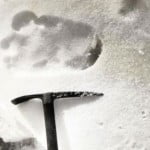
Telltale footprints in the white sand. Some Sand Yetis are 10 feet tall and weigh 500 pounds. All the more reason to pack heat to the beach with your towel and suntan oil.
Experts from “up north” echo the concerns and fascination of their counterparts here.
“The yeti may be the only primate indigenous to North America,” said a visiting scientist from Canada. “Ours are omnivorous and nocturnal while the behavior of the ones down here is impossible to predict. They may eat an entire palm tree for breakfast and then stay up all night deep in digestion. One thing that they have in common is that neither species likes to be alone – ever. These South American Sand Yetis look a lot like the Skoocooms common to the Oregon Coast and are more communal than the Bud Yeti of Humboldt County in Northern California”
She added that the rare six-toed version tends to throw feces at enemies and beat its chest when it feels threatened. They are frightfully strong and can hurl large rocks and tree stumps..
Not to be confused with the significantly smaller Rock Yeti, which are far more populous and who, even at maturity, never reach two feet in stature the sand yeti and rock yeti do not get along. The latter hide in the rocks all day and only come out at night like tourists from Sao Paulo and Buenos Aires. If one comes across these rock critters he is advised to back away and avoid eye contact. Also called Cave Yetis (or small bastards in the Guarani language) and flacos terribilius in the ancient Angostaran dialect, the bigfoots are exceptional football/soccer players but often wear too much cologne. Juveniles often have zits while older cave yetis tend to get lazy.
Cryptozoologists say the DNA matches that of the capybara, a South American rodent that grows to the size of a pig. Attempts to lure them out into the sun with bananas and mangos have failed since the yeti are used to eating oysters and prawns rather than fruit.
“I’ve seen the beggars roaming the deserted beaches looking for eats,” said one local fisherman. “They are nothing but raspy vagabonds and they don’t scare me with all the growling and jumping about.”
Others note similar contact.
“My brother and I had two sharks in our nets when several yetis pushed us back into the water and took our catch,” said an angler from La Corinilla. “They were big galoots, real big. They didn’t say much. The females are smaller. They beast-feed their young right there in front of God and everyone.”
In keeping with the concept of full employment, Uruguay is currently considering hiring many of the yeti as summer beach patrol in nearby Santa Teresa National Park during peak months.
– Estelle Marmotbreath
