 Author Archive for M. Toole


O’Sullivan’s Last Sip
This story was first told by my pipe, peat and potato grand daddy. Then, later in America, we heard that version out of the mouth of me Da. Either way it’s a keeper. As my own dear mother put it, “Your father could go on for as long as the porter held out, but he was nothing compared to that noble liar that stood six foot three in your grandfather’s boots.”
We always thought grandfather’s stories were of the highest quality because he never let up. He told them over and over until even he believed every word to be the God’s Truth. If not, he practiced hard at making it so. To take away an Irishman’s creative conversation is like taking wings away from the birds, clouds away from the sky. It’s almost like lending an ear to the loquacious with nothing to wash down the words. Parched like the Snakes of Courtmacsherry. Dead air.
See what you think.
I remember the old man grabbing for a smoke wrapped up tight in his Mizen Head blanket. It had been a departing gift from his sister, Kathy, who created the thing while summer raged on, for at least two steamy weeks, on Ballinskelligs Bay. Grandfather had come to Buffalo in 1922, the year Ireland had become a Republic. The rebel faction had finally succeeded in convincing the English that they had worn out their eight hundred year welcome, but the economy was yet no better for it.
“You ask how Paddy died, children…well I’ve bloody told you. He fell off a ladder while painting the local courthouse. It was quick curtains. He didn’t suffer that we know of. Now that was a time in America! Back in Ireland the only way a bloke like Paddy would get near a courthouse was on his way to jail.”

The Erie County Courthouse from which Poor Paddy fell some an estimated five stories from his painting ladder onto the rainy street below.
My grandpa feigned irritation to make a point. His many forehead folds, coming to a frightening fruition just above his left eye socket, reminded one of a pierced pirate grown angry at the sea. It was also the look of a man who had aged early, struggling to keep the landlord at bay in Ireland, and his family fed in America.
“Now ‘yis shut up and I’ll tell you of his wake, the finest I can recall. There were people from all over Buffalo, some from Boston and New York. Even a few from the Prod side of the family up in Nova Scotia. All the close lads were hunched up against the casket swilling Guinness and wee glasses of Tyrconnel. At first everyone was almost mute at the sight of poor Paddy O’Sullivan all dressed up in the box. His widow, Mary O’Sullivan looked grand in her grief.
“Too young a man to go so soon,” wept the widow, Mrs Walsh.
“Have you ever seen such a lovely corpse,” echoed the boo bird spinster Mrs. Brennan, her bony hand on the coffin.
“I’ll have another porter,” whispered Mrs. Nolan, herself creeping up on the ripe old age of 90.
Paddy’s mates had gathered within spitting distance of the casket as if some shabby honor guard intent on sacred purification.
“His journey could be a long one,” said Johnny McCann toasting Paddy’s memory. “We’d better have another too.
“What will we do in our paint clothes without Paddy’s singing?” asked Mickey McCormick, a man who had spent the better part of his life slapping paint on some of Buffalo’s finer homes. ‘Tis very sad and no amount of whiskey can make the pain go away,” he cried, “but we can at least try.”
And so the afternoon progressed with the entourage at Paddy’s feet growing larger as evening approached.
“Bring me another pint too, would you Martin?” asked Michael Maloney, a brick layer who had gone to high school with the deceased. “A lovely man was he, none too smart mind you, but lovely.
“We haven’t seen Nellie Boyle,” said Brian Donovan, a third cousin of the deceased. “She and Paddy went round and round before she met up with Harry whats-his-name. That lad had turned to the life of whiskey. Teeth of the Banshee, the man was a disgrace! A sadder fiddle tune I have not heard. The souls of Irish sailor boys! God save the Orange and Green, and give me one more.”
“Oh, you haven’t been around,” answered McCormick. “He’s all dried out and starched up for his own funeral. Look at him, repentant and sober. Pathetic little man, saints preserve him.”
Another voice chimed in: “It was always a good idea to keep an eye on Paddy when he was around your woman, God love him. I wouldn’t trust him any farther than the porch, meself.”

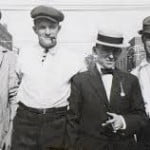
The O’Sullivan siblings at Paddy and Mary’s wedding.
Soon the topic turned to the parade of attendees.
“Look, there’s Annie Collins,” said McCormick. “She’s a wild one. Almost looks like an angel in her black. I wonder what she’s wearing underneath it all.”
“Martyred Christ, lad! Have you no respect for the dead?” chipped McCann.
“Oh but she’s quite well alive,” was the response from Mickey McCormick, “and I dare say that after another whiskey punch may be prime for the plucking.”
“A wake is no place for your womanizing,” warned Mrs. Nolan who had overheard the conversation. “Have some respect for poor Paddy up there. His rambling days are over ever since he lost to the ladder yesterday.”
“Look there’s that Colleen O’Shea. Out living in the suburbs, she is, with that Italian. I recall her wandering the streets of Cobh, her hand out for bread. Now she’s got her own car! Her husband even lets her drive it!”
“Shameful,” plied Walter Brannigan, covering his son Eddie’s ears playfully as the gossip grew.
“Paddy used to keep company with that one before she struck Sicilian gold,” said Marty Callihan, “but if that’s the worst of him he surely lived the life of a saint.”
As the beer and porter flowed the conversation flowed right along with it. Soon there were songs of Ireland and songs of children leaving the ould sod for a better life in Australia or America. There were more songs about Kilkenny and Killarney and Kenmare. Songs of West Cork. Rebel songs. The lilt of it all, lubricated with eternal stout, was astounding and all of Paddy’s faithful were quite impressed with the charm and wit, to be relied on heavily at a time of distress.
“Mary Cronin, is it?” burped Michael Maloney as a pretty young lady entered the inner circle.
“Oh, and there he is,” she bowed her head, fingering her rosary.
“If I could just get her away from the rosary and into a glass of porter the night might not be so very cold,” whispered Michael to his friends. “She’s a fine one…”
“I hear she had a thing with Paddy, at least the way he, God bless him, use to tell it. Quite the live wire, herself,” quipped Maloney.
And there it was. Thirsty brethren courting Paddy one last time, mourners dragging themselves across the smoky parlor, whiskey disappearing at a frantic pace, church bells announcing the end of another March day, Paddy up there smug in his lace curtain casket. The poor, the well-heeled. Relatives and friends all in attendance to send poor Paddy on his way.
“More ice for the corpse!” shouted Mrs. Brennan, who had now taken over a mistress of ceremonies for the while. “Buried Wolfe Tone! The man is melting. The next thing ya know he’ll be dehydrated!”
Someone came forth with a bucket of ice and gingerly poured it over Paddy’s limp body.
“Hand me a few cubes for me porter,” said McCormick with a grin. Paddy won’t miss them.”
A song was forming in the sides of their mouths. More pours and more foam: “Good-bye dear Paddy, Good-bye me lad, Lucky in love and laughter, a passing oh so sad.”
Michael stood up and gazing at Paddy announced that he was about to take on the bar with a frontal assault. Orders were barked and he was off to fill glasses. Somebody then managed to spill porter on dear Paddy much to the chagrin of Mrs. Brennan who made herself busy cleaning up the mess.
“And the whiskey told stories,
as parades filled the door,
soon nobody was talking
’bout darlin’ Paddy no more!”
It was eleven. Many of the mourners had adjourned. The priest had gone home and the ladies began clearing away the mountains of food that had once crowned the wake. A final toast to Paddy, to someone, to Ireland’s honor, to the shamrock, to that gray, dead man in the lovely black suit up in the nice velvet box.
“I really didn’t know him well,” said Philip Healy who had came all the way from Ohio, but I thought I’d pay my respects, his mustache covered in foam.
“We worked together back in Hell’s Kitchen before moving up to the lake,” said Sam O’Neill. “I hadn’t seen him in ten years. Faith! The beer is still cold.”
Soon the company had dwindled down to just a few. Most now had their backs to the casket intent on socializing with the living. Occasionally someone threw another bucket of ice on the corpse. A late mourner strode by the guest of honor engaged in tardy tears. Small mumbles turned to laughter at a moment’s notice.
“I’ve got to get another bottle,” said McCormick. “There’s one in me room.”
“Let the cat out while you’re up there,” shouted Mrs. Brennan. “Marty, you go with him to make sure he doesn’t fall on his fat arse.”
The two men rose and it was Michael, I think, who first laid eyes on the empty casket.
“Wrath of the fairies!” he shouted. Paddy’s gone!”
The others jumped up as one and were scared out of their wits.
“Where could he be? Who could have taken him? Is it the witches? The leprechauns themselves?”

Thirsty gobshites camped out all night long between the stout and the porter.
They all looked around at each other for some explanation but none was forthcoming.
“We must find him before he… he, hurts himself further,” said McCann.
“Yes, find him before his grieving widow, Mary, finds out he’s taken leave,” said Maloney. “If he’s out on the town she’ll have us all by the necks!”
And so, as is often the case with the inebriated, an impulsive, poorly organized search was mounted and all of the men ran out of the funeral parlor in different directions desperate in their quest. They searched the docks and the parks of Buffalo. They wandered along the lake calling his name. No Paddy.
“I’m beginning to feel a bit foolish out here looking for a dead man,” said McCormick. “We’ve looked in the pubs and even at the union hall.”
“How hard can it be to run down a dead man in a rented suit?” said Mrs Nolan. “Keep looking. If we don’t find Paddy there’ll be hell to pay.”
“Aye, and all this grand party for nothing,” added Maloney.
Hours went by. It was now half passed three. The bloodhounds had scoured the city, had shaken down Buffalo with a fine tooth comb. Now they were getting thirsty again.
“Let’s call off the search and go back to the parlor,” said Maloney. “Maybe something has turned up.”
Slowly the red-eyed entourage made its way back to the wake, and there, to their great surprise was Paddy, in all his horizontal splendor, a slight smile on his face, but still pale in his casket.
“Did you see Paddy come in?” asked McCann to a residue of sleepy guests.
“No, we didn’t,” was the answer. “The poor man has been lying there all the night. Will you show some respect!”
“Give us all one,” said McCann. “I think we need it.”
As the clock crawled toward dawn the assembled gathered back at the foot of the coffin. Not sure of what they had witnessed each man was about his own thoughts. Had Paddy grown bored at the slow pace of his own funeral? Was he really dead? Where would his soul go for all of eternity?
His shenanigans had grabbed the front pew. He was once again, maybe for the last time, the center of attention. The next morning the casket bearers showed up early intent on putting poor Paddy firmly into the ground. Perplexed and talked out, they went about their sullen chore unable to forget Paddy’s last jig.
Years later the riddle had not been answered. It still lay curled up at the foot of the casket or in the hearts of Paddy’s children. Were the pookas busy that night? No sense getting your locks up. We’ve got porter here. Go ahead cleanse your pallet, love. Let’s raise a glass to darling Paddy! After all, he couldn’t be expected to hold it for eternity.
Who’s to say the dead aren’t thirsty too
After howls from the dark banshee,
It seems all too clear
Paddy filled up on beer
And just got up to pee.
-Kevin Haley
IRELAND JUST MILES AWAY FROM RESTING PLACE
(Malaga, Spain) The island nation of Ireland has been spotted off the coast of Spain this morning, traveling at the speed of 35 knots in the direction of Sardinia. Hibernians, long tired of proximity with Britain, kidnapped the island last year and began the epic float trip to the Mediterranean Sea.
These Celts insist that Ireland belongs in the Mediterranean near Italy, Greece, Spain and several African nations with which it shares a common heritage.
“When was the last time you saw an Irishman that acted like a German or a Swede,” asked Finbar Harahan, the wealthy financier in charge of the transport.
“We had a little trouble getting through the Straits of Gibraltar,” he said, “but that’s still run by the Brits and all.”
If all goes according to plan Ireland will anchor in northern Corsica before steaming off south to the Tyrrhenian Sea to an undisclosed spot donated by the alleged bastard off-spring of Napolean Bonaparte, who continue to live on the island of Elba, just off the coast of Tuscany.
O’Brien’s Lowers Urinals For Wee
Haute-Hydraulics Welcomes Leprechauns to Town
(Ouray) Urinals here will be substantially lower by the time the wee folk arrive to celebrate St Patrick’s Day on March 17. The unselfish plumbers and architects, taking on this porcelain proposition, have been at it again although this is the first year that the reconstruction will be conducted using state and federal funds.
“We wrote a grant proposal late one night last off-season and 90 days later got a check in the mail,” said a principle that sough anonymity. “Along with the check were specifics as to the general construction and materials preferred. The feds like all their johns to look and function the same. They like uniformity. The leprechauns like access. We like to sell Guinness.”
“We just raised the floor and lower the ceiling for a week or so. The entire episode should be interesting with Colorado’s new tolerance for pot,” laughed one bartender. “Imagine a lot of high little folk wandering around, free of bag-of-gold commitments on this grand day. (Papal dispensation and all).
The federal grant specifically forbids the smoking of marijuana while “operating relief mechanisms and satellite accommodations in small rooms” which could mean seeing a man about a horse of a different color.
An article in this month’s American Latrine Magazine praises the Irish pub for what it calls social responsibility and kindness in welcoming the little foreigners who visit Colorado each year at about this time.
“Lowering urinals so as to accommodate out-of-town visitors (lady leprechauns will find thrones have been submerged and reduced in size for optimum comfort and accessibility) has gained a sort of international acclaim that can’t be bought. It gives the entire region a boost,” said the article.
“We just don’t want a lot of wee people peeing on their feet or missing the target,” said a source. “These little boozers can be terrible shots and use an ungodly amount of toilet paper.”
For many years O’Brien’s simply provided small stools for the faeries but other customers complained that they were far too easy to trip over in the dim light.
The Latrine article continued: “The sensitive management of O’Brien’s has once again raised the bar when it comes to cordial relations, human or otherwise.”
This gesture will not go unrewarded as droves of the little people begin arriving in the Southwest Colorado town in apprehension of the coming holiday. Others may flush the existence of the wee folk down the toilet but Ouray has taken aim to make them feel welcome.”
– Uncle Pahgre
The Greatest Movies of All Time
by Paddy O’Flynn, self-induced film critic
1. The Commitments
2. Waking Ned Devine
3. My Left Foot
4. Angels With Dirty Faces
5. The Secret of Roan Inish
6. The Nephew
7. The Quiet Man
8. Finian’s Rainbow
9. Michael Collins
10. Borstal Boy
11. The Bells of St Mary’s
12. Ned Kelly
13. In the Name of the Father
14. The Plow and the Stars
15. Da
16. Darby O’Gill and the Little People
17. When Brendan Met Bridget
continued on page 45
The ghost Captain of McGinty House
According to my parents the following story is as true as the beard on a leprechaun. According to my sister it is quite probable but may wander up and down a distant tangent at times. According to my children the whole story is a pack of lies and a product of an overactive imagination. I’m Otis McGinty and I didn’t want to wait till the end of this to tell ye that! Otis McGinty.
In June of 1932 Sean and Juliet McGinty were blessed with twins named Maureen and Otis. Things were well at the McGinty house.
Three weeks to the day after the children were born, Juliet McGinty complained of smelling pipe tobacco in certain rooms of the house. She had warned here husband not to smoke around the babies and confronted him on the matter in his den on the ground floor.
Sean assured his wife that he had not been smoking and that he could indeed curb his vices where the children were concerned. The conversation proceeded to the point of a boiling argument — then both participants let it expire. Juliet did not believe her husband and Sean wondered if the family life was really for him.
Since immediately after the confrontation the outlawed pipe tobacco disappeared from the air. Juliet was convinced that her husband had been the culprit. Sean attempted to forget the entire matter — but this was not to be.
Once again Sean McGinty smelled pipe smoke, but this time it was confined to his den. It was also accompanied by various inexplicable circumstances. Each morning Sean would awake to find the creations of some phantom interior decorator. Doors were ajar, chairs pushed over, lamps moved across the room and in each case the air was dominated by the sweet smell of that now familiar tobacco. Nothing else was touched anywhere else in the house during those first days.
While walking into town one morning Sean met Mrs. Dunn, a long-time neighbor, who the locals all over Waterford said “was in cahoots with the fairies.”
“Good day to ye,” bowed Sean nervously.
“And to ye, Sean McGinty,” returned Mrs. Dunn.
” Is something a botherin’ ye me boy?” asked the woman.
“Nothing I can’t take care of meself,” Sean assured her.
“How are the children?” continued Mrs. Dunn.
“Oh, it doesn’t bother the children,” sighed Sean. “It seems to aim it hostilities at Juliet and I…”
Sean stopped dead in the middle of his sentence — looked at Mrs. Dunn and wondered why he had told her anything. She stared back into his face and said:
“And what is it, Mr. McGinty?”
“We don’t know, Mrs. Dunn,” admitted Sean.
“Tell me more,” said the old woman in a suddenly quite proper tone.
Sean had worried about the strange occurrences in their home from the beginning when he felt that the destructive games were aimed at him. Soon after, he was almost relieved when Juliet complained of finding different possessions moved around in the bedroom, kitchen and throughout the house.
“Aren’t you talking to me?” teased Mrs. Dunn.
“I’m sorry, but you’ll think I’m crazy,” said Sean, coming quickly to his senses.
He then began to tell his very attentive acquaintance what had transpired during the last few days. She nodded her head at appropriate places and Sean could not tell if she was really listening or not. Then she broke into the conversation.
“Has it broken anything or hurt anyone?” she frowned in a reassuring fashion, her old woolen coat wrapped around her like a holdout scarecrow in a cornfield fashion show.
“No,” answered Sean, realizing that he had a non-violent houseguest as least.

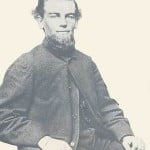
Captain McGinty?
“Then he likes it where it is,” laughed Mrs. Dunn. “He’s only playing games with ye. Your visitor is a poltergeist. He may be gone tomorrow or may stay forever.”
Sean wandered home not at all soothed by the old woman’s quick appraisal of the situation. The next few days saw an increase in the activities of the ghostly boarder. This time the activity was centered around the children, especially Otis. Both McGintys would find toys placed in the children’s cribs, extra covers placed on them at night and Juliet had often expressed a great feeling of peace and contentment in the nursery. The poltergeist had transformed himself into an overprotective nanny– one who confined his pipe smoking exclusively to Sean’s den.
Although Juliet had been skeptical of the old woman on the road she was now beginning to wonder if there might be an answer in what she had said. Did Mrs. Dunn possess an eerie knowledge of the spirit world as the locals said? She certainly maintained a close interest in matters at the McGinty house. Maybe she should come to dinner.
When Sean McGinty went to Mrs. Dunns cottage to invite here to dinner he found her deep in research and ritual. Not wanting to disrupt her uncanny procedures he waited outside. From within the dilapidated cottage he heard her sing:
Of shamrocks and hemlocks
And leprechaun stew
Tell us what strangers
Lurk yonder blue.
Give us the secret
Through babes in their sleep
Relieve the poor suffering
Of souls in the deep.
Sean finally knocked on the door and was beckoned inside.
Mrs. Dunn made no explanation and graciously accepted the dinner invitation saying that she especially looked forward to seeing the children and Juliet, as well as partaking in the McGinty meal.
On the night of the dinner the table was decorated with white linen, silverware from Boston and large candlesticks in crystal. Mrs. Dunn congratulated Juliet on her wonderful taste but both knew it was only passing conversation. The entire house seemed to be waiting for one more uninvited guest to arrive.
“I hope you like lamb,” said Sean jokingly as he helped Mrs. Dunn situate herself at the table.
“My favorite,” she smiled.
As Juliet descended the stairs from the children’s bedroom the candlelight began to flicker — then one by one the candles went out. Juliet had not noticed the spectacle and asked her husband why it was so dark in the room. He sat quietly, stunned by the presence of his resourceful houseguest.
“Don’t worry,” confided Mrs. Dunn. “He’s just showing us how clever he can be.”
Juliet relit the candles, sat down and they all began to eat.
“If we only knew who it was…” started Mrs. Dunn when she was interrupted by a deafening crash upstairs. The three rushed up the stairway fearing for the safety of Otis and Maureen. Juliet arrived first and found everything to be quite calm. The noise of the crash had not disturbed the sleeping children. As Juliet walked back out into the hall she heard a strange song come from the infant’s room. It was a salty jig that reminded her of some of the songs she had learned as a young girl in Wexford. When she turned around she saw a small, rusty music box resting precariously on the dressing table. She had never seen it before. She left the room as chills ran down her spine.
“A music box,” started Juliet as she made here way to the light coming from the master bedroom. As she arrived in the doorway she saw Sean and Mrs. Dunn staring at a broken mirror on the floor. The paint behind the mirror had faded and on that very spot was crayoned the words Captain Padriac.
Juliet put off telling the music box story.
Things had calmed down during dinner. Mrs. Dunn left the McGinty house an hour later. Even the mysterious old woman was shaken by the events of the evening. She was determined to found out who this Captain Padriac might be and what he wanted of the McGintys. She had a growing concern that the poltergeist has chosen these people for a reason and the hoped it was an honorable one.
The next morning Mrs. Dunn arrived unannounced for tea. She pleaded with the McGintys to make a trip to county records in search of some clue as to the character Padriac. Although the two were somewhat reluctant to face the problem, Mrs. Dunn convinced them to accompany her. They bundled up the twins and made their way out into the Irish winter rain.
County records in Waterford yielded no clue to their dilemma. In fact the woman at the desk was quite suspicious of the unlikely trio who asked such persistent questions about such an enchanted character.
When the McGintys arrived home they felt a stronger presence than ever before. They also found the words Spanish Armada scribbled on the kitchen wall. They stepped up their research and poured over available records in Dungarvan, Lismore, Bantry and Wexford, especially scrutinizing families existing during the time of the sinking of the Spanish Armada off the coast of Ireland.
Finally the name McGuerdy popped out of Mrs. Dunn’s mouth. She had heard the name before and associated it with Wexford Town in the adjacent county. Another trip was planned.
The night before the journey to Wexford another message appeared on the kitchen wall. It said simply “I loved Otis.” When Mrs. Dunn was informed of this latest occurrence she was quite afraid.
She knew about leprechauns tricking people out of their children. She insisted that Sean confront this ghost with what little information was apparent.
The poltergeist was not talking as Sean asked him his surname. The children slept peacefully as Mrs. Dunn stood vigil over them.
The name McGuerdy was quite common in Wexford as the McGintys found out quickly. After many hours of research Mrs. Dunn had a vision of a ship’s captain who was grieving at the loss of a loved one. She persisted in studying the history books until she came upon an account of a sea captain who had gone mad upon hearing of the death of his son. The son had been hung by the British for allegedly aiding the survivors of the great Spanish Armada, who wrecked in an attempt to invade England. The son’s name was Otis.
Mrs. Dunn was quite relieved and told Sean to confront the ghost with this information when he returned home. He must find out if the spirit were friend or foe.
The best was to do that (according to Gaelic legend) is to welcome the intruder into one’s home, telling it that it is welcome to stay as long as it likes. The spirit, who is looking for some way to detach himself from this earth may then be able to gain the peace that he is searching for.
Sean agreed and began talking freely to Padriac whenever he smelled the pipe smoke. He felt the presence grow. After reading more on Captain McGuerdy Sean began to feel for the distant relative who had lost his son so long ago. He left tobacco on a table in the den for Padriac and filled a glass of stout for both of them. He even offered the ghost his favorite chair.
“You’re welcome here, Uncle Padriac,” said Sean. “You can stay as long as you like.”
And slowly things began to settle down, as the poltergeist seemed at peace with the new arrangement.
Mrs. Dunn kept her protective ritual over the children and listened intently to the rusty music box in the nursery. One day the music box stopped in the middle of a catchy bagpipe number and Otis woke up and began to play.
From that day on the McGintys experienced no further visits from intrusive fairies, (with the possible exception of cousin Michael, the last in a long line of pale-faced undertakers from County Wexford).
As Maureen and Otis grew their parents retold the story of Uncle Padriac. Mrs. Dunn moved into the McGinty house as she became older and was treated as the children’s grandmother. She died in 1949 exhorting Sean and Juliet to pray for her soul. She spoke of wandering the fairy world searching for her just peace.
“If you run into Padriac tell him he left his music box,” said Juliet one morning, “but tell him he doesn’t have to come retrieve it.”
That afternoon Mrs. Dunn died.
According to my parents who still live in Waterford, Mrs. Dunn was a displaced banshee who had been sent by someone in the spirit world to perform a kind act. According to my sister, who sits on the Irish Parliament, Captain Padriac was an Irish freedom fighter who was probably hiding from the British at the McGinty house.
According to my children Padriac and Otis Jr. the whole story is a pack of lies, fanned by senseless Irish superstition– but those non-believers can’t account for one thing — I’ve still got the music box.
-Otis McGinty


