 All Entries in the "Soft News" Category

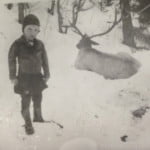
ELK BOY FOUND NEAR BALDWIN
 (Gunnison) A verified sighting of the fabled Elk Boy of Ohio Creek has been reported here this week. Late season mushroom hunters from Tulsa not only photographed the skinny creature but allegedly exchanged greetings and then shared their lunch with him. For years hikers and jeep enthusiasts have insisted that they watched elk herds roam the region followed by a struggling young male human who imitated the animals and had even begun to look a bit like a wobbly calf. Many tales tell of aggressive behavior on the part of “bulls” whenever the herd was approached. Normally the animals simply flee.
“We don’t know who the kid is or how he got in with these characters in the first place,” said a county sheriff’s deputy on the scene. “Considering the wear and tear of the wilderness and his sparse diet he doesn’t look too bad. We are currently investigating all reports of missing persons in these mountains for the past twenty years. Hopefully we will stumble into some clue as to his lineage.”
Eyewitnesses gave conflicting reports as to the presence of course, heavy body hair and the emergence of stumpy, spiked horns, common to adolescent elk. They agreed however, that the elk boy seemed quite curious and at ease.
“It’s as if he’s always known that he was one of us,” said Gwen Two Shoes of Baldwin, a native Ute and avid fly fisherman who claims to have first met the boy in 2009. “We fish together and I bring him stuffed jalapenos which he dearly loves. Otherwise he is content to graze, nibble on berries and scratch himself along the quakey bark like the rest of his herd.”
A spokesman for the local Sociable Services has asked authorities to apprehend the boy so that he can be rehabilitated. They plan to set a trap with a gross of the stuffed jalapenos near his watering hole tomorrow, despite the objections of Two Shoes who has threatened to warn him of the scheme.
“We must save this poor unfortunate from the wilds and allow him to become civilized like us,” said Samantha Meeker, a Bored Again Kokanee Counselor for someone’s county. “Then, somewhere down the road if he survives captivity and pays his fair share of taxes, he can decide for himself which species he wishes to emulate.”
Two Shoes, a direct descendent of a Tablecloth Ute chief, says the plan is atrocious and potentially disastrous.
“One hundred years ago they tried to turn the proud Red man into a farmer when all he wanted to do was to race his horses, hunt and soak in the hot springs. Now that same strain of white folks want to drag this wild elk boy into their world kicking and screaming,” she spat. “What will he do… work as a convenience store clerk or open a trendy boutique? Sociable Services even confiscated the new snowboard that I gave him for his birthday last year and he was just starting to really shred! You should see him hit the Baldwin bumps!”
Two Shoes went on to explain that First Americans never really assimilated to the ways of the European overlord.
“What makes them think a boy raised in the Rockies by an elk herd will take to their silly ways?” she flinched.
-Kashmir Horseshoe
Baseball belongs in the sunshine
 OBITUARY: Major League Baseball. Died Oct. 29. Graveside services. Wake of American tradition, at Cooperstown, N.Y. Survivors include pro football, pro basketball, pro hockey and pro bingo. All are getting old.
Ice hockey isn’t played out in the sun. Basketball courts are abandoned in the rain. Nobody plays tennis in the wind. Why do they play the World Series in the dark, out in the cold, when all good little boys and girls should be fast asleep?
Perhaps it was the repetitious beer commercials aimed at 14 year olds that upset my sense of authenticity. Maybe it was the announcers who, sentenced to childhood in right field because they couldn’t catch a fly, wanted their big-shot day in the limelight. Nope.
It’s the dollar-bill mentality that dictates that games would be played at night instead of out in the luxurious October sunshine.
In B-grade Saturday morning Westerns, even the lowest cowpuncher knew that Indians never fought at night. Neither did the gladiators in Rome. Even Eisenhower waited until daylight to launch the Normandy Invasion.
Baseball should be a game for kids and the World Series, of all sporting events, should be played in the daytime. (Theme music: Gillette Blue Blades, I mean) If the sport truly seeks credibility it must turn away from commercialism.
Why must young baseball fans be faced with staying up past midnight to watch their teams wander into the extra innings? What about some of the rookies? Should they have to ride the bench, yawning, while the contests are concluded?
Things would certainly have been different if the World Series was played at night in the 50s. Two of the principals, Mickey Mantle and Billy Martin, might have missed all the games due to their much-maligned social agenda.
In addition, what would radio broadcasters like Wait Hoyt and Rosey Rosewell have done with all their idle day time? What about Pirate great Bill Mazeroski? Would he have stayed up late enough to take his famous series-ending poke back in 1960?
I remember back then, when the Yankees and Dodgers dominated the post-season play. Of course, in those days, if a team won its division it went to the World Series and was not forced to test its mettle against also-rans in continuous five-or-seven-game fiascoes. In those days, kids would skip school to watch the games and their parents generally turned their heads.
In the workplace, especially in the competing cities, there would be lucrative office pools and little or no work going on. New York and Los Angeles, the largest cities in the country, were at a virtual standstill in 1962. That’s the real country talking. Ain’t it grand!
Worker morale was at its highest, as it was considered patriotic to blow off work and gather around the radio or the color television to catch the action.
Dammit, baseball belongs out in the sunshine, not lurking around in the evening shadows of someone’s prime time.
In 1934, Joe “Ducky” Medwick was pelted with garbage as he attempted to play left field during the autumn classic. Rude as it may have been, it was probably great fun for the Detroit fans, who watched their team go down to defeat.
Ask yourself: If the game would have been played at night, would the Detroit faithful actually have bounced their trash off Medwick? How could they be sure it was him in the dark. Baseball would have been deprived another joyous outing, even though Medwick might have felt quite differently.
In that same series, Dizzy and Paul Dean, pitching in the sunlight, were all but untouchable. Do you think the Tigers would have done better in the dark? It’s doubtful whether any of the American Leaguers would have even detected the cowhide passing over the plate. At least the Deans, pitching in the afternoon gave the hitters a shot at it all.
In 1961, Cincinnati third baseman Gene Freese lost a foul ball in the sun. It would have been the third out, but instead the powerful Yankees capitalized on his misadventure and scored seven runs, which turned the Series around.
The Yankees went on to win in five games. In 1995, would Braves fans be so quick to engage in their mindless chop chants right out in the light where everyone could see them? We think not.
Back before TV ratings dominated baseball tradition we can imagine the American family gathering around the dinner table talking about that afternoon’s game. Today the broadcast often interrupts dinner entirely. In addition, the World Series gave the unemployed something to do during those difficult hours of reflection, and was found to provide a positive distraction from the morbid soaps, the noisy, carrot and stick game shows and the few idiot talk shows that had begun to surface.
What about crime? Even a fool can see that a fan is more likely to get mugged outside Jacob’s Field or Fulton County Stadium at 11 than at 6.
Is this crisis covered by the designated hitter clause? And if this reality isn’t frightening enough, consider that the rosin bag gets soggy at night and the UV rays from the stadium lights are harmful to one’s health.
Let’s blame Ted Turner. He’s the guy who brought the national sport to its knees by providing the massive Brave money dosages on the tube. There is no doubt he wanted the games on at night due to the ad revenues and due to the likelihood that his former wife, Jane, wanted to free up her days to hit the malls in Cleveland or Baltimore, shopping meccas to be sure.
Maybe we need government intervention, but the GOP says there are too many lefties on the mound and the Democrats seem frightened to go out into right field after dark. What about presenting the World Series in the daytime, interspersed with the McNeil-Lerner Report?
In closing, Astroturf, domes and batting gloves suck too.
-Kevin Haley
Gitano Summer
 by Uncle Pahgre
That the Egyptians and the Chaldean strangers
Known by the name of Gipsies, shall henceforth
Be banished from the realm as vagabonds.
– Longfellow: The Spanish Student
Just about the time the gray hairs outwit their youthful counterparts it becomes clear that our memory fades as well. Episodes of youth are shrouded in the pure green paradise of summer, which lasts forever. When I was a boy it never even seemed to get dark on summer nights along the San Miguel.
Then the great snows of Depression Decembers amounted to at least twenty feet dumps, not paltry six inch flirtations common to the mountains today. Flooded pastures and crisp quake leaves filled in the gaps of the daily celebration.
That’s what some remember, the pleasantries, the simplicity of the Rockies. Others, who were offered the same joys, recall the strife and that’s the basic difference between the old gentleman who strolls the cigar evening, cane in hand and the curmudgeon who sits whining in his wilting rocker, the victim of it all, damning his final hand of cards before the deal is over.
In was one of these summers, 1937 or 1938 that Placerville cautiously received the Gypsies from Spain. For decades our town had been a major railway hub shipping cattle and ore along with hardrocker necessities and food to feed the hungry miners up in Telluride. The rails brought a landed assortment of humanity from bums to bankers. Local cowboys, dreaming they had finally made the big time in Dodge or Abilene kept the local sheriff busy on Saturday nights. Otherwise his position demanded visiting his constituency and drinking their lemonade on the peaceful porches of the San Juans. I had just turned ten years old the night the Gypsies pulled their brightly painted wagon into town.
“Watch out, they’re gypsies,” said Mrs. Strongwell from her sun porch, the one built for her by her son, before he left for the trenches of France in 1917. “What do they want here,” she continued, throwing fear into the little bones of her grandsons, moonstruck behind pioneer curtains at the nomadic entourage spilling from the waggish carriage.
“They want to sharpen your knives and repair your pots and pans,” said Dr. Twill, the local dentist and the closest thing to a mayor that we had. “They don’t mean any harm.”
“I saw them up in Leadville last month and they were nothing but trouble,” quacked another citizen. “They steal horses and put evil curses on people. They read palms, relish fortunes and sell sugar pill remedies for everything from broken hearts to the gout.”
The dark-skinned cargo ascended from the wagon as one copper smith surrounded himself with unfinished wares and began to tune his violin. The Roma children looked around at the bustling little burg intent on new friendships and maybe a little mischief. The men announced their services, quite accustomed to the hostile stares of the stay-at-home world.
“Maybe they have whiskey,” said a thirsty Mr. Brennan, who had come across the Atzigan in France in the early Twenties on his way to America. “They always have bootleg of some sort…and cigars.”
“I don’t trust them. Just look at their patchwork clothing,” continued Mrs Strongwell. “Those horses look too good to be pulling around a carnival wagon like that one. I wonder where they stole them.”
Brennan took offense.
“We had gypsies in Ireland, but we called them Travelers,” explained Brennan. “Some say they arrived from India via Persia, others said they were the landless ancestors of those orphaned during the Cromwellian Wars of the 1600s. Displaced at best, they wandered my island under the constant scrutiny and suspicion of near-do-wells who themselves had little more than a thatched roof over their heads. I guess everyone has to have someone to look down on so as to prop up their precarious existence…”
“Say what you will, Brennan, popped Carl Perkins, a Cousin Jack from Marshal Basin, “but I’ll be keeping a close eye on that bunch. They’ll steal anything that ain’t nailed down good.”
I remember asking my father if he had a nail of two to spare reflecting on treasures such as my fishing pole, my American Flyer and my Joe Lewis photo up on the wall next to my bed. I sure hoped the Gypsies didn’t come and take them.
“I tell you there’ll be trouble until we run them out of town,” said Perkins.
The patriarch of the Gypsy family couldn’t help but feel the weight of the bucolic reception. He was a veteran of the kind of discrimination aimed at those who would reject assimilation, even on the rare occasion that it is offered. People who stay to themselves and jealously guard their diminished culture don’t mix well. The only reason they had ventured into town was to buy provisions, sharpen knives and perhaps trade a horse or two.
“Fine looking horses they’ve got,” repeated Mrs. Strongwell.
These wanderers were recent refugees from the civil war that ravaged their native Spain, outcasts from a conflict that had not officially requested their presence but churned up their lives anyway. The kindred’s grandfather had joined the Anarchist Party in 1935 after bold strikes had gained a little leverage for starving peasants in Andalusia. He worked in the fields, harvesting grapes for the wealthy sherry producers around Sanlucar.
One day in 1936, after the Nationalists had liberated Cadiz he was taken from the fields by a Falangist gang and murdered in a nearby ditch with about 20 other leftists, who had no politically ideology except their hunger. The Fascists had no tolerance for Reds, especially low-caste tinkers who joined the unions and burned churches. It was soon after that his son, Emile, sold what little he had and escaped to America with his new wife and the remnants of both families.
After a sojourn into the local market, where they traded in services and paid the rest in gold, the residue of rovers wandered back to their camp, set up along the river near Specie Creek. It was there that the local sheriff, bored of cowboys and lemonade, would visit them that night.
Emile, who had crowned himself King of the Gypsies (a title confused in the translation from Romani to English) since there were no other Gypsy pretenders in earshot to denounce his throne, greeted the lawman from atop a stunning white Arabian.
“Where did you manage to acquire such a fine horse?” he asked. abruptly as Emile’s family watched from the campfire. “Did she just wander into your camp one night?”
“I traded two raindrop colts for her over near St. Elmo,” answered Emile. “I’ve got a bill of sale here…”
“No reason to produce a piece of paper what may or may not be legit,” said the sheriff. “Fine horse. I hope you folks ain’t looking for trouble. We’ve got a nice little town here and I won’t have a bunch of gypsies throwing a wrench into things. You can stay until you’ve completed your rounds here but at the first sign of trouble I’ll lock you up and ask questions later.”
Emile, accustomed to harsh treatment from the authorities, smiled and said he understood the sheriff’s concerns, adding that there would be no problems and that his family would be gone by the end of the week.
That was the same night that Arnold Blackman’s young quarter horse came up missing.
“One minute he was in the corral and the next he was gone,” explained Blackman at the sheriff’s office. “He’s a lazy beast and has never shown the inclination to wander from the bountiful pasture near my cabin. I can’t explain it. Even if he took off he’d surely be back by now.”
The sheriff rode back out to the gypsy camp and, interrupting the evening’s music, demanded to see Emile.
“We got a quarter horse missing from the Blackman place. Know anything about it?” he accused, spitting chew from the hole under his long drooping mustache.
“No, sir,” answered Emile.
“You know that horse stealin’ is still a hanging offense in this part of the country,” he frowned. “Now tell me what you know about the disappearance.”
With his family dumb struck Emile denied any knowledge of the occurrence.
“You’ll be coming with me until you regain your memory,” said the sheriff. “We don’t cotton to thieves around here. Nobody steals nothin. The last time a horse turned up missing there were your kind about.”
Emile smiled attempting to take the heat off his tribe. As his children looked on he agreed to accompany the lawman to the local jail, a cedar log shack at the far eastern end of town. And, while his family tried to make sense of it all, that’s where he spent the night.
“Your damn right he’s got Blackman’s quarter horse. They’ve hidden it in the woods,” said Mrs. Strongwell.
“Lord knows what else they’ve walked off with,” said Perkins. “Sticky-fingered bastards. I say let’s burn them out tonight. Then maybe the big cheese will start to melt.”
Mr. Brennan then spoke up.
“We’ve got no proof of any wrongdoings on the part of those people. You can’t just…”
“No proof!” cracked Perkins sarcastically. “Did you take the horse, Sam or did he just vanish? The Irish don’t steal, or do they?” he pushed.
Brennan just glared back in the face of Perkins, considering his options with the much larger miner.
“Sam Brennan is not under suspicion here, Perkins,” said Mr Twill. “The animal could be anywhere.”
“He’s somewhere under that gypsy tent,” continued Perkins. “I say we load up, go on out there and see for ourselves.”
“Not so fast,” said the sheriff. “If he’s guilty he’ll pay dearly. I assure you. But until we have proof there’ll be no more of that talk.”
The whole town was soon abuzz with rumors about gypsies, magic potions and enchanted horses. Some said the nomads had secret powers over the living. Others shuddered that they were in league with the dead, or worse. The sheriff returned from a cross-examination at the jail with nothing to report.
“Tomorrow we’ll search for proof and question the rest of his band,” said the sheriff. “They won’t leave the county with their leader in jail. I told that bohemian that he could save a lynching if he came to and told the truth but he denied any connection with the disappearance.”
“Meanwhile I’m out a good horse,” shrugged Blackman. “I don’t trust those people…”
“There’s one way to be sure that he won’t steal again,” said Perkins. “I won’t stand for gypsies coming into my country stealing and laying out curses…I say let’s string him up now!”
The strawberry vigilantes had regrouped at the Blackman place. The threat of spilled blood was already on their hands. A rope hung on the wall. A man was in the cell. A large cottonwood lingered with wide gaps on its dance card for the evening.
“What are we thinking?” sensed Mr. Twill. “What insanity! If you kill you’ll never be the same people, even if he’s guilty of stealing 100 horses! We must maintain a sense of justice or we’re no better than common murderers.”
“Stealing is stealing and hanging is hanging,” chimed in Mrs. Strongwell. “What other choices do we have? I say burn them out and run them down the road. Then we, as a town, can replace Blackman’s stolen mount. We don’t want those people skulking around at the edge of town anyway.”
“Running them off is too good for them,” said Perkins. “They need to be taught a lesson. A man dancing from a limb don’t steal. Let’s proceed with a little frontier justice…the terrible swift sword and all…”
“I’ll shoot the first man that forces his way into my jail,” threatened the sheriff, adjusting his holster. “Now you all settle down or the Gypsy will have a lot of company. We’ll pay a visit to their camp first thing in the morning and sort this thing out. I promise that, if the Gypsy had anything to do with this you’ll get your justice. I didn’t like the way he sat on that Arab. If he’s to blame it will give me great pleasure to dispense the law.”
Emotions continued to run amuck. Nothing this important had happened in Placerville since the ore train was robbed by those boys from Utah in 1898. The imagined fortune, in reality amounting only to about $100, had left three men dead and one train guard blind. Before that there were Utes to contend with, water wars and bandits from the Disappointment Valley showing up for afternoon tea.
Imagine this brash gypsy appearing right here in the daylight and by nightfall a valuable horse is gone. It all adds up. Who wanted to sleep while a felon cooled his heels in the midst of a once peaceful patch of paradise? A slap in the face.
No one went home. The hour grew late as a jug was passed around. Talk turned tough, then subsided, then got tough again. As the dawn approached everything remained on edge. A small contingent of Emile’s family bravely arrived and begged for mercy saying he had not committed any crime. They we’re received by the stares of the righteous intent on an eye for an eye.
“You’d better have that horse hid real good,” threatened Perkins. “We’ll be coming your way before breakfast to see what else you’ve been up to. When we’re finished your Gypsy King will be sucking dust.”
Emile’s wife asked to see her husband but was denied by a tired sheriff now facing the mob mentality of his neighbors. Twill cautioned against hard talk in front of the children. Perkins countered by calling them little thieves whose daddy wouldn’t be coming home.
Blackman appeared with a shotgun which he pointed menacingly at the Gypsies. He ordered them off his land. No one moved.
Everyone was so worked up that they didn’t see the logger from Sawpit leading the prodigal quarter horse into Blackman’s corral. The man’s name was Christy. He was covered in sawdust as he approached the group.
“Got another swig of that hooch?” he asked. “It’s been quite a trek from my camp to here. Seems your boy has fallen in love. I found him down by my gate, making eyes at my Appaloosa filly. Didn’t know where he belonged until I did some snooping around. The brand is hard to decipher. Fine looking horse though.”
In the early morning light a jury of eyes met and quickly dropped to the ground. No one said anything. Perkins looked at Brennan for acquittal. Mrs. Caldwell busied herself with her apron, yawning about chores and chickens to feed. The sheriff galloped over to the jail to free its inmate. People prepared for the day. Members of Emile’s family shed tears of relief. A terrible miscarriage of justice was narrowly averted in Placerville.
A few days later the sheriff rode out to the gypsy camp which had been deserted the morning before. There was nothing there. The visitors had moved on to sharpen knives, tell fortunes, and maybe trade a few horses.
CANE LICENSE DEADLINE LOOMS
Montrose) People carrying canes have until Thursday to procure licenses for same or face stiff fines. Whether a citizen is using the cane as a tool, a crutch, a walking stick or simply an accessory, he must comply with the new regulation.
Critics of the law say it is just another agist step toward a national ID card. They say that although the card is presented as necessary security against illegal aliens and terrorists it is just another attempt by the federal control freaks to look up your dress/down your shorts.
“I’d prefer trainloads of illegal immigrants in my backyard rather than have an ID number stenciled on my forehead,” said Rocky Flats, a semi-retired atomic scientist and frequent cane user from Olathe. “I’m gonna use my cane and I’m not gonna buy no damn license. Them that gets in my way wanting to see credentials will get a close up look at my walking stick, you betcha.”
A free-lance gov’ment source defended the action.
“We don’t want to get involved in people’s personal lives, no sireee…We just want to defuse a potentially explosive scenario before it becomes a life threatening situation,” smiled Suzanne Compost of the Committee for Public Safety. “What with all those baby boomers hitting senior status we expect to see more people using canes. In fact, we estimate that cane use will all but double by the year 2020.”
Compost went on to deny rumors that the authorities will patrol older neighborhoods checking paperwork, observing suspicious behavior and kicking canes out from under elderly people who choose to ignore the law.
“That’s ridiculous,” she quipped. “Some of those old farts carry mace, bite and have mean cats. Why would we jeopardize the safety of our people? Our policy is to wait till these criminals take a nap on a park bench, lay their canes down at the local cafeteria or go to pick up their sociable security checks at the mailbox, then we simply the seize the illegal cane.”
The AARP, the ACLU, Reader’s Digest, the manufacturers of Viagra and several prune juice processing plants have promised to appeal the new legislation.
– Manuel Flushe
Imaginary Friend Population on the Rise
 (Denver) The number of imaginary friends claimed by residents of the Confront Range has almost doubled since this time last year. Experts say the jump is the result of growing disenchantment and constant stress experienced in higher population areas.
Imaginary friends, defined as anyone from a fantasy pal to an invisible advisor, tend to surface when real people just don’t cut the mustard. They are, in turn, attracted to lonely people who find themselves the victim of the 21st Century—People who constantly breathe bad air, people who spend their lives stuck in traffic or crammed into the cheery suburbs.
“These are not to be confused with guardian angels,” explains Dr. Efram Pennywhistle of the Lookout Mountain Helicopter Traffic Brown Cloud Symposium. “They cannot be claimed as dependents on tax returns and are not recorded on the national census.”
Pennywhistle says guardian angels are good spirits while imaginary friends run the gamut from helpful to destructive. He adds that a pretend passenger can be of great worth while negotiating I-25 at rush hour or on the ol’ riding mower at dusk.
“We had one joker up here in Golden who claimed his imaginary friend bought him cheap vodka and made him drink it while driving up Clear Creek to the Central City casinos. Upon arrival the imaginary friend allegedly made him gamble away his paycheck and later threaten security personnel. When police arrived, and arrested the man,” quipped Pennywhistle, “the imaginary friend was nowhere to be seen.”
Up till now most urban planners and social scientists have chosen to ignore the existence of these others preferring to focus on logistical problems having to do with physical matter and space.
“It was bad enough trying to create housing for the first string (living, breathing humans) without worrying about these imagined individuals,” said one planner. “Now we have to build imaginary interstate highways, locate imaginary low income housing, develop imaginary neighborhoods and even maintain imaginary schools for their children. The impact on social services is astounding. We still haven’t figured out how to tax them and sell them licenses but that day is coming.”
In private, many sociologists resent the imaginary friends whom they say are parasites at best out only for a good time. Most feel humans would be better dealing directly with trauma rather than creating beefed-up linemen to do their blocking for them.
“Any way that modern man can deal with the bombardment of stimuli is acceptable,” explained Jorge Thorwell, a professor of Latter Day Metaphysics at Cal Amari University (Compton Fire Base). “These poor unfortunates in washed cars live life at a blow by blow pace traveling the robot highway in a world turned to bad science fiction. The road noise alone drives most slowly insane.”
At press time the number of imaginary friends living between Ft. Collins and Trinidad is estimated at about 500,000. While most have assimilated into ancient Colorado culture (they are Bronco fans) their presence is a constant threat to the fragile peace and harmony along that stretch of Colorful Colorado. – Fred Zeppelin

Happy Hour at State Prisons Raises Eyebrows

Happy hour in prison? Thirsty rehab or same old punishment?
(Canon City) First it was karaoke, then bake sales to raise money for families of convicts, now it’s a daily happy hour. Since last month prison guards and prisoners have mixed for an hour each day sipping tea-strong cocktails and swilling 3.2 beer. The social hour, catering to all but the maximum security population, has been credited with a distinct drop in hostility toward big house authorities and a decrease in recurring prison violence that has plagued the institution from the onset.
People incarcerated learn to look forward to the simplest experiences to escape from the daily ritual of prison life according to warden Emile Turlo.
“Imagine sitting in a cell all day without free access or socialization,” he said. “Sure most of the inmates get a few hours in the yard and there are mealtimes in the mess hall but overall the system creates long hours alone which are not particularly helpful with rehabilitation.”
Some state Republicans are highly critics of the happy hour saying that prisoners do not deserve these kinds of freedoms.
“When they broke the law they gave up their rights,” said Rep. Owen Blackman, himself a white collar petty thief before he got religion and hooked up with the party. “These people are in jail to be punished not to be wined and dined.”
Blackman is concerned not only because alcohol is served but that the prison commissary has been offering meatless and low cholesterol meals on the weekends.
“What are we doing raising a crop of vegan crooks, a crew of health conscious criminals who might just live to a ripe old age. Why can’t they eat nutritional fast food like the rest of us?”
Warden Turlo told the media that many of the inmates are drug offenders who plea bargained their lives away due to anxious cops and bad legal advice.
“Often public defenders are buried in work and cannot relegate adequate hours to insure that cases are handled properly, that all alleged perpetrators get a fair trial,” explained Turlo. “We get these guys who have been whisked through the system and never indicted. Some of them get two to three years here, where they learn to hone their criminal skills. They come in with the criminal equivalent of a grade school diploma and leave with a PhD in burglary or extortion. What a system!”
One convict, a 22-year-old unemployed Black aluminum can magnate, was busted when police found a roach in his automobile ash tray in 2009. After a “speedy trial” leading to court-ordered confinement he wondered if a plea bargain was the way to go.
“My lawyer told me if I didn’t cooperate with the court I could get ten years, so I plead guilty to a lesser charge and here I am. They told me I’d be up for parole in 18 months but that milestone has passed and I am wasting away within these walls. I think they forgot me.”
In addition to the daily happy hour there are other benefits for prisoners exhibiting good behavior. Work release programs, college study groups, trade school opportunities and ultimately halfway houses designed to pave the way for reentry into society.
“We must decide if prison is primarily punitive or if it is an attempt at rehabilitation,” said Turlo, “and we must be careful not to run short of ice.”
The United States incarcerates more prisoners than any other “free” country in the world. Many prisoners have fallen through the cracks and are now mere statistics in a shameful shuffle where private institutions function as profitable enterprises. Treating convicts as humans might just be the beginning of a new approach to justice.
“Considering the poor performance by most penal institutions a daily happy hour might just be a bright spot in an otherwise dark existence,” snapped Turlo.
– Kashmir Horseshoe


