 All Entries in the "Featured Peeks" Category

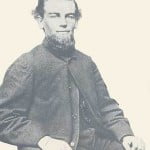
The ghost Captain of McGinty House
According to my parents the following story is as true as the beard on a leprechaun. According to my sister it is quite probable but may wander up and down a distant tangent at times. According to my children the whole story is a pack of lies and a product of an overactive imagination. I’m Otis McGinty and I didn’t want to wait till the end of this to tell ye that! Otis McGinty.
In June of 1932 Sean and Juliet McGinty were blessed with twins named Maureen and Otis. Things were well at the McGinty house.
Three weeks to the day after the children were born, Juliet McGinty complained of smelling pipe tobacco in certain rooms of the house. She had warned here husband not to smoke around the babies and confronted him on the matter in his den on the ground floor.
Sean assured his wife that he had not been smoking and that he could indeed curb his vices where the children were concerned. The conversation proceeded to the point of a boiling argument — then both participants let it expire. Juliet did not believe her husband and Sean wondered if the family life was really for him.
Since immediately after the confrontation the outlawed pipe tobacco disappeared from the air. Juliet was convinced that her husband had been the culprit. Sean attempted to forget the entire matter — but this was not to be.
Once again Sean McGinty smelled pipe smoke, but this time it was confined to his den. It was also accompanied by various inexplicable circumstances. Each morning Sean would awake to find the creations of some phantom interior decorator. Doors were ajar, chairs pushed over, lamps moved across the room and in each case the air was dominated by the sweet smell of that now familiar tobacco. Nothing else was touched anywhere else in the house during those first days.
While walking into town one morning Sean met Mrs. Dunn, a long-time neighbor, who the locals all over Waterford said “was in cahoots with the fairies.”
“Good day to ye,” bowed Sean nervously.
“And to ye, Sean McGinty,” returned Mrs. Dunn.
” Is something a botherin’ ye me boy?” asked the woman.
“Nothing I can’t take care of meself,” Sean assured her.
“How are the children?” continued Mrs. Dunn.
“Oh, it doesn’t bother the children,” sighed Sean. “It seems to aim it hostilities at Juliet and I…”
Sean stopped dead in the middle of his sentence — looked at Mrs. Dunn and wondered why he had told her anything. She stared back into his face and said:
“And what is it, Mr. McGinty?”
“We don’t know, Mrs. Dunn,” admitted Sean.
“Tell me more,” said the old woman in a suddenly quite proper tone.
Sean had worried about the strange occurrences in their home from the beginning when he felt that the destructive games were aimed at him. Soon after, he was almost relieved when Juliet complained of finding different possessions moved around in the bedroom, kitchen and throughout the house.
“Aren’t you talking to me?” teased Mrs. Dunn.
“I’m sorry, but you’ll think I’m crazy,” said Sean, coming quickly to his senses.
He then began to tell his very attentive acquaintance what had transpired during the last few days. She nodded her head at appropriate places and Sean could not tell if she was really listening or not. Then she broke into the conversation.
“Has it broken anything or hurt anyone?” she frowned in a reassuring fashion, her old woolen coat wrapped around her like a holdout scarecrow in a cornfield fashion show.
“No,” answered Sean, realizing that he had a non-violent houseguest as least.

Captain McGinty?
“Then he likes it where it is,” laughed Mrs. Dunn. “He’s only playing games with ye. Your visitor is a poltergeist. He may be gone tomorrow or may stay forever.”
Sean wandered home not at all soothed by the old woman’s quick appraisal of the situation. The next few days saw an increase in the activities of the ghostly boarder. This time the activity was centered around the children, especially Otis. Both McGintys would find toys placed in the children’s cribs, extra covers placed on them at night and Juliet had often expressed a great feeling of peace and contentment in the nursery. The poltergeist had transformed himself into an overprotective nanny– one who confined his pipe smoking exclusively to Sean’s den.
Although Juliet had been skeptical of the old woman on the road she was now beginning to wonder if there might be an answer in what she had said. Did Mrs. Dunn possess an eerie knowledge of the spirit world as the locals said? She certainly maintained a close interest in matters at the McGinty house. Maybe she should come to dinner.
When Sean McGinty went to Mrs. Dunns cottage to invite here to dinner he found her deep in research and ritual. Not wanting to disrupt her uncanny procedures he waited outside. From within the dilapidated cottage he heard her sing:
Of shamrocks and hemlocks
And leprechaun stew
Tell us what strangers
Lurk yonder blue.
Give us the secret
Through babes in their sleep
Relieve the poor suffering
Of souls in the deep.
Sean finally knocked on the door and was beckoned inside.
Mrs. Dunn made no explanation and graciously accepted the dinner invitation saying that she especially looked forward to seeing the children and Juliet, as well as partaking in the McGinty meal.
On the night of the dinner the table was decorated with white linen, silverware from Boston and large candlesticks in crystal. Mrs. Dunn congratulated Juliet on her wonderful taste but both knew it was only passing conversation. The entire house seemed to be waiting for one more uninvited guest to arrive.
“I hope you like lamb,” said Sean jokingly as he helped Mrs. Dunn situate herself at the table.
“My favorite,” she smiled.
As Juliet descended the stairs from the children’s bedroom the candlelight began to flicker — then one by one the candles went out. Juliet had not noticed the spectacle and asked her husband why it was so dark in the room. He sat quietly, stunned by the presence of his resourceful houseguest.
“Don’t worry,” confided Mrs. Dunn. “He’s just showing us how clever he can be.”
Juliet relit the candles, sat down and they all began to eat.
“If we only knew who it was…” started Mrs. Dunn when she was interrupted by a deafening crash upstairs. The three rushed up the stairway fearing for the safety of Otis and Maureen. Juliet arrived first and found everything to be quite calm. The noise of the crash had not disturbed the sleeping children. As Juliet walked back out into the hall she heard a strange song come from the infant’s room. It was a salty jig that reminded her of some of the songs she had learned as a young girl in Wexford. When she turned around she saw a small, rusty music box resting precariously on the dressing table. She had never seen it before. She left the room as chills ran down her spine.
“A music box,” started Juliet as she made here way to the light coming from the master bedroom. As she arrived in the doorway she saw Sean and Mrs. Dunn staring at a broken mirror on the floor. The paint behind the mirror had faded and on that very spot was crayoned the words Captain Padriac.
Juliet put off telling the music box story.
Things had calmed down during dinner. Mrs. Dunn left the McGinty house an hour later. Even the mysterious old woman was shaken by the events of the evening. She was determined to found out who this Captain Padriac might be and what he wanted of the McGintys. She had a growing concern that the poltergeist has chosen these people for a reason and the hoped it was an honorable one.
The next morning Mrs. Dunn arrived unannounced for tea. She pleaded with the McGintys to make a trip to county records in search of some clue as to the character Padriac. Although the two were somewhat reluctant to face the problem, Mrs. Dunn convinced them to accompany her. They bundled up the twins and made their way out into the Irish winter rain.
County records in Waterford yielded no clue to their dilemma. In fact the woman at the desk was quite suspicious of the unlikely trio who asked such persistent questions about such an enchanted character.
When the McGintys arrived home they felt a stronger presence than ever before. They also found the words Spanish Armada scribbled on the kitchen wall. They stepped up their research and poured over available records in Dungarvan, Lismore, Bantry and Wexford, especially scrutinizing families existing during the time of the sinking of the Spanish Armada off the coast of Ireland.
Finally the name McGuerdy popped out of Mrs. Dunn’s mouth. She had heard the name before and associated it with Wexford Town in the adjacent county. Another trip was planned.
The night before the journey to Wexford another message appeared on the kitchen wall. It said simply “I loved Otis.” When Mrs. Dunn was informed of this latest occurrence she was quite afraid.
She knew about leprechauns tricking people out of their children. She insisted that Sean confront this ghost with what little information was apparent.
The poltergeist was not talking as Sean asked him his surname. The children slept peacefully as Mrs. Dunn stood vigil over them.
The name McGuerdy was quite common in Wexford as the McGintys found out quickly. After many hours of research Mrs. Dunn had a vision of a ship’s captain who was grieving at the loss of a loved one. She persisted in studying the history books until she came upon an account of a sea captain who had gone mad upon hearing of the death of his son. The son had been hung by the British for allegedly aiding the survivors of the great Spanish Armada, who wrecked in an attempt to invade England. The son’s name was Otis.
Mrs. Dunn was quite relieved and told Sean to confront the ghost with this information when he returned home. He must find out if the spirit were friend or foe.
The best was to do that (according to Gaelic legend) is to welcome the intruder into one’s home, telling it that it is welcome to stay as long as it likes. The spirit, who is looking for some way to detach himself from this earth may then be able to gain the peace that he is searching for.
Sean agreed and began talking freely to Padriac whenever he smelled the pipe smoke. He felt the presence grow. After reading more on Captain McGuerdy Sean began to feel for the distant relative who had lost his son so long ago. He left tobacco on a table in the den for Padriac and filled a glass of stout for both of them. He even offered the ghost his favorite chair.
“You’re welcome here, Uncle Padriac,” said Sean. “You can stay as long as you like.”
And slowly things began to settle down, as the poltergeist seemed at peace with the new arrangement.
Mrs. Dunn kept her protective ritual over the children and listened intently to the rusty music box in the nursery. One day the music box stopped in the middle of a catchy bagpipe number and Otis woke up and began to play.
From that day on the McGintys experienced no further visits from intrusive fairies, (with the possible exception of cousin Michael, the last in a long line of pale-faced undertakers from County Wexford).
As Maureen and Otis grew their parents retold the story of Uncle Padriac. Mrs. Dunn moved into the McGinty house as she became older and was treated as the children’s grandmother. She died in 1949 exhorting Sean and Juliet to pray for her soul. She spoke of wandering the fairy world searching for her just peace.
“If you run into Padriac tell him he left his music box,” said Juliet one morning, “but tell him he doesn’t have to come retrieve it.”
That afternoon Mrs. Dunn died.
According to my parents who still live in Waterford, Mrs. Dunn was a displaced banshee who had been sent by someone in the spirit world to perform a kind act. According to my sister, who sits on the Irish Parliament, Captain Padriac was an Irish freedom fighter who was probably hiding from the British at the McGinty house.
According to my children Padriac and Otis Jr. the whole story is a pack of lies, fanned by senseless Irish superstition– but those non-believers can’t account for one thing — I’ve still got the music box.
-Otis McGinty
Factual Eire
Before Ireland fell to the Christians it was pagan. Functioning quite well as a matriarchal society its fierce warriors kept invaders at bay. Enter Patrick, the full-of-himself and his snake oil carnival show. Shamrocks and conversions were the name of the tune. Then came the Vikings who plundered and killed at will and then built cities on the rivers.
The Druid poets, mediators, intellectuals, astronomers, climatologists could not stir up much resistance among a population drunk on future salvation. Pagan darkness? All the relics of all the dead saints couldn’t protect the rich monasteries from the psychedelic Norse madmen, dressed for battle in no more than a shield and sword, long red hair flowing.
For the next few centuries Ireland was beset by constant warfare among earls and chieftains intent on hoarding cattle, the accepted sign of affluence. Then in 1167 deposed Irish King of Leinster, Dermot MacMurrough, angry over his lot, swore an oath of allegiance to Henry II of Britain. In turn, Henry obligingly sent Norman troops into Ireland and they have never left.
See incidence of Oliver Cromwells listed in the Dublin City phone directory
New Bank Coming to Ouray
The First Snow Bank of Ouray will celebrate its grand opening in late February. Representing what is believed to be the only fiscal institution in the nation to measure deposits and withdrawals in snow, the new venture marks pointed innovation in the industry.
“With the dollar on a roller coaster ride we feel that our time has come,” said Albert Coine, President of operations here. “We have snow. It’s a natural resource. Let’s make it work for everyone, especially us.”
Depositors are encouraged to bring in their snow in any quantity, from snowballs to avalanche. Yellow snow is not acceptable while C-Dot trucks and snowplows are asked to use the drive-up facility.
Once salted away the snow will be classified as to water content, with wet spring snow possessing more value. Hail and ice have no place in this arrangement. Man-made snow cannot be accepted.
“We expect to pay interest in icicles which can be stored in our frozen safety boxes until the time that the customer needs them. In the meantime we will make loans to often snow-deprived, certainly less fortunate communities such as Montrose and Delta,” said Coine.
Local merchants say winter may end up being the “profit” season instead of the more traditional summer months.
“In the spring only the people with cold storage capacity will retain their earnings. Our customers will be solvent while the rest of the populace watch their savings dissolve and melt just like they do when the dollar takes a dump.” – Gabby Haze
ROCKY MOUNTAIN MAMMARIES
By Ella Benedictine Rockefeller
“On the Road to Hermosa”
In 1874 Otto Mears and Chief Ouray were little more than another dime store stand-up comic act. The pair traveled from Creede to Capital City to Cortez in an attempt to hit the big time. Artifacts unearthed near the traditional Ute camp north of Jackass Flats confirm these theories. Items excavated include tasteless plaid jackets, clown noses, giant, inflatable shoes, exploding cigars and an assortment of other primitive gags aimed at bringing the house down in the later 19th Century.
During this frustrating time both men went about their own business with tireless fervor. Mears operated a system of toll roads and Ouray attempted to administer the business of the Ute Nation despite the interference of mining and ranching interests in the Uncompahgre Valley. When a lucrative gig opened up, say in Gunnison or Telluride, the two would drop everything and rehearse madly for the opening night. Then, after often receiving a less than enthusiastic reception, the comedy team would return to the tedious chores at hand, to plan their next assault on show business.
One missing link to the whole tale centers around the purported existence of a strong box, rumored to be buried near the top of Red Mountain Pass by Mears in June or July of 1899. The box is said to contain profits from Mears’ questionable ventures in and around the San Juan Mining District. Although tramp miners, treasure hunters and metal detector nerds have eagerly combed the land they have turned up nothing after almost 100 years.
In 1969 a state snowplow allegedly hit a metal object while manicuring the highway shoulder near the Guston town site. When the drivers got out of the truck to observe the situation first-hand they found nothing. What a mystery! It was then surmised that the impact from the jolt may have knocked whatever was there down a steep embankment. Either way, nothing was recovered.
Later, in 1981, a contingent of California realtors claimed to have located the Mears strong box in that same vicinity during a summer picnic. Unfortunately, after sending one of their party to town with news of the discovery, the rest of the group was eaten by a nosy black bear before they could retrieve the prize. Neither the ostensible treasure chest nor the playful bruin were ever located.
Today, hikers, escaped convicts and RV pilots alike often stop near the top of the mountain pass to kick a few rocks, empty their ash trays and snoop around with a passive hope that they might be lucky enough to discover Otto’s treasure box. Up till now no one has found a thing. Ute legend sardonically suggests that Otto took it with him.
The comedy act of Otto and Ouray finally folded in 1908 when Mears was accused of stealing material from aspiring young comic, Calvin Coolidge, who, after failing in vaudeville, would be elected 30th President of the United States in 1922.
NEXT MONTH: “The Insatiable Ditch Whales of Roaring Judy”
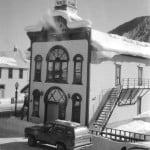

Massive Rubber Deposits Authenticated at Snodgrass
(Crested Butte) What might be the largest rubber vein ever detected was unearthed under Snodgrass Mountain near here Friday. The incredible deposit, which local geologists say has been in the ground longer than coal and molybdenum, measures roughly 10,000 acres and stretches into Delta and Pitkin Counties.
Surveyors mapping Snodgrass for yet another proposed ski are expansion scheme say the “ore” is of extremely high quality and is rarely found near coal or silver in this vicinity. They expressed surprise that so much of the valuable commodity was just lying around on the ground near the portals.
“Upon further investigation we discovered massive caverns whose walls were carved out with pure rubber,” said one surveyor. “Sushi quality rubber. After roaming through these perfectly symmetrical hallways, tunnels and caves nobody much wanted to survey anymore. We were all having too much fun bouncing off the sides of the cavern and collecting specimens.”
As might be expected the announcement sent shock waves through the mining industry. Pay-Max, a giant mining company with many local molybdenum claims quickly sent top executives to have a look. Already they are insisting that they retain all rights to Snodgrass and Gothic Mountains, Red Lady and Teocali as well as Crested Butte Mountain, The Bench, Kebler Pass and Lake Irwin. A spokesman for Pay-Max told The Horseshoe that if the strike is “half of what it appears to be” residents should expect to see an assortment of satellite operations on the works by spring.
“Here we sit watching molybdenum prices and someone stumbles across the largest rubber reserves on the planet. It just proves that the rich were born rich for a very good reason,” smiled a fidgety Pay-Max executive, who said he didn’t like high places.
Meanwhile over at Crested Butte Mountain Resort (CBMR) plans to expand anything are at a standstill since one of the cast of corporate thousands reportedly forgot to secure the mineral rights to the Snodgrass-Gothic Corridor (SGC) from the Department of the Posterior (DOP).
“We have one executive director who has nothing else to do but watch the earth move and the snow fall,” said an angry ski boss. “What was she doing? Skiing?”
We attempted to reach the DOP late this morning for a comment on this latest episode but everyone had already gone home for the day.
The ski area plans to fight the mining interest saying that the extraction of rubber from below the surface is not compatible with existing use of the forests. They say the rubber mills alone would adversely affect smooth slopes and ski mansion foundations.
“Consider if you will the detonation of dynamite all day long and the sucking sounds of the heavy machinery used to pull out the rubber ore,” said a ski source. “How did you think they harvested rubber, from trees?”
– Uncle Pahgre


