 All Entries in the "Lifestyles at Risk" Category

Steeple in the Sky, Ouray

Saint Patrick’s steeple in vertical confederacy with the San Juans
The Cigarette Roller: Surreal Redemption
“We lost Davey in the Korean War and I still don’t know what for…don’t matter anymore.” – From the song Hello in There by John Prine
It was July of 1967. Everything was changing at once. The Vietnam War, Civil Rights, the Counter Culture, music, hair and fashion were raging, all with a pinch of bombed out chaos and pound of foreboding just a breath away. Psychedelic and far out! Laugh-In was full throttle as was the Ho Chi Minh Trail. It would be two summers before the Black Panthers, the Moon Walk and Woodstock would grace the stage.
The Cardinals and the Red Sox would meet in the World Series that fall. At least that seemed normal.
Having just graduated from high school in May, my life was on stimulation overload. As a fortunate son I would be going to college in the fall while many friends were getting drafted into the army and sent to a small Asian country called Vietnam to fight against godless communism or something like it.
Life was new and exiting but tainted by the inconvenient reality of going to war. Maybe my real fear was getting plugged into the mad, mindless military machine. The future they had promised us had come down to the bloodless draft lottery and those pasty-faced, warmonger humanoids on the draft board. It’s the patriotic thing to do, isn’t it?
Several of my older friends had already come back from a year in Southeast Asia. They seemed different and often stayed pretty much to themselves. A few looked for excitement in Southern Ohio and found little after the pace of combat, the great smoke, carrying a n M-16 to the village, the thrill of the exotic, the thrill of being 20 years old and already a witness to the most hellish inventions of men. They were all just kids. None were prepared for what awaited them.
Most were hung-over from the US military cocktail. Those of us who remained stateside had no idea what combat veterans had lived through and how they survived in the jungle.
Despite a pseudo-inspirational Catholic education I had already been fired from two summer jobs when I got hired at Kitty Hawk Golf Course to mow greens and rake out sand traps. My first failure with the work ethic was in a dismal, downcast factory where I built dryers and dishwashers all day. The second was in a suburban department store where I sold dryers and dishwashers all night. It was clear that I did not have the wardrobe or the wherewithal for Lyndon Johnson’s Great Society. That’s just the way life is. If all else fails maybe a few years in the army would straighten me out.
The golf course was so green and precise at sunup. The mist hung in the trees like my last morning dreams, giving off a fresh sense of well-being.
My first day working at the golf course was actually quite pleasant. The bosses were cool, happy. Although showing up later than 6:30 was unforgivable there was very little else expected of the workers there. Mow your greens, change your cups, rake your sand traps. Stay out of the way of the golfers. My supervisor, Marian Zowolski, the head greens keeper, was a genuinely nice person. His boss, Robert Plant (not from Led Zeppelin) was on his last year or so before retirement and dreamed of weeknight Reds’ games, winters in Florida and, after 35 years of getting up in the dark, of sleeping well past 5 am on the weekdays.
After lunch, a celebration generally extended by a pickup football game, most of us were banished to the sand traps where we would be left alone for the remainder of the day. We loafed. We could see the silhouette of the boss cruising in his Cushman, almost blind with those thick glasses hanging off his nose, his pipe leading the way. We knew he couldn’t see us or maybe didn’t care to look. Don’t rock the boat.
In addition to regular employees, Kitty Hawk enjoyed the services of a crew of men from the local workhouse. They would show up about 11 am, work for a short stint, eat lunch, work a little more and leave for the day. One of these guys was named Joe. He was friendlier than the others and was missing his left arm at the shoulder.
One afternoon in the wind and the sand he became our hero.
There were four of us working in the sand trap that day. My friends Phil and George, Joe and myself. The wind was howling as black clouds gathered ready rain. During the first of a series of breaks Joe pulled out a pouch of rolling tobacco, skillfully manipulated a gummed cigarette paper, filled it with tobacco and rolled a perfect smoke…. all with just one arm. He flipped it into his lips and looked at us for a light. We stared in quiet surprise, in adolescent awe, in curious approval of the magic we had witnessed.
“Wow, man, that was incredible,” said Phil, careful not to dwell on the lost appendage. “Where did you learn to do that?”
Joe looked at him without taking offense.
“In a ditch in Korea,” he snapped, not angrily.
About a week later, during our daily lunchtime football game Joe opened up to Phil and I. He had played ball in high school before his father had died and he had to skip a college scholarship and go to work. Soon he was on the field with us, a one-armed quarterback who threw with power and precision.
“You don’t need two arms to play quarterback,’ He laughed. “I’m just an old Briar hopper,” he said. “Family’s from down around Portsmouth, before that Kentucky…and I can still throw a football,” he smiled.
“You still got it, Joe,” said Phil
He was the only one of the workhouse crew that talked to us. One rainy morning in our break house he told us he had lost his arm in the Korean War. Joe had joined the army at 18 figuring on spending his tour in peaceful Okinawa. When, after countless border skirmishes North Korea invaded, Joe, our cigaret roller, was one of the first to be sent to Korea.
Two of his high school buddies were reported as missing in July 1950. Joe saw action as part of the 24th Infantry Division at Taejon. He retreated with the badly rattled survivors so as to regroup near Pusan.
“We was just teenagers with a bout 8 weeks basic training,” he explained. “Our equipment was nothing. We couldn’t even stop a wheelbarrow much less a tank. They sent us there to slow down the North Koreans. Bang-bang, you’re dead. We slowed them all right, but it cost half the regiment.”
Joe stared into space.
“It was murder. 400 poorly trained GIs with outdated weapons against the what seemed like entire North Korean Army with state-of-the-art Soviet tanks,’ he finally gasped, turning his head against the wind and sand.
“Many of us went to Korea, not because we wanted to but because, I guess, we felt we had to go. You have to understand the times. Some of us came back fine. Others didn’t come back at all. Some, like me, left a little part of themselves there.
After the landing at Inchon the United Nations’ troops charged up the peninsula all the way to the Yalu River. Then in November 1950 the Chinese began a mass offensive, swooping down on United Nation’s positions, systematically killing the wounded as well as many unprepared soldiers who believed that the war was just about over. The North Korean and Chinese armies marched south precipitating grim, gory house-to-house fighting in Seoul. The deployment of nuclear weapons was considered in far-away dry martini Washington, while sweaty highways clogged with millions of refugees provided the apocalyptic scene up and down the Korean Peninsula.
Hell, a pack of rolling tobacco like this would fetch a pretty penny in Korea in them days,” said Joe. “It was like the end of the world.”
Joe survived the next 8 months up and down the peninsula. He lost his arm during the Battle of Kapyong 23rd April, 1951. Joe had captured three Chinese prisoners who had surrendered to the UN in hopes of repatriation to Taiwan. While several of his fellow Marines favored executing the enemy soldiers Joe protected them until they were interned at Koje Island with 60,000 others.
“When I met these three Chinese fellows: I didn’t talk no Chinese and they just smiled and gestured peacefully, happy to be herded away from the front lines.
Almost immediately after returning to his unit he was hit.
The Chinese had again come out of nowhere. A human wave of attackers, many without weapons, advanced on his position as ammunition dwindled. An air strike was called in to avoid being overrun. That’s when he lost consciousness. Two days later he woke up in a thirsty ditch surrounded by mounds of dead bodies. It was then that he discovered he was short one arm.
I had a pouch of tobacco and two cans of K-ration peaches,” he told us. I ate the fruit and rolled up a cigarette.
“In the wind?” I asked
“In the wind and the bitter cold, he laughed. “I couldn’t believe I had not frozen to death out there. I figured I was granted another life.”
Later that afternoon Joe was picked up by a contingent of Greek troops patrolling the terrain looking for survivors. Most of his company had been wiped out. Later that evening a MASH doctor saved his life on the operating table.
“I’ve never told anyone my story,” he said sadly. “I figured nobody would much give a shit. Most people from my part of Ohio didn’t know Korea from caramel corn. But they damn sure knew Captain Kangaroo, Betsy Wetsy and Dr Seuss. It was all nice and pasteurized for the people back home. For us it was minute-to-minute hell. They didn’t really understand the heroism or the fact that so many bugged out – broke and ran.
“And let me tell you about Douglas MacArthur. He was a big showman. He should have been on “You Bet Your Life” or Sid Caesar. We were convinced that he cared more about his pipe and his stupid little dog than us, but he was a gifted general – look at Inchon. Maybe if the hotshots in the White House would have listened to him the war might have ended quickly…or maybe the world would be ashes. MacArthur never spent so much as a night in Korea preferring to run the war from Tokyo.
During the early Cold War the people back in the USA were basking in the dimly lit victory against Germany and Japan, having babies, watching black and white TV, madly in love with muscle cars, afraid of the Bomb and watching the Hit Parade.
“In Korea they had this thing they called psychological warfare or brainwashing, “ Joe said. “There were lots of prisoners on which to practice. A new world was on the horizon. Would it be dominated by the East or the West? Or could these conflicting ideologies be better explained and brought to a boil on “I Love Lucy?”
When Joe came home he worked an army desk job and realized that very few of his countrymen gave a damn about Korea. The answer came easily to the shrink at the veterans’ hospital:
“Stop drinking and the dreams will go away,” he had said. That was easy enough. Sure. This clown had spent his tour in giddy, post-war Europe but was now analyzing people who had just come through hell.
Joe quickly realized that it was impossible to explain anything to anyone who had not suffered the fighting. He got married to a girl from down around Portsmouth and they had two kids. He couldn’t relax. He drank to calm down. First it was with fellow vets, then alone. Peace evaded him especially in his sleep. It all came back to visit him no mater what he did to head it all off and preserve his new life here. Then he talked to us about Vietnam.
“Don’t buy into that shit boys.”
That night when the dreams came they were in different colors than before. Joe distinctly remembered boarding an airplane for Korea. He felt himself climbing the stairs and taking his seat. Then lift-off. He felt some pain in returning but the flight was a release. It was as if he were doing the flying rather than the plane. When he showed up at the golf course the next day he was quiet and reserved. No jokes. No football at noon.
Joe got out of the workhouse the next week and didn’t show back up at the golf course until the end of the month.
“Ima going to Korea,” he said, “and bring back an old friend. I’ll miss you boys. Maybe when I come back I’ll apply for work out here.”
Joe was facing his demons, a hillbilly smile tattooed onto his face.
“Imagine my arm just laying there for all these years wondering why I have not come back for it,” he whispered as he shook my hand goodbye. “You know how bad I feel.”
***
That night dreams came easy. The plane landed and Joe walked out into the Korean cold. Everyone was smiling. They were the same people that had loaded him on the medivac 20 years ago. The same nurses who had dressed his wounds and read to him were now floating all around him. When the call for attention was sounded he couldn’t remember how to respond. He tried to return a salute but his right arm would not rise to the occasion. Then he fell into a deeper sleep or so it seemed. When he regained consciousness he was out in a field, under a cliff, rolling a cigarette.
“You! What do you want? Where have you been?” said Joe’s arm. I see you still have your shoulders and your legs and, oh, and my other arm.
There were no words of response. Joe looked around. Everything was exactly the way he remembered it minus the artillery and the Chinese. He tried to gather himself but the arm wasn’t having any of it.
“I’m so sorry I left you behind,” said Joe. “It was all too terrible and I could not find you when they pulled me out. You must understand…I did not want to lose you. Every day since I have awakened to contemplate my demise. You are not the only one who has paid the steep price.
You! You have been back home living the life while I sit surrounded by clay and a burnt battlefield. I thought about leaving but where would an arm go all-alone?
Why did you leave me, Joe? Was I not a good, honorable friend? Did I not help you through life? Was I too short or too long? Didn’t you love me?
Joe thought about a drink…just one to settle down. No, that did not appeal to him. All he cared about was reconciliation with his long lost limb and his young family.
“I’m sorry I left you but I’ve come to take you home,” said Joe, the words coming out like they had been rehearsed a hundred times.
“Home?” said Joe’s arm. “Home.”
“We could leave today,” started Joe
“Not so fast,” frowned the arm. “Things are different now. I have a life here without the rest of me. I can’t just…”
Please come back with me. I need you to be whole,” said Joe.
“What if you go off to war again? I might get lost again,” sighed the arm.
“That won’t happen,” said Joe.
In the morning Joe awoke after a full night’s sleep. He was tired after talking to his arm far into the night. Having convinced his appendage that at least a “temporary” reunion was best for all the two buried the hatchet. He was happy to be home, to be whole once again. Yes, my friend was whole once again.
I ran into Joe at a Reds’ game in 1991. He introduced me to his wife, Flo and his two teenage boys. They had the look of one very happy family. He said he’d tasted his last drink some 15 years ago.
“Do you still roll ‘em, Joe?” I teased.
“No. I gave that up. My family doesn’t want me smoking.”
I was drawn to his prosthetic arm, which, although it was a sweltering day, was partially covered by a shirt sleeve.
“Oh, and I guess you’re wondering about my arm, heh?”
“Actually I was wondering about your metamorphosis, your…”
“My meta what, college boy?
“Your redemption. Your deliverance…”
I’ll have to credit my left arm for all of that,” he smiled. “You know it was there all the time. I just didn’t look for it the right way.” – Kevin Haley
My Favorite Beach Towns in South America

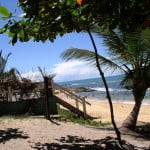
An array of mind-boggling beaches awaits the adventuresome at Tyrona National Park near Santa Marta, Colombia
Anybody can spend a boatload of cash and go to Rio. Another option is to fork out for a brochure secure, mono-cultural, claustrophobic cruise where passengers can rub elbows with same bedfellows in a sterilized atmosphere.
Sure Rio has great beaches…and exorbitant prices, crowds and lots of pickpockets. The violence is cordoned off from the favelas (slums) to the beaches but enough seeps through to create separation from the hunger dens. Before you go ask yourself: “Why would anyone with any sense go to Rio when there are so many other gorgeous, untamed and idyllic beaches within a bus or boat ride up and down this magnificent coastline.
Having spent a good deal of time beating feet in South America I have seen a lot of empanadas and a lot of sand. The following beach towns were chosen to review because they were beautiful and culturally enlightening. They are places that, due to access, overgrazing, sprawl, weather and pollution are disappearing in North America and many parts of Central America
In South America, where life moves a bit slower and a precarious adventure could be right around the next palm tree, the beaches represent a lifestyle that has not gone away. Whether you watch people drink mate in Uruguay or rum on the Colombian Caribbean a Neptune connection is clear. There are still seascapes seemingly untouched by man. There is undisturbed sand. There is warm, salty peace in the middle of the day.

Town Beach at Santa Cruz Cabralia, Brasil . Easily one of the most enjoyable spots on the globe.
Santa Cruz Cabralia, Brasil
Here is where Pedro Alvaras Cabral and his Portuguese thugs made the initial landing in the New World, although nobody seems to give a damn. There is little plaque, a 16th Century church and a great little restaurant called Cabralia 1500. Otherwise it’s just a sleepy beach town of surprising dimension.
Only half an hour by bus from the airport at Porto Seguro, two large families, one white and one black, who take care of problems quickly and efficiently, effectively monitor Cabralia. As a result there is no noticeable crime (I never even saw a cop in three weeks) and an overall atmosphere of tranquility.
The beaches that run on empty for miles and miles are of fluffy sand, peppered with baraca bars, eateries and houses to rent for the season. The surf is pleasantly gentle after spending time on the Pacific. The fishing is good.
Besides the drama of the Atlantic at one’s feet, visitors will enjoy wide-eyed Rio Joao de Tiba. A primitive ferry connects Cabralia to the even more serene beaches of Santo Andre and Santo Antonio to the north.
Time for lunch? Bahian cuisine is wonderful if not varied. Yesterday I had fish with beans and rice and salad. Tomorrow I will enjoy fish with beans and rice and salad. Today? I’ll have the fish with beans and rice and salad. No need for a menu but nobody’s complaining. And if you want to sling a few compliments on the way out the door mention the beans. That is the pride. Anyone can make fish, rice and salad. It is the steaming frijoles that separate the mystic from the mortal in the kitchen.
Monkeys up river, lobster boats bobbing in the bay, smiling people, cold beer and samba…and the experts at Lonely Planet “don’t think it’s worth staying overnight”. In a sense they were right. I spent three weeks.
If you want to head further north to the amazing city of Salvador from here you can take a series of inland waterways and buses until you reach Olivenca and Itacare two more developed, yet incredible beach stops as well.
Tayrona, Colombia
Perhaps the most beautiful beaches on the continent can be found in the state of Magdalena at Tayrona National Park, which skirts the Caribbean and the Sierra Madre de Santa Marta. The lowland heat can be sweltering but the mountains (less than 35 miles from the Caribbean) reach 18,000 feet in elevation, Tayrona is made up of over 20 superb beaches such as Playa Cristal, Bahia Concha, and Palmarito. Along with the eye piercing landscape these locales also feature a healthy mosquito population in rainy season. The rest of the year (November through April) basic precautions should be taken at feeding time (except in the case of travelling, cold-blooded vampires).
The park, with its rainforests and classic tropical beaches can be reached by boat from Taganga, a questionable pseudo-hippie town where bad pot and petty theft reign. Go early in the morning before everyone’s awake.
On the other side of Santa Marta there is Rodadero, the up-market strip of sand with high-rise hotels and a reasonable beach scene. It’s a great place to get away from all this infringing nature that can certainly be overwhelming. Typical of most civilized beach scenes in South America, Rodadero beats the Santa Marta town beach/harbor, which, unless you enjoy trash in the sand and last night’s stale aromas, is best avoided.
The evening in Santa Marta features a slew of great restaurants and plazas, impromptu music, venders, dancing and stray dogs sadly looking for a meal. Santa Marta is the oldest city in Colombia and the second oldest in South America.
One exhilarating side trip is the lovely village of Minca, which sits at about 2000 feet above sea level and offers some respite from the heat. The no-see-ums await your arrival with a baptism of fire but citronella keeps them off. Near Minca are several hikes to waterfalls, coffee farms, world-class bird watching and anthropological jaunts that further showcase the contrasts of nature and remarkable bio-diversity. Pico Simon Bolivar at 18,946 feet is part of the highest coastal range in the world but due to inversions, storm clouds, and tight proximity is almost never visible.
Back to the beaches (mountain people have to spend some time talking about the mountains too) the tide is in and it’s time for a swim.
 The warm water waves at Playa Las Pocitas run 24 hours offering surfers and swimmers a paradise of sand and sun. Solitude (depending on the season) is just a ten-minute tuk-tuk ride from Mancora.
Mancora, Peru
On the Peruvian coast, near Ecuador, where the Humboldt Current finally turns out to sea, we find warm Pacific water and arguably the best langostinas (prawns) in the world. The surfing is free and you can take home a kilo of these giant shrimp for $7 (if you get to know the local fishmonger). A distinctly young crowd is drawn to this spot where 4-meter waves are not uncommon but safe swimming is the norm.
What may not be so secure is a cab ride from Tumbes (closest airport) about 80 km north. My driver, a likeable fellow named Jesus, sped through town after town at 70 to 80 miles per hour on the way down the night time coast. He only slowed down to 50, so as to point out a few landmarks, when we passed though his village.
Upon arrival in Mancora it is apparent that the Pan-American Highway runs the show. One can actually sit at an outdoor locale and dangle his flip-flopped feet onto the highway – just watch out for the big rigs coming up from Lima!
But back to the beach: My bungalow is located in a serene spot on Playa Las Pocitas (with a pool just five feet from the sand), a 75-cent tuk-tuk ride into town. The beach here is excellent and there are no people in my dreamy post-Semana Santa destination. Just me and the fish (and a few fishermen who insist on selling me fresh lobster for $2.50 a pound).
One night I prepared shrimp scampi for two restaurant owners, a Miraflores cooking show host and a food critic for the Lima daily paper. Nobody had much too say after the plates hit the table. I’ve always been told that was a good sign. Note: Several of the diners are still alive today!
Near my digs is Donde Teresa Restaurant, which serves creative cuisine and has a nice pool, just steps from the bar. Diversions include tropical cocktails and maybe even a knife fight with the owner over his beautiful wife.
35 km down the coast at Lobitos the ocean water is colder than the beer. Turning east one enters a massive desert that doesn’t look as if it could support so much as a horny toad.
Inside info: The Kon Tiki, way up on the hill with views of the whole area is hands down the best lodging bet for the weary traveler.

Cold, cold Pacific waters may limit the activities at Quintay, Chile but the seafood more than makes up for any inconvenience. Miles and miles of open beaches and pine forest views of the South Pacific are remarkable.
Quintay, Chile
Only 25 km collectivo ride from Valparaiso, Quintay offers a complete escape from the hectic pace of Santiago and the coastal cities. The countryside is beyond belief with endless cliffs and pine forests feeding into surreal panoramas of the sea. The collectivo driver dropped me two miles north of town and told me I’d love the walk into the village which is one-street pleasant and sells everything from live chickens to tacky beach towels.
Most of the other tourists are Chilean with a few western Argentines thrown in. Long walks await the visitor in search of solitude while the ocean dictates tomorrow’s priorities. Although the beaches are wonderful the water is very cold.
Better to enjoy las frutas del mar than to wade into in her icy waters. The surfing is best south but be sure to wear two or three wet suits. Great restaurants (the best I found in Chile) await the hungry at with exceptional service and ultra-fresh yellow fin tuna and an assortment of local shellfish.
The black eel ceviche is beyond words, especially with a freshly baked baguette and a cold beer. Besides the fine eateries, and some little kids selling shells on the overlook, there is little commerce going on today.
Probably the least spoiled of all the beaches in the region, Quintay remains in the sphere of Valparaiso, which, due to the construction of the Panama Canal fell from favor in the shipping industry and has never fully recovered. In downtown Valparaiso be attentive as there are lots of people standing around wondering what you are carrying in your backpack or suitcase.
Up on the Ceros it is all quite cosmetic nouveau leaving very few barrios in the middle. You’re either rich or poor with little in the center. Valparaiso looks and feels a bit like San Francisco or Vancouver. Quintay offers its own salty reality.
Punta del Diablo, Uruguay

Although a bit remote (from Montevideo) the beaches surrounding the town of Punta del Diablo, Uruguay offer big surf, fine sand, rolling dunes and marvelous wooded areas.
There are no less than 9 magnificent beaches within an hour’s walk from the central grocery store here in this now discovered gem. Four and a half hours by bus from Montevideo and 45 km from the Brasilian frontier the town is called “poco rustico” by smiling natives. The catch runs from white corvina to shrimp and everyone serves overpriced pizza. Tip: Try the Milonesa and the empanadas at what was the Ruta del Sol old bus station. Relax and digest, then take a walk to the old lighthouse (one hour) or journey to the unspoiled Playa Esmeralda or Santa Teresa National Park, roughly two-hour hikes away.
Once a fishing town and artist colony, this fragile place gets mobbed in January and February by mindless youth from Argentina and Brasil. The best time to enjoy the place in a normal state is December and March when all the restaurants are open but the tourist impact is lightest. After Easter the place rolls up the sidewalks (which it has not yet built), boards up the windows and goes back to Montevideo to watch futbal and eat red meat for the winter.
Getting around is best by motorcycle but me feets be me only carriage and all the walking sure didn’t hurt my physique. Bikes work well as to large sticks to discourage aggressive dogs after dark.
Yes, the surfing is good. Rivero is safer. LaViuda (riptides) is a good way to end up in China before breakfast. Young, thin, female novice surfers in need of instruction should contact: Tom Thompson, Certified LSMFT, early in the day.
With a year-round community this might be nice place to live. Interestingly the pavement ends near town and the streets remain dirt at last report. If this place had trees near the beach it would be perfect. Don’t buy into the South part of South Atlantic, since the winter temperatures drop to 40 degrees and the influence of the constant sea “breeze” puts one to wishing for those balmy February days in Gunnison.
Budget lodging suggestion: Hostel de La Viuda. Great owners, pool, about 15 minute walk from two superior beaches.
Hiking Trails Widened For Growing Population

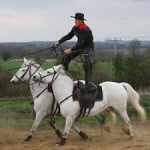
Melvin “Two Horse” Toole tries out some of the wider hiking trails set to open this spring
(Denver) The U.S. Department of Posterior has announced plans to widen existing hiking trails by next summer. The move is in compliance with current statistics as to alarming obesity in this country.
With over 40% of the population classified as obese and another 30% deemed overweight, the forest service says it is only responding to the needs of the majority. The agency has decided that if fat people want to hike they should be given the opportunity.
Common sense might indicate that if people took a weekly hike they might loose weight.
“We are not about to be bogged down by logic,” said a USFS official. “We don’t need people getting stuck on narrow trails or destroying the natural landscape. Wider trails don’t hurt the thinner mountaineer.”
The trails will be expanded to about the size of a sport utility vehicle and groomed so as to play down vertical relief.
“We realize that some of our constituents are larger than your average SUV but we can’t tear up the entire forest,” said one source who requested anonymity. One problem is that federal agencies are uncomfortable using the F word, preferring to describe this portly clientele as corpulent, beefy or well-upholstered.”
Fortunately, according to local sources people who live in the Rockies are in better physical shape than their fellow citizens in, say, the Midwest where the potbelly rules.
“It’s a lot like the millions of unused handicapped spaces and the federally imposed alcohol levels for motorists,” said the source. “The feds respond to whatever special interest screams the loudest.”
In developing countries, where people spend their days trying to get enough to eat, hiking trails are ample at present. Nutritionists, however, fear a drastic change in that status as fast food concerns begin popping up in African and Latin American capitals. Trails in many of these locales are often groomed and maintained by government military vehicles chasing guerrillas through the jungle. In other nations, where fat is a virtue, the wealthy wander well manicured gardens or spacious avenues, insulated from the peasantry.
Many of these pleasant redoubts were constructed with foreign aid funds earmarked for the great unwashed.
“The first order of business is to study general usage of the trails by the group in question then start removing snow,” said the USFS spokesman, “but right now it’s time for lunch.” – Suzie Compost
SNOWBOARDERS MUST WEAR HAIR NETS
(Crested Butte) Snowboarders on the slopes here will be instructed to wear hair nets while snowboarding as of February 20. The action comes on the heels of numerous complaints as to the behavior and activities engaged in by this developing minority group.
“It has nothing to do with personal hygiene or long hair,” said a spokesman for Crested Butte Mountain Resort. “It’s…it’s a health department code thing, or something. We couldn’t ignore all the complaints. We almost lost a pizza and coke group from Moline this morning,” he gasped. “Hey, running a major ski area ain’t no stroll in the park.”
Critics of the new regulation say that the kids are all right.
“The snowboarders could be out robbing convenience stores or stealing cars,” said Moms Maplethorpe, 97, the oldest semi-living telemark ski instructor. “These are nice kids out to have a good time. If they threaten the flatlanders by their lifestyles, that’s just tough guano, baby.”
As of yesterday a lengthy compromise has been proposed which calls for separate but equal slopes for both the snowboarders and the skiers at peak times such as Christmas and Spring Break. Contact at Paradise Warming House would be limited and potential lift partners would be thoroughly screened by the lift-operators upon boarding lifts.
“Something has to be done before the situation deteriorates even further,” said the spokesman. “Our status in the real estate world is in jeopardy.”
Other ski areas have undressed the problem simply by building bigger and better lifts, as in the case of Vail and Aspen, which have built support facilities such as Beavercreek and Buttermilk to handle the overflow caused by the separation of the two opposing concerns.
According to lawyers for the snowboarders, who refuse to take the matter lying down, this is a clear case of harassment. A class action suit is pending, dude. -Uncle Pahgre
Bathrobe Day at Monarch Slated for February
(Garfield) The fifth annual bathrobe ski races and snowshoe rally will be held at Monarch Ski Area February 2 – 5 according to unreliable sources here. Any skier arriving in a bathrobe can compete for prizes with the top ten qualifying for the grand prize of a night — a $400 bar tab in Salida.
Interested participants should report to the bunny hill no later than 8 am on the designated ski days. Skiers should bring all necessary athletic gear, including eye protection and sun screen. Approved accessories including gloves, face masks and hats will be provided.
Otherwise it’s just bathrobes!
All entries will be reviewed at race time by judges encased in wool, goose down and Goretex. Herbal stimulants, open containers, dogs, body paint, suggestive tattoos, and leg coverings are prohibited as are knee pads, lip balm, tarnished political slogans and New Age underwear.
Monarch shocked the ski industry in 2009 with the introduction of bathrobe skiing in Colorado. Although popular at first, people quickly lost interest in light of nude skiing and other questionable diversions common to the winter sun. The actual sport, which requires both taste and dexterity, has been saddled on the back burner since the Winter Olympic Committee banned the event in 2010.
“It just proves that skiing is part athletics and part fashion show,” said an organizer of bathrobe skiing here. “Was the Olympic Committee afraid of its image or just a little skin? Maybe both.”
For more information contact any member of the pajama patrol.
– Marlena Diaspora

