 All Entries Tagged With: "Rockies"

US Selling Clean Air to China

Is the the United States secretly selling Rocky Mountain air to Beijing? The residue of such a deal has been directly linked to closed door sessions since last year. The above photo of Silverton, Colorado may look the same, but as the trained eye can see the air quality has diminished. “The air just seems thinner and less buoyant,” said one local.
“Take Me Out to the Ball Game” relegated to Designated Hitter Status?
We start professional baseball games in the United States with The Star-Spangled Banner, which is certainly appropriate and in many ways showcases our pride as a nation. But what happened to traditional “Take Me Out to the Ball Game” the song that used to grace the Seventh Inning Stretch in most parks. Now it seems that we have embraced another round of robot jingoism with the playing of God Bless America. Where is the separation of church and state…you know from the Constitution and all?
In many stadiums we no longer hear a classic baseball tune vital to our dwindling culture and replace it with a one-dimensional, quasi-religious chant that does not take into account the citizens who don’t buy into the Christian god and may be losing faith in an 3.2 America as well. Are we goose-stepping our way to first base when we should be rounding third on the way to home sweet home?
Mass produced mega-theocracy is not what our deist founders had intended. Mindless jingle patriotism cannot stand up to adversity. A walk is not as good as a hit.
Trump-free accepted by Merriam Webster
(Orlando) The term Trump-free has been included in the annual updated version of the heralded dictionary, Merriam Webster, due to a spike in common usage over the past year.
This particular dictionary is accepted as the ultimate source for legitimate words, spellings, definitions and grammatical uses. Only valid and vernacular words are included in this roster of English words
Joining caffeine-free, lint-free and gluten-free among others, Trump-free will be listed alphabetically and referenced in the back of the reference book.
Most commonly found in conversations about the 2020 presidential election, the term has waded into the conflicts between money and the environmental state of the planet. It is often used as a predicate noun or even a weak participle but can be applied to a plethora of situations where the speaker embraces the invisible or the lack of presence.
“Who’s she?” chanted red-hatted supporters at a recent election rally. “Lock her up!” they demanded as their truth-twisting idol flexed and fumbled at the podium.
Most not comfortable with books demanded to see the emails of this Webster person, whoever she might be. Many privately whispered that Webster was probably an alias and that she must be Hillary Clinton or Elizabeth Warren.
Meanwhile the Trump base remains disoriented, confused over the presentation of their hero as an absent variable in the midst of crucial ingredients. Rather than a status of top dog the quasi-terminology paints the president as non-existent, suggesting that a situation might be an improvement sans Trump than with him.
“These throwbacks quote the Bible and the Constitution when it benefits them but most have never read either document. It seems the dictionary has fallen victim to the same indifference and ignorance worship,” said one of hundreds of Democratic presidential candidates. “I for one have never seen anyone successfully cherry-pick a reference book like this but there’s a first time for everything.”
– Gabby Haze
Math Corner #611
Which is higher: The number of Democrats running for the presidential nomination or the number of runs it takes for the Colorado Rockies to defeat the Los Angeles Dodgers? Does the victory of June 28 mean we’re off the Dodgerschnide?
BONUS: What is the average number of worthless passwords imposed on the average consumer in the US today?
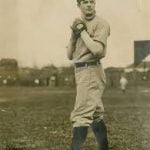
Take Your Base — I’ll Take Mine
A Critical Analysis of the National Sport
by Quentin Parquay, Royal Legion of Athletics
(Editor’s note: Mr. Parquay, a literary critic with The London World and former fellow at Oxford University, has been dedicated enough to sit through rain delays, extra-inning games and traffic jams so as to compose this international peek at baseball in 2015. Although well versed, drifting from Kahlil Gibran to Oscar Wilde, Parquay admits he possesses a limited knowledge of the game having experienced his first contest only last week. The following expose is reprinted from The Hamilton Hemorrhoid, a well- respected, often painful British sports bulletin. It has appeared Steamboat Magazine. Unlike golf baseball was never immortalized by George Bernard Shaw as (to paraphrase) “a pleasant walk ruined.)”
Baseball: 1.) a game played with a bat and a ball by two opposing teams of nine players, each team playing alternately in the field and at bat. The players at bat, after hitting the ball in fair territory must then run a course of up to four bases laid out in a diamond pattern in an attempt to score runs. 2.) a questionable competition of North American origin that promotes bad language, hooky, jawing, bad manners, superstitiousness, and the spitting/chewing of tobacco. 3.) the ball used in the game of baseball.
My interest in the field of baseball began when I first ran across “Casey at the Bat” in 1990. Although the epic poem had been around for decades it had not circulated through the offices of a man who dissects playwrights and Gothic novelists. I hope the following will be entertaining to the reader and beneficial to the fringe fans and the arts as well.
THE FAN
We Brits cannot afford to be critical of abhorrent fan behavior after the escapades of our cohorts at most football (soccer) matches from Cornwall to Kent. The counterpart American aficionado is actually quite calm and well behaved compared to the football fanatic. He only becomes dangerous toward the late innings after drinking cup after cup of overpriced light beer.
The aesthetic distance between the audience and the main characters is of special interest to anyone wooed by the theater. The left field character, for instance, is closer to the audience and can be more objective about how his lines are perceived in the grandstands. The thrower (pitcher) cannot gather this same kind of feedback. The audience however is well in earshot of various asides mouthed by fielders and the funny-dressed men behind fourth base that you call home plate.
The fan is most often in sympathy with one team or the other. He is most vocal at points of tension between singular characters or sometimes with entire groups of players. He is prone to embracing myths and often makes references to the supernatural as he metaphysically munches on hot dogs with onions and mustard and burnt peanuts, salted in the shell. His metaphors can be figurative, trite and/or utterly classic. His hyperbole is common only to the colonies. In later innings the fan gets swept up in the flow of dramatic monologue that results in comic relief or didactic tragedy.
THE CHARACTERS
Reflecting on the scene behind home plate we see one over-dressed character (the catcher) that carries with him a host of mandatory duties. He must not only catch the ball each time it is flung at him, but he must field difficult “pop flies”, cover his base, backup first base and throw down to second in the event of an attempted steal attempt. (We will discuss thefts and squeezes later in this article). While there is little morality involved in the steal, the catcher is often measured by his pinpoint response to the instant plot. In the local vernacular we hear fans loudly encouraging this catcher to “gun him down” or “nail him with a low throw”. This should not be taken as anything violent. The successful application of these throws and tags can often bring down the curtain for an inning.
The catcher’s associate behind the plate is called the umpire, a living allegory who attempts to impose his own doctrine. This dark character converts acceptable language into persuasive, tight, one-syllable chants with the sacred narrative “Steeerike, Bawww or Yurooout!” Otherwise most of the communication is in sign language that is reminiscent of Shakespeare that holds the audience in awe.
Amusing reaction to the umpire often dwells on King Lear’s cry: “Thou hast eyes to see…and see not!”
The rest of the extras dress alike so much that it lends an eerie, almost robotic essence to the performance. Each of the two reams is represented by wearing its own costume. It is within the professional ranks that we find strong connection to ancient bestiaries and ethnic euphemisms with names like “Tigers, Cubs, Braves and Giants”. On the local level this practice has been methodically embraced. Long socks may represent the desire to return to simpler days while “softball” fashions clearly illustrate a yearning for a
modernistic, almost impressionist, rendezvous with the keystone future. Significant action generally soils the players’ costumes but adds a delightful descent from the loftiness of pre-game ceremonies.
THE PLOT
Everything happening on the diamond is synchronized into nine innings where one team tries to outscore the other by whatever means available during the scenes that add up to an act. The two teams could play an eternity if the thing reaches extra innings. Imagine a summer day and a pastoral scene in right field where a player is responsible for catching the ball before it hits the ground, then hurling it back into the infield (main stage). He must do this before any players “tag up” and make their way around all four bases and off the set and backstage into the dugout. If the ball is caught cleanly the acting batter is out and has no further lines until he comes up to the plate again in two or three innings. If the fielder misses the ball the hitter gains access to any number of bases while other supporting cast scores runs. The clumsy fielder is often then seen as a goat. Continued performances of this quality will often result in an understudy placed in his position.
The main actor and navigator of the plot is the pitcher since he initiates the action. He delivers his lines while perched on a pompous little hill 60 feet (18.3 meters) from the batter’s box. He throws a variety of pitches to the catcher aimed at confusing, overpowering and terrifying the man with the stick (bat) in his hand. The umpire then watches closely as curves, sliders and fastballs cause negative capability of the part of the person trying to make contact (with a rounded bat) with the little spinning ball. Some of these pitches exceed 100 miles (or 161 kilometers) per hour. The fastball coupled with an array of sneaky pitches often causes the batter to pop up, ground out or strike out (signified by K for some unknown reason). These activities in no way represent literary onomatopoeia since there is no sound emanating from the ball as it travels to the plate. The onomatopoeia magically occurs when the ball slams into the squatting, supporting actor’s round, oversized glove. Here we see the frontline struggle by the designated protagonist to stifle the antagonist by making contact with a fiery sphere chucked in the direction of his head and vital body parts. It is here that we see another character, the manager, wheel out onto the field angered by the exposition of the background.
THE SET
The set can be universal as well as specific to baseball. The only props are the three bases and the plate, the walls, the mound, the backstop, the dugouts (2) and the scoreboard. The size of the stage varies greatly from set to set but is always characterized by white lines that protrude from home plate to the first or third bases. These are the symbols of the action. It is the actor who brings it all into perspective.
During my last sports melodrama the hero was a young pitcher for the Colorado Rockies. His saga was one of ever-increasing pathos. He quickly extended his poetic license by hurling a “loaded up” ball at the batter’s head. Soon after he balked, a clear sign that he neglected to prepare his lines before taking the stage. By the end of the inning he had reached absurd capacities in low comedy by allowing three other actors to reach untenable positions without exiting the stage. The tone of the play then becomes one of anticipation, bordering on anxiety. The guilt-ridden child actor is sent away by his rigid master to a place called the Minors that was never described by Dante or even the unholy angels. Each summer pantomime contains endless and simultaneous dramas with characters intact. It is this mysterious show and tell that stimulates the lifelong fans of the game. How appropriate in both a literary and mirthful sense. Play Ball!
“The check’s in the mayo.” – famous promise in Dixie.

Fossils of extinct tourists unearthed at Black Canyon
Anthropologists carefully separate history’s deposits near the Black Canyon of the Gunnison
(Montrose) Rare vestiges of ancient history were on display this afternoon at the Black Canyon of the Gunnison, just east of here. At first just a dribble, the recovered data now covers two parking lots and encompasses several Department if the Interior panel trucks.
Mostly bone and hair, the exhumed artifacts are believed to be from the 15th Century, long before scientists thought tourists visited the continent. Where these visitors might have come from or what they were seeking should be determined before the summer has concluded.
“This is big,” said Ellen Mulvaney-Kelly, a forensics and space expert at the Forest Service. “We have a wide assortment of of material to sort through and catalogue. Then we’ll interface the mounds of new data with what we already have collected. That should tell us where to go for the next step.”

The cornerstone find, Pea Green Man (1996), was found when workers excavated a former organic junkyard to make room for more fast food temples on South Townsend Avenue. It is not clear whether this fellow consorted with the other ancients or if he simply strolled the Uncompahgre Plateau oblivious to his neighbors in the valley.
Kelly said the discovery has only scraped the surface and that three digs just outside the park should shed light on the 16th Century as well as the foggy periods when the Spanish were here and later European adventurers would appear.
“We wonder what the Ute people must have thought about yet another invasion,” said Kelly. “It had to have been a clash of culture, yielding very little for the tribes caught somewhere between the Bronze Age and the arrival of horses in the San Juans.”
At primary glance the scull bones found appear to be genetically linked to today’s modern tourists. Sometimes buried in tombs, with souvenirs and photographs of mountains, the mummies indicate social standing and wealth. The middle class seems to enjoy private burial plots while less distinct groups were simply thrown from the cliffs into the Gunnison River and washed away to fertilize golf courses in Las Vegas and Phoenix.
Anthropologists think most of these early guests had sophisticated transportation and even primitive GPS trackers. Indeed, the original unearthing was somehow linked to tire tracks although no information in that link has been released as of this morning.
“How else could they have had the mobility necessary to explore our back country?” asked Kelly. “Although the net gain of all the digging and rock hauling has yet to be determined, researchers think their assertions will blow the doors off traditional thinking on the subject of the first wanderers in these mountains.
Much of the human motherlode will be displayed at the intersection of Main and Townsend until hunting season. Showcased 24-7, the display is expected to give today’s visitors something to do while they wait in line to make a left turn south onto 550.
“We are proud that a find of this magnitude happened here on our watch,” said Kelly. We expect the breakthrough that we’re seeing will lead to a greater understanding of genealogical and ancestral links. Maybe your relatives are represented here. Maybe not.”
– Uncle Pahgre


