 All Entries in the "Lifestyles at Risk" Category

Halloween – A Celtic Thing
From the outside the newspaper business looks pretty basic, but it gets complicated fast. The publisher is in Brasil this week, engaged in beach frolic while the often responsible managing editor is out betting against the Broncos. That leaves me here with Freddy Kruegar, The Mummy and an assortment of zombies, vampires and skeletons on a slow news day no less, to do everything. Morbid decorations.
Let’s see here…halitosis….hallelujah…ah yes, Halloween. It seems the perfect subject matter for late October.
While the observation of Halloween in this country carries an array of perceptions and conceptions, it is quite a different experience on the Celtic Isles of Scotland and Ireland where the Hallow E’en celebration or Oiche Samhain originated. To the Pre-Christian Celts, Halloween was a sacred pagan holy day where it was believed that the spirits of the dead could return to their former life and make contact with the spirits of the living. In that ancient society, dominated by the enlightened and mysterious Druids, Halloween was an end of the summer fire feast where the gods were thanked for a rich harvest.
The Manx called it Hoptu Naa and the Welsh called it Calan Gaeaf. In the Gaeltacht of Western Ireland the people call the celebration Pooky Night, named after the mischievous Puka, a fairy of some regard. Either way it was all pretty much the same big carnival at a time of the year when the crops were in and magic was said to be most potent. In addition, it represented the mid-point in the Celtic calendar and the entry into the dark phase of the year.
The tradition of costumes originates on these islands too. Where merrymakers would mimic or placate the dead with painted faces and ghoulish attire. They were short on super hero outfits, and pre-fab plastics with accessories, so they had to rely on the magic itself to pull off their disguise. In Ireland and Scotland today many people simply done the white face paint and black robes in an attempt to continue this tradition – the cycle of birth and death in line with the order and harmony of the universe…a far cry from our commercial Halloween.
The practice of trick or treat (called mumming in Ireland) has been traced to the Celts too, as well as the Romans who invaded England. These conquerors sought to honor their Goddess Pomona, protector of the harvest, whose symbol was the apple, now an inherent part of Halloween celebrations. All of these feasts carried the unifying belief in the powerful symbolism of the moving dead, prayed for by the living
All was well until Pope Boniface IV decided that people were having too much fun. He turned the whole shooting match into a holy day of obligation where the faithful faced mandatory Mass attendance and an assortment of restrictions. The Pope could not accept the idea of a special day for all of the dead so he turned it into a day for just the blessed dead…All Saints Day. If you didn’t go along with the Pope on this one your crops would fail and your livestock would die mysteriously. Blasphemers, pontifically defined, would certainly spend eternity in the Netherworld
The Jack-O-Lantern also came from these isles but was carved from a large turnip since pumpkins were not indigenous to the Irish soil. The legend tells of a greedy gambler, Stingy Jack, who once tricked the devil and was condemned to eternally wander the earth at night. The lantern was placed outside to help him find his way and, possibly to keep him out of the flower beds, off the lawn and from peeking in the windows. The more bountiful pumpkin, used today to create the frightening, toothy faces on the jack-o-lantern, only came into play after early settlers brought it back to Europe (along with the potato) from the Americas.
Although the origins of our Halloween are clearly Celtic, Day of the Dead observances are popular in Mexico, Egypt, Guatemala, and the Caribbean. In Michoacan, Oaxaca, Chiapas and Merida, on the Yucatan children receive little chocolate sculls and families build altars piled high with food and the things the deceased loved one enjoyed in life. The altars are then decorated with marigolds to honor the dead. Pan de muertos (Bread of the dead) is baked to accentuate the feasting.
In Chichicastenango, Guatemala a massive procession begins at one end of town and strolls to the other. Along with the Jesus and Mary statues the alternative Creole deity, Rahsheeman, rides elevated through the streets. Sugar cane liquor is everywhere. Cannons are fired and bedlam is not far off. Up father north, at haunting Nebaj, the naturales engage in inebriated horse races which are quite a sight to behold (from the sidelines with a plate of Hilachas).
In Cariacou, Grenada the party starts in the evening at the local boneyard where graves are turned into bars and everyone toasts dead relatives throughout the night. Fortune telling takes second fiddle to the consumption of under-de-counta (under the counter) a fortified (99% proof) rum from Trinidad fermented with spices and reputed aphrodisiacs. Now these folks really know how to throw a party. Chevere Boo, Babies !
Reader Prompts More Than Bells and Whistles Says Judge
(Colona) Methods of reader inducement, employed by a local website to increase domain traffic, is instead goading rather than simple encouragement says a county judge here.
In addition, the albeit questionable premiums guaranteed by sanjuanhorseshoe.com may be bogus in that not one reader has received anything since 1977.
“The oh-so-many slogans gushed from the gob of sanjuanhorseshoe.com are a far cry from the bells and whistles originally promised,” Justice Mary Lee Lewis explained to a packed quartroom Thursday.
“The publishers of the gossip organ were subpoenaed ad testificandum decades ago and have only appeared today after threat of incarceration. We have them in our grasp and intend to act within the full force of what is good in this culture,” she said glaring at the defendants.
According to an aid-memoire released by the same court in 1980 the Horseshoe, then a monthly newspaper used threats, bullying, literary pressure, food deprivation, sleep manipulation, political cadres on the lawn, tedious hunter safety classes, forced grammar reassignment, electric shocks and in extreme cases…cattle prods.
“We never used political cadres on the lawn,” cried Kashmir Horseshoe, who stands to lose his 3000-acre Vicuna ranch if convicted. “They always watched from the street or alley. Otherwise, even a hint of accountability is out the window.”
Horseshoe went on to claim that most humans are stupid, lazy and needed to be reeducated as to the proper way to embrace the natural thought patterns of the cosmos.
“Forms of inspiration vary from culture to culture,” chided the judge. “Plato talked about this. So did the Tao masters and the people that discovered uses for the agave plant.
“Let’s face it once and for all: The Spanish Inquisition was never really about conjunctions, the past perfect or irregular verbs,” she said, “but it certainly fit in nicely when it came to the disappearances and depopulation of Spanish heretics and other troublemakers.
“1984 was not about 1984 either,” she choked, holding back tears amid the tensions of a highly emotional venue.
Horseshoe plans to counter sue the state of Colorado claiming political prisoner status or incompetence to stand trail, whichever is easiest.
-Uncle Pahgre
Police Visibility On Upswing

Local authorities are hopeful that an increased visual police presence will help discourage gang activities, the meth epidemic and traffic congestion in Montrose. The larger than life letters can be seen from 35 strategic spots in the city and from outer space.
Psychological Studies of Men in Public Restrooms
By Dr Joyce Bothers and Dr. Ruth Westhymen
Forgoing concern that the following behavioral, literary renderings might fall into the wrong hands, (i.e. the illiterate, the young, the elderly), here is the next segment of “village by village” sociological roundabout, searching for the fool’s paradise on the edge of ecstasy.
EXCITABLE: Shorts half-twisted around, cannot find hole. Rips clothing in stressful dilemma.
SOCIABLE: Joins friends for a leak whether he needs to go or not.
NOSY: Looks into the next urinal to see how the other guy is fixed.
CROSS-EYED: Looks into the urinal at left, uses center urinal, flushes urinal on right. Upset that he cannot find the right paper towel rack or hand dryer.
TIMID: Cannot urinate if someone else is watching. Flushes urinal as if business concluded only to double back and pee when he is alone. This neurosis can expand if not confronted. Some men can’t urinate if there is someone else in the room, the building, the parking lot, the county…
INDIFFERENT: If all urinals are occupied he goes in the sink.
CLOWN: Look! No hands. He shows off adjusting tie, looks around at mess on floor as if someone else is responsible.
WORRIED: Not sure what he’s been doing of late. Makes flash inspection while standing at urinal.
FRIVOLOUS: Plays stream up and down urinal. Tries to hit fly.
ABSENT-MINDED: Opens vest, undoes belt, unties shoes, wets pants.
DISGUSTED: Stands for a long while before giving up and walking over to the sink.
CHILDISH: Leaks directly into urinal bottom for utmost bubble affect.
PATIENT: Stands ultra-close to urinal, reads newspaper with free hand.
EFFICIENT: Waits until he must perform number two and exits into the stall where he does both functions in one sitting.
FAST: Stands back to take long swath at the urinal, blindly missing and peeing on shoes.
LITTLE: Stands up on box or uses kids’ pisser only to fall in and nearly drown.
WITHDRAWN: Places feet in urinal, goes down leg eliminating noise.
– Manuel Flushe
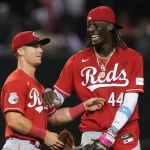
Take Your Base, I’ll Take Mine
A Critical Analysis of the National Sport
by Quentin Parquay, Royal Legion of Sport
(Editor’s note: Mr. Parquay, a literary critic with The London World and former fellow at Oxford University, has been dedicated enough to sit through rain delays, extra-inning games and traffic jams so as to compose this international peek at baseball in 2015. Although well versed, drifting from Kahlil Gibran to Oscar Wilde, Parquay admits he possesses a limited knowledge of the game having experienced his first contest only last week. The following expose is reprinted from The Hamilton Hemorrhoid, a well- respected, often painful British sports bulletin. It has appeared Steamboat Magazine. Unlike golf baseball was never immortalized by George Bernard Shaw as (to paraphrase) “a pleasant walk ruined.)”
Baseball: 1.) a game played with a bat and a ball by two opposing teams of nine players, each team playing alternately in the field and at bat. The players at bat, after hitting the ball in fair territory must then run a course of up to four bases laid out in a diamond pattern in an attempt to score runs. 2.) a questionable competition of North American origin that promotes bad language, hooky, jawing, bad manners, superstitiousness and the spitting/chewing of tobacco. 3.) the ball used in the game of baseball.
My interest in the field of baseball began when I first ran across “Casey at the Bat” in 1990. Although the epic poem had been around for decades it had not circulated through the offices of a man who dissects playwrights and Gothic novelists. I hope the following will be entertaining to the reader and beneficial to the fringe fans and the arts as well.
THE FAN
We Brits cannot afford to be critical of abhorrent fan behavior after the escapades of our cohorts at most football (soccer) matches from Cornwall to Kent. The counterpart American aficionado is actually quite calm and well behaved compared to the football fanatic. He only becomes dangerous toward the late innings after drinking cup after cup of overpriced light beer.
The aesthetic distance between the audience and the main characters is of special interest to anyone wooed by the theater. The left field character, for instance, is closer to the audience and can be more objective about how his lines are perceived in the grandstands. The thrower (pitcher) cannot gather this same kind of feedback. The audience however is well in earshot of various asides mouthed by fielders and the funny-dressed men behind fourth base that you call home plate.
The fan is most often in sympathy with one team or the other. He is most vocal at points of tension between singular characters or sometimes with entire groups of players. He is prone to embracing myths and often makes references to the supernatural as he metaphysically munches on hot dogs with onions and mustard and burnt peanuts, salted in the shell. His metaphors can be figurative, trite and/or utterly classic. His hyperbole is common only to the colonies. In later innings the fan gets swept up in the flow of dramatic monologue that results in comic relief or didactic tragedy.
THE CHARACTERS
Reflecting on the scene behind home plate we see one over-dressed character (the catcher) that carries with him a host of mandatory duties. He must not only catch the ball each time it is flung at him, but he must field difficult “pop flies”, cover his base, backup first base and throw down to second in the event of an attempted steal attempt. (We will discuss thefts and squeezes later in this article). While there is little morality involved in the steal, the catcher is often measured by his pinpoint response to the instant plot. In the local vernacular we hear fans loudly encouraging this catcher to “gun him down” or “nail him with a low throw”. This should not be taken as anything violent. The successful application of these throws and tags can often bring down the curtain for an inning.
The catcher’s associate behind the plate is called the umpire, a living allegory who attempts to impose his own doctrine. This dark character converts acceptable language into persuasive, tight, one-syllable chants with the sacred narrative “Steeerike, Bawww or Yurooout!”. Otherwise most of the communication is in sign language that is reminiscent of Shakespeare that holds the audience in awe.
Amusing reaction to the umpire often dwells on King Lear’s cry: “Thou hast eyes to see…and see not!”
The rest of the extras dress alike so much that it lends an eerie, almost robotic essence to the performance. Each of the two reams is represented by wearing its own costume. It is within the professional ranks that we find strong connection to ancient bestiaries and ethnic euphemisms with names like “Tigers, Cubs, Braves and Giants”. On the local level this practice has been methodically embraced. Long socks may represent the desire to return to simpler days while “softball” fashions clearly illustrate a yearning for a
modernistic, almost impressionist, rendezvous with the keystone future. Significant action generally soils the players’ costumes but adds a delightful descent from the loftiness of pre-game ceremonies.
THE PLOT
Everything happening on the diamond is synchronized into nine innings where one team tries to outscore the other by whatever means available during the scenes that add up to an act. The two teams could play an eternity if the thing reaches extra innings. Imagine a summer day and a pastoral scene in right field where a player is responsible for catching the ball before it hits the ground, then hurling it back into the infield (main stage). He must do this before any players “tag up” and make their way around all four bases and off the set and backstage into the dugout. If the ball is caught cleanly the acting batter is out and has no further lines until he comes up to the plate again in two or three innings. If the fielder misses the ball the hitter gains access to any number of bases while other supporting cast scores runs. The clumsy fielder is often then seen as a goat. Continued performances of this quality will often result in an understudy placed in his position.
The main actor and navigator of the plot is the pitcher since he initiates the action. He delivers his lines while perched on a pompous little hill 60 feet (18.3 meters) from the batter’s box. He throws a variety of pitches to the catcher aimed at confusing, overpowering and terrifying the man with the stick (bat) in his hand. The umpire then watches closely as curves, sliders and fastballs cause negative capability of the part of the person trying to make contact (with a rounded bat) with the little spinning ball. Some of these pitches exceed 100 miles (or 161 kilometers) per hour. The fastball coupled with an array of sneaky pitches often causes the batter to pop up, ground out or strike out (signified by K for some unknown reason). These activities in no way represent literary onomatopoeia since there is no sound emanating from the ball as it travels to the plate. The onomatopoeia magically occurs when the ball slams into the squatting, supporting actor’s round, oversized glove. Here we see the frontline struggle by the designated protagonist to stifle the antagonist by making contact with a fiery sphere chucked in the direction of his head and vital body parts. It is here that we see another character, the manager, wheel out onto the field angered by the exposition of the background.
THE SET
 The set can be universal as well as specific to baseball. The only props are the three bases and the plate, the walls, the mound, the backstop, the dugouts (2) and the scoreboard. The size of the stage varies greatly from set to set but is always characterized by white lines that protrude from home plate to the first or third bases. These are the symbols of the action. It is the actor who brings it all into perspective.
During my last sports melodrama the hero was a young pitcher for the Colorado Rockies. His saga was one of ever-increasing pathos. He quickly extended his poetic license by hurling a “loaded up” ball at the batter’s head. Soon after he balked, a clear sign that he neglected to prepare his lines before taking the stage. By the end of the inning he had reached absurd capacities in low comedy by allowing three other actors to reach untenable positions without exiting the stage. The tone of the play then becomes one of anticipation, bordering on anxiety. The guilt-ridden child actor is sent away by his rigid master to a place called the Minors that was never described by Dante or even the unholy angels. Each summer pantomime contains endless and simultaneous dramas with characters intact. It is this mysterious show and tell that stimulates the lifelong fans of the game. How appropriate in both a literary and mirthful sense. Play Ball!
“The check’s in the mayo.” – famous promise in Dixie.
TOOTH FAIRY SHOT IN L.A.
(Los Angeles) Local police arrested Guy LeRoy Cuspid, 99, of Redondo Beach, charging him with menacing and assault in the shooting of the Tooth Fairy at his residence last night. Cuspid’s son Slim, 74, had reportedly lost a tooth earlier in the day and had not informed his father that he was summoning the Tooth Fairy. As is the custom, he simply put his lost tooth under his pillow and went to sleep.
When Cuspid arrived home from his job at a local slaughterhouse, he walked smack dab into the Tooth Fairy in the hallway and opened fire. Neighbors say they heard a series of shots at about eleven-thirty.
When police arrived on the scene, they found Cuspid standing over the bleeding Tooth Fairy and his kid, Slim, crying his eyes out. The senior shooter was transported to jail, the Tooth Fairy rushed to Conquest of Paradise Mission Hospital and Slim was handed a chocolate bar by the arresting officer.
At press time, the Tooth Fairy, in stable but guarded condition, is expecting a complete recovery and should be back at work by Monday according to a union representative.
– Fred Zeppelin

