 All Entries in the "Fractured Opinion" Category

Glitzy Strip Seduces Casinos
(Colona) Three major casinos are currently negotiating the purchase of a strip of land on the border of Ouray and Montrose Counties. The corridor, dubbed Glitzy Strip, lies in neither county making it exempt from laws governing such recreative endeavors as gambling and whiskey making.
County officials fear the worst. The powerful gambling interests say they plan a tasteful development but can Colona maintain its distinct culture with the sounds of poker chips rattling and dice hitting the felt? Sure, some say it will help the economy but a majority questions the ability of the existing infrastructure to handle the impact.
“I don’t know if we can handle any more than 700 breakfasts in one morning,” flinched a waitress leaning on the good old days when Colona was a railroad town.
Ouray County planners sitting on both sides of the fence seem distracted by potential tax revenues from satellite businesses that they say will spring up. Ranching interests are firmly against the project saying that it’s hard enough to keep hired hands straight now without further distractions.
“I’ve got a good business already,” said one resident. “I didn’t move here to get rich. Western Colorado is a gamble enough without casinos.”
As of this morning Colona remains the only god-fearing community in the county with once-backwater Ridgway emulating Telluride and Ouray knee-deep in decadence.
– Suzy Compost
Low Riders Banned From Engineer
(Ouray) Persons operating low-rider vehicles, hydraulic shocks, space-age woodies, RVs and ruptured Humvees have been banned from Engineer Pass due to clearance considerations. The pass, notorious for deep ravines and mounds of shale, is a challenge for four-wheel-drives.
According to the Forest Service and Department of Transportation, street vehicles have no business traversing tight switch-backs and manipulating steep grades found on Engineer. Both say simple math can be employed to determine rate of success in negotiating the pass.
In addition to the hazards of height many of these banned vehicles simply don’t have the torque to make it to the top.
Hinsdale County officials have yet to decide what, if any action should be taken on their side of the pass. Many feel that if back country drivers make it to the top they should not be restricted on the descent. They remind all drivers to check their brakes before starting downhill.
LOCAL COWS STILL ON METRIC
Trouble in Paradise?
(Ridgway) Most readers are aware that back in April local bovines adopted the metric system and, since then the herds have been documenting and measuring sizes using that international standard. Unfortunately a problem exists in that cowboys still cling to the English system.
While the situation appears tolerable to the tinhorn, out here on the ranch the conflict grows with neither side willing to make concessions.
“When the cattle are in the pasture or the barn there’s really no operational problem,” said Dutch Butterfly, foreman of the X-Bar-None Ranch at Cow Creek. “It’s when we have to move the critters that the pies hit the fan.”
Butterfly added that branding and dehorning are also more difficult since the cows measure things one way and the cowboys another.
“It’s the same size brand and the same amount of horn we’re cutting off. It’s just lost in the translation,” he spat. “There’s enough to do trying to make a living out here without communication breakdowns.”
Actually it’s easy enough to convert from English to metric and back. For example: when changing miles to kilometers one simply multiplies the number of miles by the number of kilometers that make up one mile. When weighing hay stacks converting from pounds to kilograms is just as easy.
“These cows are generally a cooperative, but distant lot,” said Butterfly. “We don’t always know what they’re thinking out there chewing the cud and all. What’s gotten into them is hard to say but it all began when they went metric on us. Whenever anyone suggests they go back to the good old American measurement they start all that bawling and kicking and it’s just not worth the hassle.”
Butterfly said the spring roundup was a real mess in Ouray County with cows going one way and cowpunchers another. Feeding time became a struggle since daily allotments were subject to repeated question. Even water measurements got mixed up and had to be sorted out one cow at a time.
After two months of study the Western State University Math Department advised that, since the cows were mere livestock, it was up to the cowboys to adapt. That didn’t go down well either.
“Primates don’t kowtow to domestic herd animals,” said Butterfly. “It just ain’t right.”
Another veteran rancher, Slim Tinkleholland of Mill Creek, near Gunnison, told The Horseshoe that if cows were taught respect when they were still calves they wouldn’t get so uppity.
“Nobody here is belly-aching over bovine/heiffer desires to better themselves. It’s just that for centuries we’ve been a team and now they want to go and change a good thing,” he said. “The fact is that they are bred for meat and dairy and until that changes it’s the wrangler that’s boss.”
Tinkleholland reflected on a day last May when he and his ranch hands were moving a herd of cattle from Mill Creek to Jack’s Cabin.
“The head just didn’t know what the tail was doing,” he winced. When a cowboy hollered in inches the cows mooed in meters. At one point we feared that the dogs and horses would mutiny and adopt that damn metric count. By the time the afternoon was over we had Herefords spread from Almont to Baldwin. What a mess.”
– Small Mouth Bess
“The Dodgers are scared to death to come over the mountain and play some real baseball teams. We’d kick their asses.” – Western Slope resident, Melvin Arenado Toolski, 119, former baseball coach and body chemistry professor at Pine Beetle Institute.
SOLAR POWER – THE BIG LIE
(Ridgway) Of all the pinko-techno logic that has risen from the ashes, lauding the benefits of solar energy is the most ridiculous. The very idea that redirecting the power and heat of the sun for the benefit of modern man is not only silly but also it is also dangerous.
It is the apex of hype and deceit.
Harnessing the sun, or trapping solar energy (accepted at 1000 watts per square meter) is a mindless and misinformed pursuit carried out by 21st Century solar charlatans who have only one goal: separating the consumer from his hard-earned cash. Do people really fall for these pipe dreams, providing simple answers to ancient challenges such as keeping warm and generating power? Can’t architects and contractors see through the smoke and mirrors? The growing roster of victims runs all the way around the block. These are the poor unfortunates that been burned by false doctrines as to the contributions of the Sun.
Laced with all kinds of new age trip words, the solar energy equation states that stored heat of the sun can and will replace petroleum and coal if given the chance. How absurd. Those who embrace these juvenile wish lists are surely headed for a disaster of catastrophic dimensions. If solar-powered cars are so special why are all the gas stations doing such a booming business? Why do city folk continue turn up the thermostat? Why are chain saws so popular with country folk?
The misconceptions run rampant while solar engineers attempt to herd energy-starved optimists willing to embrace fictitious clean-air solutions. They don’t even begin to address the problem of solar waste preferring to turn their heads as byproducts are dumped indiscriminately, with no thought to the health of future generations.
Right now, ugly solar collectors cover the landscape like washing machines on the porches of progress. What are they collecting? I can clearly see a pile of coal but I can’t see stored energy. Moreover, what of the innocent little birds that fly into this evil apparatus and never again fly out again?
These emerging sci-fi shrines to sun worship are already dinosaurs compared to proven methods such as mining and offshore drilling. Take for instance the construction of solar towers all over the Southwest. These intrusive monuments to the big lie are killing our wildlife (there are bones and feathers everywhere) and allowing alien beings to monitor our every move from deep in outer space.
Up until now, no one actually owns the sun, but just wait. Plans are already in the works to charge the consumer for sunlight. Here in Colorado that tab could get really expensive since we now enjoy over 320 days of sun per year. Despite the invoice, what shall we do during the night when the sun is on the other side of the world? In order to resist these efforts to control and profit from the sun we must be aware of what is really happening under our collective noses.
The lies began centuries ago with temples to a variety of sun gods and goddesses. The Egyptians built alters to the sun while the Incas sacrificed victims to the sun gods who determined health, family and harvest. The Mochica, Nazca and Chimo were often more brutal, often blindfolding their prey then hurling them down steep stairways in the dark.
“It’s nothing but pagan prattle,” said Rory Phelps, coordinating director of primitive studies at the University of Downtown Delta. “Do you think it’s OK to throw a virgin into a smoking volcano to appease a sun god? People who buy into the solar lie are apt to accept almost anything but maybe the prospects are not as hot as they think.
Some decades later, the Prussians used solar-operated weaponry to subdue the Russians in World War I, highlighting the heinous side of applied science when it falls into the wrong hands. (As most readers will note: solar weaponry fell from favor with the introduction of atomic arsenals and nuclear delivery systems that make more noise).
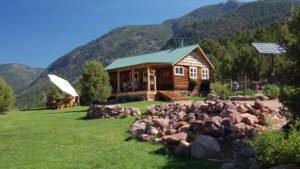
An obviously airbrushed photo allegedly showing solar energy at work. I don’t see anything. Do you?
Academies across the country have joined a burgeoning group asking: “What happens if the sun burns out in, say, a million years…why the short-term investment?”
How much abuse before reserves dry up and the kingpin of our solar system goes dark causing temperatures to plummet and plants to die? What will these solar wizards offer then? What about all that coal that we left in the ground in our rush to welcome solar power? What about the stockpiles of oil hidden deep within the earth’s crust? Will we, as a society, leave it to rot?
The hocus pocus goes on. One former believer in Ridgway has changed his tune:
“I read the brochures and I thought solar energy was going to provide jobs,” he lamented. “I got up every morning and applied sun screen with a giant roller and nothing happened. It became increasingly tedious and the neighbors were talking. After a few frustrating weeks I tore down the collectors and took them to a recycling plant. Now I’m back to propane and loving it.”
Another surprised consumer, Melissa Johnson, of Log Hill said, “The solar sauna is hit or miss and won’t work on the north side of the house or at night when we want to soak off the grid.”
Other solar pretenders report that the technology doesn’t work on doublewides.
“Only the rich can harness solar,” said one man. “Renewable energy is not for the common working stiff.”
Creators of the Solar Consumption League, a power watchdog group opposed to the application of solar energy, reminds us that Ronald Reagan was the first to sound the alarm on solar.
“President Reagan further exposed the hoax taking down all of the solar panels of the White House in 1981. If solar technology was so good, would a president of the United States be stupid enough to discard it? C’mon.”
“Don’t be duped by all the propaganda,” said Josh Kent. “I’ve been a builder for 35 years and…I…I forgot what else I was going to say.”
And so goes the saga. The next thing you know they’ll expect us to believe that useable power can actually be generated by windmills or that we can create electricity with falling water.
Solar Chatter heard locally:
“It doesn’t work. It sucks.”
-Margot DeHavilande, local alternative energy critic
“I love the smell of a coal-fired nuclear
liquification plant in the morning.”
– Col. Worthington Bulbous, former chief of solar intelligence, KGB, LSMFT
Bone Soup
Rates: For the first 20 words or so we will pay you in stock (live). After that our society page editor will award contingency packages. For less than 20 words one may just as well paste the message up on a kiosk or put it out to sea in a bottle. We discourage graffiti since so many of you cannot spell the wurd properly. Ads that run over thirty days will be sold for scrap while ads that miss the deadline will be stored, sans plastic wrap, in the employee refrigerator overnight. Ads requiring boxes should be placed with poultry adhesive byproducts attached. Keep in mind that the staff of this paper would rather touch each other inappropriately than wait on you. If you require further attention contact your elected officials as profit and loss is not an issue in that whitewash arena.
Policy: We have none as of the moment but we have a committee working on it, just as soon as the members return from Carnival in 2022. If you need parameters they can be purchased at the hardware store. Otherwise we suggest a fishing trip with linguistic bait or community service underground. WE PREFER CASH UP FRONT AND ADS LEGIBLY WRITTEN. If you are advertising goods and/or services for free or items vital to the good of the community you will be charged 25% since that kind of behavior is not conducive to the continuation of the Free Market System, as we know it. Persons running continual ads may be subject to a simple loyalty oath. Example question: Have you ever been a member of the YMCA. the Communist Party, the Audubon Society, Plato’s Republic or the Western Slope Bankruptcy Coalition? Please proofread your ads or we will have to do it for you.
Deadline: Now. Thank you.
Cowboys Without Cows meets on the third Tuesday of the month at Red’s Gravy Heaven. Bring some rope.
CATASTROPHE EMPLOYMENT – JOBS FOR FALL:
Jaeger-Meister distribution associate/driver. Responsible for visits to ski towns while accumulating accounts. Must have current driver’s license, sea legs and common sense. Pay plus stock options.
Snowplow mechanic in Shiprock, New Mexico. Seeking man or woman who can throw wrenches, make coffee. Tendencies toward the mechanical will not be tolerated. Must answer the phone and concoct outrageous stories when motorists call to complain about highway conditions.
Ice boy for Caribbean venture. Must have bathing attire, flip-flops and ability to interface ice buckets in several romance languages. Must be comfortable serving sunburned fat people over-priced cocktails in plastic cups. No watered down cruise ship refugees need apply. Towel and mosquito net provided. Compatibility with palm trees and sand a must. Bungalow space possible. Contract runs through March season. Low pay, high benefits to self-serving types.
Ice cream flavor inventor/technician. Will be responsible for three new ice cream flavors per week. Herbal therapy included. Night shift only. No experience required. Will train.
If any of these positions are of interest DO NOTHING AT THIS TIME. We will contact you! A subsidiary of Catastrophe Realty-Jacking up the Price of Living in Colorado.
A growing number of Americans may soon qualify for delicious water buffalo cheese direct from the federal gov’ment. To determine if you are eligible for monthly shipments write Department of Genetic Farming and Agricultural Perception, 57 Chevy Chase. Attn: Foggy Bottom Filibuster.
Will the man who was spitting nickels out of the side of his mouth at Totem Pole Park please call Yvonne. Maybe I was too rash. Sure, I’ll dance with you. Braille Box 49992, Grand Valley.
Trouble starting your dogs on cold winter mornings? True Canine W-30. Available at pet shops everywhere. Works fine on cats too.
Bi-Polar Cruise. Domed eco-systems, Woo River excursions, The Great Salt Lake, mosquito nets, pagan babies, Hudson Bay, picnics with the seals. All meals and transfers. Private cabins. Dial 18.
Does anyone out there have change for a drachma? – a friend in Crete.
Visit Nepal in nothing but your boxer shorts. Mabuhay Missions, Crested Butte. Sorry: One per customer please.
Indian Summer Special: Plenary Indulgences: 1/2 off. St Roscoe’s. Up-to-the-minute listing of newly formed minority groups, bogus handicapped parking credentials, sushi decorations, plastic puke goof for Day of the Dead jokesters. Next to St. Roscoe’s barking lot, Wimpton Penny Wise.
Chopsticks agility sessions. Mr. Woo, Ridgway.
Lost: Spanish language flash cards during peace negotiations at Guadalupe Hidalgo in 1848. If found please contact the surviving ancestors of General Winfield Scott, 2998 Squatter Sovereignty Circle, Cerro Gordo, AZ..
Olympic Giant Slalom Driving! Every weekday on Dallas Divide 4:30 to 6:30 weather permitting. No dogs, police or alcohol please. Can’t make the afternoon session? Try our Daybreak Gladiator Competition mornings at 7 am. Seasonal.
Express Hydrofoil to Paonia: Mondays and Wednesdays 9 am and 3:30 pm. Saturdays at dusk. Political prisoners will not be boarded before weekend departure. No exceptions.
Dog Food Magazine of Irwin is looking for sales associates, account executives, executive vice-presidents, fleet directors and management personnel. Small commission but you get your name on your door. Deliver resume to above publication in small, shabby little trailer adjacent to lake.
Pisces Intervention starts soon! Get off your cusp and call Sandra…Aquatic Hydrotherapist Extraordinaire! Specializing in snorkel abuse, fin malfunction and minor hair loss. Blind Box 9922777, Mayberry.
Leap Year Okra pickled while you wait. Red’s Hollywood Show-Bar in the Wimpton Strip Mall. Next to Big Chief’s Casino. Born naked? Red’s is always hiring dancers. No cover charge before eight. Show your ticket stub at the adjacent Temple of the Blinding Allegiances and get saved before or after the show.
I lost my dog during an acid trip on Elk Avenue back in 1970. Unfortunately I was called away days after to run my father’s chemical stadium seat warehouse in Delaware and have not been able to return. Now I’ve made my fortune and I’m back to reclaim my dog. The problem is that I don’t remember his name or what he looked like. I cannot handle the thought of being called a deserter another day. Please, if you remember us, call me. Leave message at Lawrence of Oregano. Generous reward.
Canine escorts for any and all occasions. Crested Butte, Telluride, Aspen, Las Vegas. Dial 48.
Have you recently fallen down the stairs at the Eldo, the Talk of the Town? Call Morstern, Hamill and Glick Attorneys-at-Law. We can help. Many of our clients now own public houses all over the country. How do you think the Forest Queen survived horizontal zoning?
Registered mechanic to rebuild the solar heater on my 1987 appaloosa mare. The ride back from Gunnison last night nearly killed the both of us. Price no object. Earl MacAdoo, Crested Butte Livery. “Where the pipe’s always lit!”
Dynamite sagebrush $200/oz. Meet me on Mountain Express at 2 and 10 weekdays. I’ll be wearing ski goggles and carrying poles even in the summer and fall. Ask for Josh. Also scalping three front-row seats for the 2027 X Games in Wichita.
Urinal cakes for any occasion. Drive out the post road to 3365772299886565 Road and honk loud. We got real mean dogs. Grandma Pritchard Vineyards.
Dominant stooge seeks two submissive stooges to accompany him on outings, diversion, and mirth. No kinky stuff. Call Moe at the Wildwood Music in 1979.
Land a good paying position in the fast-paced world of Embryonic Research. Must have earned at least a passing grade in high school biology, exhibit ability to operate a blender (for cocktails) and have a sincere desire to change the world. Car helpful. Send resume to Blind Box 3992, Horseshoe. No missionaries.
Auction off your ego on E-Bay. Lots of good destinations for unnecessary body parts, imagination, assorted DNA and integrity. Make Big Money! Further biology and medical disturbances still on the WEB at www.mindlessproductivity.com.
Notice: Cars towed on July 32 from Elk Avenue in Crested Butte have been misplaced in one of our satellite lots. We will not be responsible for lost articles. Vouchers will be extended to chronic whiners based on Blue Book values and current state of affairs. Next time read the sign. Park tomorrow for tonight, damn it!
Lost: G-string in downtown Colona. Not slight underwear but rather musical accessory for guitar. Leave message with machine gun-toting militia stationed in front of news stands downtown.
Bridge burning seminars nightly and on Tuesdays. Box 3333, Slick Rock. Bring two sticks. If you can’t make it send the covered dish anyway. No Irish.
I would like to take this opportunity to apologize to anyone bitten by my dog, Earl, between now and April 20. After that date you’re on your own. Jacques Strappe, Almont. (6/20/21)
The United States Department of Questionable Karma has relaxed restrictions building on tailings in the San Juans. Ponds are particularly enhancing. Nice mountain views. Year-round Access. Catastrophe Realty. Portland, CO. Wee-mail us.
Most of you already know that reading the San Juan Horseshoe is more fun than experiencing the stomach flu. Now we possess conclusive proof that it’s far cheaper. Now available in Canada — just $26 for 24-hour podcast.
The Disappointment Valley Optimist Club will host a membership drive at the bottom of Norwood Hill on March 14 and 15. Free rose-colored windshield scrapers to the first 100 persons to join up.
Second-hand smoke getting to you? Protect yourself and ones you love with Syd’s Second-hand Smoker’s Patch. Penetrates fatty area under the arm or stitches over the eye. Installation free when you buy one or more at St. Roscoe’s Drive-In Out-Patient Easy-Payment Duty-Free Non-Profit People’s Clinic in Wimpton or Manana. Worried about second-hand, third-hand, fourth-hand and even fifth-hand smoke invading your respiratory system while you’re asleep? Ask about the Syd’s Second-hand Smoke Detector. All and more medical superstition from St Roscoe’s Hospital…The Hospital with hospitality built right in!
Legitimate and enlightening encounters with chicken gumbo and crawfish bisque starting in August and running until Fat Tuesday. Afternoon and evening seatings. Tea dances on demand. Marie Laveau Tavern, St. Charles Ave.
Need: Aspiring Executive type to handle toilet paper installations and quality control measures until the end of the tourist season. Rusty Xenophobe Hotel. Could work into regular job and advancement in the expanding field of motor lobby security. Complimentary Flea Pass and Snowboardable Housing included in 2022. Apply in person or out of body if you so desire.
Texans Massing at Border
(Raton Pass) Three divisions of battle-hardened Loan Star storm troops in armored personnel ATVs backed by artillery, lawn chairs and the ruthless French poodle cavalry have been spotted moving through northeast New Mexico toward the porously defended Colorado frontier this morning.
Surveillance flights, often interrupted by smoke from lingering forest fires, confirm that the huge force has now been joined by primitive colonial infantry units from Oklahoma.
Loaded down with bags of gold, often exchanged for exotic trinkets in the higher elevations, the force has been little match for Colorado Air National Guard squadrons. Employing sophisticated methods of psychological warfare, these brave men and women continually peppered the ground with a blitz of sugar beet sweetened iced tea and pictures of Tom Landry.
“We almost hit a couple of ’em,” said one pilot sucking on a fifth of John Powers. “Our biggest logistical nightmare is trying to avoid the recon asphalt crews, busy patching Highway 87 somewhere down there.”
In a simultaneous exercise, volunteers from Las Animas and Costilla Counties have extended operation Frito-Lay, a highly successful poached earth operation, way up into Moffat County which effectively scorches the Sangre de Cristos, leaving crunchy landscapes in its wake.
We will not allow our holy ground to fall into the hands of those Dr. Pepper swillers! Once we burn all the farms and ranches, we can start building interstates and shopping malls,” said one culturally-absorbed torch warrior. This is one good ol’ Glorieta Pass!”
– Oral Waters


