 All Entries in the "Featured Peeks" Category

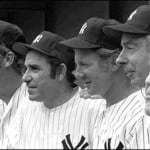
Take Your Base, I’ll Take Mine
A Critical Analysis of the National Sport
by Quentin Parquay, Royal Legion of Sport
(Editor’s note: Mr. Parquay, a literary critic with The London World and former fellow at Oxford University, has been dedicated enough to sit through rain delays, extra-inning games and traffic jams so as to compose this international peek at baseball in 2015. Although well versed, drifting from Kahlil Gibran to Oscar Wilde, Parquay admits he possesses a limited knowledge of the game having experienced his first contest only last week. The following expose is reprinted from The Hamilton Hemorrhoid, a well- respected, often painful British sports bulletin. It has appeared Steamboat Magazine. Unlike golf, baseball was never immortalized by George Bernard Shaw as (to paraphrase) “a pleasant walk ruined.)”
Baseball: 1.) a game played with a bat and a ball by two opposing teams of nine players, each team playing alternately in the field and at bat. The players at bat, after hitting the ball in fair territory must then run a course of up to four bases laid out in a diamond pattern in an attempt to score runs. 2.) a questionable competition of North American origin that promotes bad language, hooky, jawing, bad manners, superstitiousness and the spitting/chewing of tobacco. 3.) the ball used in the game of baseball.
My interest in the field of baseball began when I first ran across “Casey at the Bat” in 1990. Although the epic poem had been around for decades it had not circulated through the offices of a man who dissects playwrights and Gothic novelists. I hope the following will be entertaining to the reader and beneficial to the fringe fans and the arts as well.
THE FAN
We Brits cannot afford to be critical of abhorrent fan behavior after the escapades of our cohorts at most football (soccer) matches from Cornwall to Kent. The counterpart American aficionado is actually quite calm and well behaved compared to the football fanatic. He only becomes dangerous toward the late innings after drinking cup after cup of overpriced light beer.
The aesthetic distance between the audience and the main characters is of special interest to anyone wooed by the theater. The left field character, for instance, is closer to the audience and can be more objective about how his lines are perceived in the grandstands. The thrower (pitcher) cannot gather this same kind of feedback. The audience however is well in earshot of various asides mouthed by fielders and the funny-dressed men behind fourth base that you call home plate.
The fan is most often in sympathy with one team or the other. He is most vocal at points of tension between singular characters or sometimes with entire groups of players. He is prone to embracing myths and often makes references to the supernatural as he metaphysically munches on hot dogs with onions and mustard and burnt peanuts, salted in the shell. His metaphors can be figurative, trite and/or utterly classic. His hyperbole is common only to the colonies. In later innings the fan gets swept up in the flow of dramatic monologue that results in comic relief or didactic tragedy.
THE CHARACTERS
- CHARACTERS IN COSTUME ON STAGE

Reflecting on the scene behind home plate we see one over-dressed character (the catcher) that carries with him a host of mandatory duties. He must not only catch the ball each time it is flung at him, but he must field difficult “pop flies”, cover his base, backup first base and throw down to second in the event of an attempted steal attempt. (We will discuss thefts and squeezes later in this article). While there is little morality involved in the steal, the catcher is often measured by his pinpoint response to the instant plot. In the local vernacular we hear fans loudly encouraging this catcher to “gun him down” or “nail him with a low throw”. This should not be taken as anything violent. The successful application of these throws and tags can often bring down the curtain for an inning.
The catcher’s associate behind the plate is called the umpire, a living allegory who attempts to impose his own doctrine. This dark character converts acceptable language into persuasive, tight, one-syllable chants with the sacred narrative “Steeerike, Bawww or Yurooout!”. Otherwise most of the communication is in sign language that is reminiscent of Shakespeare that holds the audience in awe.
Amusing reaction to the umpire often dwells on King Lear’s cry: “Thou hast eyes to see…and see not!”
The rest of the extras dress alike so much that it lends an eerie, almost robotic essence to the performance. Each of the two reams is represented by wearing its own costume. It is within the professional ranks that we find strong connection to ancient bestiaries and ethnic euphemisms with names like “Tigers, Cubs, Braves and Giants”. On the local level this practice has been methodically embraced. Long socks may represent the desire to return to simpler days while “softball” fashions clearly illustrate a yearning for a
modernistic, almost impressionist, rendezvous with the keystone future. Significant action generally soils the players’ costumes but adds a delightful descent from the loftiness of pre-game ceremonies.
THE PLOT
Everything happening on the diamond is synchronized into nine innings where one team tries to outscore the other by whatever means available during the scenes that add up to an act. The two teams could play an eternity if the thing reaches extra innings. Imagine a summer day and a pastoral scene in right field where a player is responsible for catching the ball before it hits the ground, then hurling it back into the infield (main stage). He must do this before any players “tag up” and make their way around all four bases and off the set and backstage into the dugout. If the ball is caught cleanly the acting batter is out and has no further lines until he comes up to the plate again in two or three innings. If the fielder misses the ball the hitter gains access to any number of bases while other supporting cast scores runs. The clumsy fielder is often then seen as a goat. Continued performances of this quality will often result in an understudy placed in his position.
The main actor and navigator of the plot is the pitcher since he initiates the action. He delivers his lines while perched on a pompous little hill 60 feet (18.3 meters) from the batter’s box. He throws a variety of pitches to the catcher aimed at confusing, overpowering and terrifying the man with the stick (bat) in his hand. The umpire then watches closely as curves, sliders and fastballs cause negative capability of the part of the person trying to make contact (with a rounded bat) with the little spinning ball. Some of these pitches exceed 100 miles (or 161 kilometers) per hour. The fastball coupled with an array of sneaky pitches often causes the batter to pop up, ground out or strike out (signified by K for some unknown reason). These activities in no way represent literary onomatopoeia since there is no sound emanating from the ball as it travels to the plate. The onomatopoeia magically occurs when the ball slams into the squatting, supporting actor’s round, oversized glove. Here we see the frontline struggle by the designated protagonist to stifle the antagonist by making contact with a fiery sphere chucked in the direction of his head and vital body parts. It is here that we see another character, the manager, wheel out onto the field angered by the exposition of the background.
THE SET
The set can be universal as well as specific to baseball. The only props are the three bases and the plate, the walls, the mound, the backstop, the dugouts (2) and the scoreboard. The size of the stage varies greatly from set to set but is always characterized by white lines that protrude from home plate to the first or third bases. These are the symbols of the action. It is the actor who brings it all into perspective.
During my last sports melodrama the hero was a young pitcher for the Colorado Rockies. His saga was one of ever-increasing pathos. He quickly extended his poetic license by hurling a “loaded up” ball at the batter’s head. Soon after he balked, a clear sign that he neglected to prepare his lines before taking the stage. By the end of the inning he had reached absurd capacities in low comedy by allowing three other actors to reach untenable positions without exiting the stage. The tone of the play then becomes one of anticipation, bordering on anxiety. The guilt-ridden child actor is sent away by his rigid master to a place called the Minors that was never described by Dante or even the unholy angels. Each summer pantomime contains endless and simultaneous dramas with characters intact. It is this mysterious show and tell that stimulates the lifelong fans of the game. How appropriate in both a literary and mirthful sense. Play Ball!
“The check’s in the mayo.” – famous promise in Dixie.


Utilities Accepting Livestock, Canned Goods
(Pea Green) In what is seen as a gesture of cooperation local utility companies will begin accepting alternative methods of payment for services rendered. Starting in November Delta-Montrose Electric, San Miguel Power and Gunnison Rural Electric will credit consumers who bring chickens, pigs or canned peaches to the front door. In December it will be eggs, calves and canned tomatoes that will be ledger compatible instead of hard cash.
The action comes as a result of lingering payment histories, fiscal incompetence and creative excuses for non-payment of energy bills.
In keeping with Script’s Manual of Commodities and Convivial Records the three utility concerns have adopted a uniform cash value for agricultural products when bartered. This official exchange rate will most certainly be extended to include automobiles and household items in the near future.
The rendering value of common livestock shall be as follows:
One lamb = 900 to 1250 kilowatts of usage; one small pony = 1300 to 1650 kilowatts of use; One calf = 1700 to 2100 kilowatts and one baby chick (must be crated and housetrained = 14 kilowatts. Ducklings, geese, fish and sage hens are worth slightly more. These and other credit items will be assessed on their own merit. For a complete roster of accepted items and applicable credit see form below or call your utility company directly and ask about the Cows for Kilowatts Entitlement Program.
“Persons wishing to pay exchange canned foods for energy credits must show detailed history of same from seed to can,” said Wayne B. Wayne, of the United States Consumer Fraud Division. “Wild animals may be used but must be cleared through the Division of Chaos or the Office of Coming Anarchy three working days before negotiation can begin.”
Small, dysfunctional amenities will be immediately sacrificed to Paradox, the Greek god of Talking Wires and Cyber Optics. Marmots, fur-bearing armadillos, toothless chinchillas and hyperactive salmon will be considered with approval of parent of guardian. No bunnies will be harmed, especially in front of the children.
Your friends at the local utility companies hope that these changes will help some of you come across with your monthly payments. Those who do not have access to livestock may be allowed to trade beadwork or take in laundry to cover at least part of these expenses.
– Warren Weatherspoon
The shame of the Western Slope Tourism Circus
Bathrooms for customers only
“What would you have them do, Bassanio, water the shrubbery?”
from The Merchant of Haggis – William Shakespeare Act II, Scene IV
Restrictive bathroom policies have given a new meaning to the concept of Where to go in Western Colorado. After the passage of meandering civil rights legislation since 1964 one major problem has never been undressed and remains a black mark on the country, more specifically to tourism here.
The right and wrong of privilege is deep-rooted in the American melting pot and cannot be discussed without dredging up old emotions and then flushing them away along with self-evident truths as to equality and the pursuit of happiness.
“It is scandalous, obscene and downright uncomfortable,” said Hector Plunger, a recent victim of the limitations. One would think that in the wealthiest country in the world some accommodation could be made for those who have to pee. I myself was forced to find a bush.”
It is common knowledge that the Bathrooms For Customers Only is perpetuated by concerns of cleanliness, employee time, product and water. Proprietors often feel that unless someone buys something he can just hold it until he gets to a more user-friendly environment.
Concerned citizens have already gathered sufficient signatures to put the issue on the ballot in November. They insist that it is unconstitutional to turn away a fellow human in need, no matter what the fiscal exchange.
“It is shameful that an enlightened society cannot pull itself up from the hateful segregation into a more tolerant atmosphere,” said Plunger. “In many countries the needy are simply charged a small fee to use the public facilities. It’s kind of like mass transit. They all have it and we sit in traffic burning fossil fuel. One begins to reassess the concept of progressive, no?”
The biased tradition may well come to an end after the next election, canned, if you will, through the resolve of freethinking participants in this planetary social experiment. However, much of the harm has been done and will linger for decades, like the embarrassment of wetting one’s pants.
Shall we then, upon out thrones, pass judgment on those who must hold it? Sure this may sound like some more liberal crap but isn’t it time to bring the skeletons out of the water closet once and for all? – Ben Gamone III
Mr. Gamone is a dedicated tantric pipe fitter
and urinal cake broker from Privy, Utah.
Elvis Appears to Carne Canyon Widow
Shavano Sun and Mailer – June 25, 2015
Most women would be thrilled to have a rock and roll legend visit them in the bathroom but not the reclusive Beverly Lupac. In fact she’s had about enough of it all.
Back in March Beverly arose from a deep slumber, wandered into her two-tone bathroom, gazed into her two-way mirror and there he was: Elvis Presley right there in the zoomed in make-up circle. At first she thought she was dreaming but upon reentry she saw him again, combing his hair.
“At first he didn’t speak but just smiled in that “Elvisy kind of way,” she said. “Then he asked to borrow some hair cream.”
Then he thanked Lupac, asked if he could sing her a song, crooned a verse from Blue Hawaii and melted back into the glass.
Shaken, Lupac rushed to her neighbor’s house to share the strange encounter with Ira Synge-Toole, a former typesetter for this website when it was a newspaper. While at first Toole scoffed at the preposterous pandering of a pop star pertaining to the porcelain presence she quickly came around when singing resumed from Lupac’s bathroom.
The two women, armed with a can of outdated mace and a 34-inch Louisville Slugger, went back into the Lupac house. They made their way to the bathroom all called out “Elvis! Elvis! Come out. Come back.”
Nothing happened. After about a half hour Toole became disenchanted with the entire operation and, saying The Days of Our Lives was about to begin, left.
Lupac then journeyed into her spacious, well-lighted kitchen to prepare lint and kidney pie when a voice crooned Fools Rush In. She turned around half-aroused to see a life-size Elvis standing before her in nightclub attire. This one was a talking Elvis. He asked her about her life in Carne Canyon but she couldn’t think of any interesting answers. The conversation dragged. There she was with the King and she was tongue-tied. She could tell him about her peach harvest or the day the dog got knocked up outside the barn
For more please turn to
You Ain’t Nothing But a Corn Dog
News Flash
(Bennytowne Plaza) Uninformed sources somewhere around the corner have vaguely insisted that the clandestinely whispered rumors of dubious plausibility may be nothing more than sheer innuendo. Moreover, equally uncorroborated critics of the current control modes vehemently suggest that forces from the other side may be engaged in a system of sabotage wherein unclear rumblings and tepid projections land on deaf ears and newly swept sidewalks. This public embrace takes on the personality of those wishing to disguise the issues as only possibilities, and not died-in-the-wool lethargies bordering treacherous ponds of drooling quicksand and pea-brained, yet concise, summations.
That said the situation remains much the same with hordes of promiscuous paparazzi clogging the doorways, hiding in potted plants, hang from window ledges and infiltrate the sanctity of public urinals and private beaches, exhibiting the restraint of crippled harlots. The prize: A television news anchorship in the great Midwest! This newspaper will of corpse bring you each imperative detail and every mumbled conjecture as it comes out of the oven. Forward!


