 All Entries in the "Hard News" Category

Paradise becoming household word
(Paradise Divide) Once a term that huddled up with utopia, heaven, bliss, nirvana, Zion and Shangri-la paradise has become the catchword for a vast assortment of locales all over the globe. It’s become a testimony for the unimaginative who somehow think their paradise is the real paradise and that the others are pretenders to the throne.
The other day I received an e-mail from a woman on Little Corn Island in Nicaragua. She thanked me for my query saying that my letter had arrived in two weeks from the U.S.. Then she said “Things move slow here in paradise. What? Which paradise? I wrote her back that I too lived in paradise, only mine was 8000 feet and not on the beach. She didn’t seem to get it. Has she only visited one paradise in her life? How limited. I won’t stay at her hotel.
Then there was the pension in Grenada (Nicaragua) called Another Night in Paradise. How clever. I won’t stay there even one night, even if they have ice. Too bad. Here we have a minimum of undeveloped spots in the world and some clown has to call them paradise. What do you think that will do? It will bring more people in search of their own personal heaven and wreck the place in a matter of months.
Realtors love to use the word paradise when promoting the sale of land. They have jacked up paradise to where it means nothing. Maybe that’s why they’re always posing in their ads with face lifts and with Golden Retrievers, ya think?
There are paradise beaches, passes, plateaus, peaks, rivers, lakes, tributaries, canals, malls, valleys, meadows, freeways, tours, ski areas, motors, acres, coiffures, temples, tattoo parlors, car lots, restaurants, bars, skating rinks, plazas, rest homes, trailer parks, kennels, counseling centers, liquor stores and botanical gardens. And that’s just the beginning of the roster.
Every state in this country has at least one town named Paradise. There’s Paradise, New York; Paradise, Illinois; Paradise, Florida and Paradise Texas to start with. I have been to all of these and I cannot detect even a subtle hint of paradise, unless it’s the high-tech car wash in Florida or the pork ribs in Texas.
Not to beleaguer the point: Maybe it’s time for the idle rich in Crested Butte to belly up to the wine bar and formulate a new concept in reference to the town and region. How about Elysium or Lubberland. Both words are in the dictionary and so far as I can tell there is not so much as one Elysium, New York or Lubberland, Illinois.
In closing, the word paradise appears in the dictionary right between paradigm and paradox. What more do we need to proceed? Does one have to walk into walls to prove they are there? Would a two by four do the job? – Rocky Flats
The Jumpers
 A feeble, forlorn figure sits in a rocking chair near a severe drop-off into a massive canyon. He has trouble moving due to the flock of medals pinned to his worn out government issue, camouflage bathrobe. He carries the rank of four-star general. He has a large, large archduke mustache — one that would make Pancho Villa proud, and is wearing a shiny, spiked helmet fashioned from a Prussian staff bedpan with a cavalry chinstrap reminiscent of the Light Brigade tightly latched.
Next to him is a burned out tree like the ones that once dotted the meadows of Flanders and the woodlands of Tarawa. Adjacent is a rusty cannon and a pyramid of cannonballs. The wind is blowing hard like a death chant during burial duty. There is a red-stained sun and a dark moon hanging above.
ACT I
General: I long for the day…of the cavalry charge, sabers held high, cutting our way through the flesh of men and horses, our mustaches waxed, our black mounts — no quit in them, their nostrils flared, their hooves like razorblades in the dust. Bullets whiz by from the trenches, squeezed off by expendable men who are about to die.
(Enter Maude, pushing a baby carriage)
Maude: Oh I didn’t see you sitting there so close to the edge. Doesn’t this wind make you crazy?
General: The wind is not the culprit, wench. After all the years and all the glory looking death in the teeth I can only sit here in this chair, unable to move under the weight of all these medals, unable even to even rock back and forth after charging across continents. My wooden chair. My wooden prison. My only future is the wind’s cold chant.
Maude: I know the feeling. I can’t move much either in a metaphoric sense. My life is without highs and lows, just the same every day. Mundane, fruitless, quietly desperate and alone, terribly alone.
General: If you are so fruitless tell me who is in the stroller?
Maude: Oh him. It’s my son Lemmings, named after his absent father, a man I never knew but have soon forgotten.
(She wheels the carriage over to an angle where the general can look inside).
General: But. Maude, the carriage is empty.
Maude: What! How do you know my name? What has happened to my boy?
General: Could have been Shiloh, could have been the Somme. You yourself sent him off. Tell me. Are you alone in the world?
Maude: I already told you that I was alone, terribly alone.
General: Solitude in birth and again in death. It’s all that we know. Where we came from and where we go has not been addressed by the enlightened and the level-headed.
Maude: My life is shit. I never have enough to eat. My lovers have all been killed in the wars to end all wars. If I had any direction in my life I would still not have the shoes for it.
General: Then what will you do?
Maude: I shall maintain. All of us on earth must maintain.
General: And why must we all maintain?
Maude: For future generations if for nothing else.
General: (Laughing) For future generations? Ha! They don’t care about you, about how you are today. They would not blink if you died and blew away.
Maude: I am lost. My soul is lost! (lamenting)
General: A lot more than your soul has been lost. If I could move under all this weight I’d jump right now and find all of the answers that have eluded me. I used to love being a general…the nice warm bed in the rear, the pretty maps, the firefights far away brought close to home in my binoculars, the power…All nice and orderly. No blood. All nice and clean. But it’s all gone. All I have left are these medals.
Maude: And your bathrobe. Don’t forget your bathrobe and pajamas. Without them you’d have to carry your medals around in a basket and nobody would ever see them.
General: The planet is exploding. People eat rats.The wars rage and there are still soldiers left standing. You’d think someone would run short of bullets.
(He tries to scoot his rocking chair closer to the cliff).
Maude: Life is defined not by the feast but by the famine.
General: It’s worse. Your life will never mean a thing, even to you. Walking around with an empty baby carriage will bring no peace. The only way to pace is over the cliff, Maude.
(He gazes over the cliff dramatically. She begins to cry.)
Maude: My life will not improve? I always thought my life would improve. I seek the light of heaven but only find the shadows of hell.
General: There is no devil below. I have seen him on the battlefield.
Maude: Darkness?
General: Who told you there was light?
Maude: God
General: God who?
Maude: You’re a sick old man with medals on his bathrobe. I’m leaving. Sit in your wooden chair alone.
(Maude wheels her carriage around, throws back her head as if to rid herself of the general and exits).
General: Now there, my friends, is a prime recruit for the jump. She’ll be back. Weak and brittle like the little boy soldiers at Argonne. They never knew what hit them. All those pretty uniforms soaked in blood and black trench mud. I understand them and salute them for their courage in the face of the German guns. Flesh against hot metal fired into the sky.
(He begins to sing).
General (singing): Oh look on the Assyrian armies, the Romans and the hordes of Tamerlaine. Survivors of the battle marching backward, then forward to ordain. Boom!
Angel: Who is that singing?
General: Who is that not singing?
Angel: My wings, my wings are broken and I will soon fall. I have come to view, to examine the abyss.
General: (scooting frantically closer to the edge of the cliff but smiling as if nothing is out of character): You have come to the right place my angel friend. Perhaps you can no longer fly with the birds or the bombers, but you can still descend gracefully.What’s it like being an angel? Is it all it’s cracked up to be?
Angel; I’m not just an angel, I’m a fucking archangel you wrinkled, rocking decoration of death. Can’t you see my brilliance, my aura?
General: Can’t say that I do…A navigational streak of light in a sea of wind and darkness. Righteousness has gone for a walk. Your wings are all saggy. Have you ever been in the army?
Angel: I said I was an archangel. What do you think archangels do for a living, sell bathrobes? I was the point man in the pre-ancient showdown with Lucifer and his boys. We kicked their asses but they never were defeated. They never really went away.
General: No one ever really goes away. No one really ever stays either. No soldier eagerly vacates his line to charge the enemy in the morning.
Angel: Could you move away from the cliff. I’d like to make a clean jump and the last thing I need to remember is the face of a madman in a rocking chair.
General: An archangel jumping to his death? Interesting.
Angel: Move or I’ll take you with me.
General: Please do.
Angel: Stop! You just don’t realize what I’ve been through, what I have seen since Beelzebub started running his mouth and pissed off the Big Three. Did we cast out the wrong angels?
General: All the more reason to jump.
Angel: An angel without wings is like a morning without light, a champion without victory, a dog without a tail.
General: You’re right. You’re hopeless. Why not just jump? Things are not going to get better. What is your name, angel friend?
Angel: Estragon sometimes.
General: The spacemen are arriving any day now. All the more reason to hurl oneself from the heights!
Angel: I have no future and I am tormented by my past. The present gives me no peace. No one cares. There are no answers. I have no options.
General: On the contrary you do. It’s just a few steps and down.
Angel: There’s no soul left in you is there? You sit there in your rocker with your medals, waiting for some god or the other to apologize.
General: I have no need for apologies, only recognition. I am a soldier. I have no need of a soul, just a good saddle. I was cavalry you know.
Angel: You are raving mad but you will be gone soon. I must find my way away from here. The cliff answers nothing and I don’t like the sound of splat. I have no quarrel with mortal man or gods or even Lucifer anymore.
(As he leaves the general furiously tries to scoot his rocking chair closer to the cliff without success).
ACT II
General: Freud jumped. Marx jumped. Caesar jumped. Joan of Arc in flames! Robspierre watched as his head fell downward into a pretty whicker basket. A breakfast of figs and a dinner of loaves and fishes. Where is the real prophet? Wait…who’s there?
Young Soldier in baggy uniform: It’s only me, your Excellency. Jimmy from Iowa. Do you like my uniform? It’s just like the one my grandfather wore when he got hit in Korea. I never knew him. I think I’ll grow into it over the next few wars.
General: I was in Korea but I didn’t die there.
Soldier: I will be a hero. I know it. Just give me the chance. All of my family were heroes. I know all the patriotic songs and battle slogans by heart.
General: For the glory of it all. For the glory of the jump. Are you here to leap?
Soldier: If ordered, sir.
General: We jumped out of airplanes flying higher than this little cliff. (He manages to scoot closer to cliff this time). You can’t even see the bottom. What’s the big deal? Let’s jump together, tandem, for the glory of the nation! He tosses one of his medals over the side.
Soldier: I didn’t hear it hit.
General: Nor will I hear you.
Soldier: I’m not here to jump. I have my whole life to jump. Sure, things could be better but I don’t think jumping will fix anything.
General: Don’t be so sure. Put the cork back in the bottle and get a running start. It will be over in no time.
Soldier: Throw another medal you bitter fool. I’ve got to go before I’m late for the next war. Adieu.
(He warmly greets the Arc Builder on the way off stage)
Arc Builder: Greetings General. I am here to build an arc and I’ll be needing your rocker. Do you want some help jumping?
General: An arc builder? Why? There is no flood up here. Salute the Centurion! Throw your grenade.
(He tosses another medal off the cliff)
Arc builder: The flood is down there. Here, let me help you scoot…
General: Wait a minute. Why are you here? Who are you? Are you a spy?
Arc builder: I am the arc builder. Don’t you recognize my arc builder’s hat? I have come to help you jump.
General: Discarded puppets with broken strings.
Arc builder: What? What’s that you say? All the puppets have broken their strings?
General: I was cavalry. I was looking through my field glasses. All I saw was smoke. The whole world wakes top hungry. Everyone is a meal in the jungle.
(He starts to scoot toward the cliff again and the arc builder breaks into a wide grin)
Arc builder: Let me help you, general. Let go of the chair. We’ll just pour you out like molasses from the jar. Let go of the chair…But first let me wash my hands.
(He washes methodically, sharing his smile with the audience, then throws the wash cloth over the cliff).
Arc builder: Are you ready for your solo flight? I’ll bet they didn’t teach you this dance move in the cavalry.
General: Why don’t you jump if it’s such salvation?
Arc builder: Oh, I have already jumped. So have all the others. You are the last one to leap. Go on…just a little further. There is no devil below only restful darkness. No black, no white. No good, no bad.
(The arc builder begins hammering planks of wood together).
Arc builder: I’ll wait. You’ll jump before long.
(Enter nurse from the nearby rest home)
Nurse: Oh there you are general, talking to the clouds again. You shouldn’t sit so close to the pond. I know you like the ducks but you could fall in, besides it’s time for your medication. – Kevin Haley
DOW Wants in on Drone License Fees
 (Deer Trail, CO) Threatening to sell drone licenses to this year’s hunters may or may not be legitimate. Either way it has caused quite an uproar at the Colorado Division of Wildlife, who want a piece of the local action if there is any.
According to town fathers and mothers in Deer Trail, the announcement that the municipality would begin selling drone licenses this fall was meant as a political statement and never as an actuality. Several say they wanted to protest the country’s policies with regard to unmanned rockets, spying and assassinations of suspected terrorists, including US citizens. Others say our government has lost its sense of right and wrong and is engaged in deplorable acts on our behalf.
“The fact that the national media picked up on our tongue and cheek plan further indicates that there are a lot of people out there highly concerned about the clandestine nature of our government these days,” said councilperson Bettie Clonne of Deer Trail. “And now it appears that another parasitic gov’ment agency wants in on the spoils.”
Clonne, which rhymes with drone, went on to suggest that it would be impossible to sell drone licenses since those unmanned weapons are not all that prevalent in Colorado skies and because drones are not wards of the state like deer and elk. In addition they remind us that one cannot eat a drone which creates other problems with morality of hunting in general.
“We realize it is a federal offense to mess with federal property, even though in essence it belongs to the people, doesn’t it?” she asked.
The government has expanded its drone programs to include domestic surveillance which worries civil liberty proponents as to the future of robot war and intrusive technology.
“Don’t shoot it unless you’re going to eat it has always been my mantra,” continued the source. “I haven’t seen any trophy drones up there and the drone is not calculated on the basis of points on the antler since there are no horns, just a ball of metal.”
Meanwhile the DOW, who used to offer hunting licenses at a reasonable fee for instate and out of state sportsmen, has continued its greedy march to the destruction of hunting in Colorado. Years ago everyone shared in the profits, – merchants, outfitters, communities – now most of the money ends up going to the DOW. Today’s average hunter is now urban, unskilled and rich with expensive gear and no soul for the hunt. This is what happens when fees are not in keeping with reality. Less hunters mean less money spent on dinners, hotel rooms and services.
Still the thought of bringing down an unmanned drone is tempting to some. The possibility of actually hitting one with an elk rifle is all but impossible anyway. They travel fast.
Most people in Deer Trail agree that all the hoopla over shooting down drones will blow over after the season is concluded. However the feds and the state will still be here helping us to become more robotic and less human.
What tales will they tell around the campfire in the years to come?
“I was so busy field dressing the first clone that I din’t see the second one coming right at me. Thankfully my old buddy Earl had a bead on it and blasted it out of the sky. I don’t know if the meat can be recovered but it was a damn fine shot. Things sure are different out in the woods then they were when I was a boy.”
– Rocky Flats
Detroit in big trouble
 (Miracle Mile) The city of Detroit has had a bad month. First there is the foreclosure thing with one of the creditors, the Bank of America, which announced $23 billion in profits in the last quarter. Most of the excess comes from late fees and credit cards charges according to bosses within the walls of gold. One might think with figures like this under their belt the bank might show a little tolerance but…
It’s tough top say if Detroit deserves what it is getting. Years of economic downturn and fiscal flight from the city has left it in shambles. Then the fat cats pull the final rug. It’s kind of like the millionaires in Congress debating minimum wage.
And where is the mainstream media? Protecting its backside as usual. Maybe they were too busy covering celebrity bake-offs, PED scandals, gay marriage and the price of bullets.
The Fourth Estate, owned by the rich, failed to report on the coke spill too. Read this:
Our Koch Tea Party Buddies
… & North Fork Neighbors…
Toxic cloud of tar sands waste travels from Detroit to Canada
A massive cloud of black dust that swept across the Detroit River into Windsor, Canada this week has been linked to piles of petroleum coke, a by-product of tar sands oil illegally stored in Detroit by Koch Carbon.
Though much has already been said of the tar sands oil industry, which is currently experiencing a boom and has spurred several high profile pipeline expansions across the US, the accumulation of the petroleum coke, commonly referred to as pet coke, along the Detroit riverfront went largely unnoticed until this week.
A dust cloud which flew over Detroit and into Windsor this week was found to carry elevated traces of lead, sulfur, zinc and vanadium, which is possibly cancer-causing in humans in prolonged or elevated exposure, according to the International Agency for Research on Cancer, a France-based organization. The US Department of Health and Human Services and the US has not yet classified whether vanadium is carcinogenic.
Last Saturday evening Windsor resident Randy Emerson managed to capture a video of the thick black dust moving along the city’s waterfront.
“Is that the pet coke?” Emerson, who captured the scene on his cellphone, asked his wife.
“Oh my God,” he concluded. “Yep — that’s pet coke.”
In May the New York Times profiled the Detroit dumping grounds of pet coke at an industrial site owned by Koch Carbon, a company controlled by wealthy industrialists Charles and David Koch, which sells the high-sulfur, high-carbon by-product overseas in China and India where it serves as a cheaper, dirtier alternative to coal. There is also strong demand for the by-product in Latin America, where it is used in cement-making kilns.
The refining process known as coking releases oil from tar sands, and leaves petroleum coke as its by-product. According to the Times Canada currently has 79.8 million tons of pet coke stockpiled, most of which is dumped into open pits and ponds in Alberta, and the rest is simply piled up.
Marathon Petroleum’s refining plant in Detroit is currently processing some 28,000 barrels a day of tar sands oil, and the increase of oil sands into the US, including transportation through the controversial Keystone XL pipeline, will also bring more of the coking processing and waste product to the US.
Coke is an ingredient in steel making and the production of aluminium, though according to a petroleum coke analyst at Roskill Information Services cited by the Times high sulfur content in this particular type of pet coke make it virtually unusable for those purposes.
It was only last November that exports of pet coke produced by Canadian oil sands began to arrive at the site, and seemed to catch local government off guard.
“Here’s a little bit of Alberta,” said Brian Masse, a Windsor’s parliament members in May. “For those that thought they were immune from the oil sands and the consequences of them, we’re now seeing up front and center that we’re not.”
According to Lorne Stockman, the author behind a recent study on petroleum coke, the waste is “the dirtiest residue from the dirtiest oil on earth
This week residents who spoke to Michigan Radio said they had found pet coke dust inside their homes, and videos of a large, black cloud moving across the Detroit River were posted on social media.
It’s blowing onto the neighborhood,” said Nick Schroek, director of the Great Lakes Environmental Law Center. “People are having to clean their homes regularly to deal with the dust. There’s parks nearby where children are playing that are being impacted by the fugitive dust blowing off the pile.”
Company representatives for Detroit Bulk Storage who handle the industrial site have said they were not aware that they required a permit to openly store pet coke in Detroit’s riverside, though they have been following “best practices” in handling the piles of pet coke waste.
Regardless, Detroit Bulk Storage is facing strong resistance from the city for a permit, and it has rejected suggestions that it cover the pet coke piles, instead relying on a sealing epoxy to prevent “fugitive dust” from escaping the site.
Detroit mayor Dave Bing said in a statement that he will require more information on the effects of pet coke.
“I want to make it clear that Detroit is not a dumping ground and residents of southwest Detroit deserve to be protected from industrial by-products,” Bing said.
Detroit Bulk announced earlier in July that it has stopped accepting new shipments of pet coke. Koch Carbon, which did not respond to a request for comment from the Toronto Star, has said that it plans to store the pet coke in another, as yet undetermined US state. – RT Web News
The enchanted hammock
Dawn broke one more time. Roosters and howler monkeys told the tale. Across the peninsula campesinos sang their way to work perched happily on rickety bicycles, their machetes held tightly in leather sheaths against the handlebars or strung over their shoulders like prison chains. Accompanying them were small helpings of gallo pinto and tepid tea which would serve as the daily luncheon special. Memories of an early breakfast among the mango trees consoled them, and thoughts of dinner…more beans and rice and maybe a can of Imperial Beer. On Sunday there would be chicken. They could still live off the land, at least for the time being.
Why be sad? Why worry? Nothing was going to change and besides, each had his family to hold onto, his village and at least a small garden to tend while the evening sun dipped over the Golfo Dulce.
Marcelo Ramirez woke up early too. At 89 he still had chores to do. His lazy son Juan refused to help with the farm preferring to lounge in his hammock all day. After feeding his livestock and raking his front yard the old man washed, drank coffee and saddled up his aging bay mare, Carmen. It was now time for his daily pilgrimage to the village of Amarantha, three miles down the dirt road that connected LaPalma to Puerto Jimenez. There he would visit with the friends he had known for almost a century.
Passing children in navy and white school uniforms, sweating palm oil workers, a stray horse, a few citrus farmers and an occasional air-conditioned Gringo chariot on the way to the eco-jungle lodges of Corcovado, he choked from the dust. Dry season was hell on the lungs but at least the Corps of Engineer bridges would not be flooded as they were in rainy season. Marcelo waved and chatted, as he and Carmen surveyed the edges of his farm. He reflected on his good luck since in all of his years he had not been forced into the dirty, dangerous work of palm oil extraction.
Today many of his neighbors spent the day in the palm forests, engaged in back-breaking labor. The fortunes they had been paid for their homes had quickly disappeared and they were once again destitute only this time landless as well. Now Nortes perched on their former property, building large houses, driving SUVs and cultivating gentlemanly orchards.
As Marcelo wandered into town on the back of Carmen he was quite the sight to behold. Carmen, his mare of almost two decades was definitely slowing down but the slow stroll seemed to perk her up this morning. The pair had become as familiar a sight as banana trucks, scarlet macaws and the tour buses that had just began to reach to Osa Peninsula, bringing with them monetary salvation as perceived by the impoverished locals.
He was a tough old vaquero with a heart of gold and a smile for everyone…except perhaps his off-spring. Juan, was a worthless bum and his daughter-in-law was no better. He saw himself as the local ladies’ man while Penelope regarded herself as a definite femme fatale, despite her extra 40 pounds.
Some thought Marcelo better off for having even questionable company out on his place, but he would have preferred solitude. His two grandsons, Mario and Alberto, still had potential but that diminished as they watched their parents sleep away the afternoons while Marcelo did all the work. They might have become closer but the parents discouraged it. Some day their grandfather would be dead and they would inherit the land. That’s what Juan had told them.
Across the washboard road the local brujo, Bernardo Espinozo, watched the daily parade. Hidden from view by thick fig trees, banana leaves and bougainvillea he peered out at the world crowded with inferior mortals.
Espinozo desperately sought respect from those around him. His continued witch status required displays of dark power and the casting of mighty spells. He could not comprehend how or why Marcelo would allow these parasite relatives to live off him. Clearly, after having served six months in prison for polygamy and car theft, Espinozo had many unresolved issues with mankind.
When Marcelo returned from the village he saw his son asleep in his hammock. The dishes from breakfast were piled high in the sink while his daughter-in-law, cracked open her first beer of the day. The two grandchildren were playing in an derelict pickup parked in the driveway. His son had promised to repair the old truck’s transmission three years ago. He passed the snoring Juan and the sipping Penelope without comment. He went out to the garden intent on doing battle with tropical weeds and grasshoppers. Soon he was on the patio napping away the humid January afternoon.
That’s when Carmen died.
The grandsons found her and ran to tell Marcelo who rushed to the side of his longtime companion. Old age had taken its toll. Marcelo loved the horse. He stared down at her, a tear rolling down his tan, weathered cheek. Now she must be buried. The hired hand from the next farm got wind of the situation and showed up with a shovel, as did the neighbor and the owner of a small pulperia nearby. Juan lingered on the hammock refusing to lift a finger to help his father. He mocked the grave diggers, suggesting they join the animal in the hole.
The brujo, eager to regain his tenure and rejoin the celebrated ranks of sorcery watched from across the road as the drama played out. Marcelo ignored his son while the neighbors openly glared at him swinging on the hammock. The story would be told in town that very afternoon of an evil son too lazy to help his father bury his beloved, dead horse.
Espinozo conjured up a plot to rid Amarantha of Juan and his wife for good. He would need a charm, a hex, a pinch of voodoo and a vehicle through which to channel his power. He must have an instrument, something linked to Juan. He’s in that hammock almost all the time. It’s almost like a spider web but first he must lure the lazy couple away while he applied the finishing touches. This called for serious incantation, witchery of the highest degree.
Chanting ancient words, he mixed the bellies of kinkajous with the eyebrows of a bulldog bat and the tongue of a tayra. He added the dust of a moonless night with the course fur of a peccary and the toxins from a poison-arrow frog. He concentrated some more, adding Tamarind seed and volcano ash, adjusting his brew, when, as if on call, along came the bait, the beautiful Maria Mendoza.
Every man in town had yearnings for Maria. She was 23 years old and a lovely creature. About a year ago her husband Hector had been crushed by a palm oil press and she was left alone with three children. She survived on money from her family in Cartago and gifts from her gringo dates. Her mere arrival in LaPalma at the Friendly Bar on the Corner caused guaro-chugging patrons to go mad. Fist fights and even a knifing or two were chalked up to her account.
Now she was swinging down the road within view of Juan’s hammock. He opened one eye and saw her. Peering around for his wife, Penelope, Juan slid out of the hammock and sneaked outside. Maria had already passed the farm and was headed toward one of the newly built tourist restaurants above the river. He followed her unaware that he was shadowed by Penelope.
The brujo watched the three figures disappear into the jungle. He saw that Marcelo was still asleep and that the two boys had gone to swim in the Rio Rincon. Bernardo Espinozo let himself in.
The first order of business was to employ personal articles, possibly articles of clothing, belonging to his potential victims in the spell casting. Then he knew he must touch the hammock with a pinch of his concoction so as to give it life. He found one of Juan’s many combs and stared at the hammock waving the comb back and forth, whispering the simple words “eat him-eat every bit of him” over and over. He did the same thing with one of Penelope’s sandals and the scarf, encouraging what he hoped was now an enchanted hammock’s appetite. Then he scurried back to his shack to await the return of his prey.
Maria had reached a group of customers at the restaurant before Juan could catch up to her. Penelope, however, had caught up to him. By the time the two returned to the farm they were in a heated argument but Juan, enticed by the thought of Maria, was in the mood for love. In less than an hour he had apologized for his conduct and had invited his wife to join him in the hammock. He kept inviting. What else was there to do that evening? He persisted and she resisted. Then a smile crossed her fleshy face. They were both in the little cottage alone for a change. After all, he was her husband. The hammock looked inviting. Unaware of the danger she joined him.
That’s when the enchanted hammock took over, quickly swallowing both of them without further adieu. It was business as usual at first but then Juan noticed his arms had turned to noodles. Then his neck seemed limp. Penelope’s smile had turned to fear as gravity came to play. Juan’s hair stood on end. His very veins became a target to the hammock’s aggression. His brain turned to mush. Penelope screamed as her ankles became embroiled with the netting. Soon Juan could not move. His entire torso glued to the lowest points of bodily contact with the web. He was gasping for breath as Penelope looked to him for some ungodly answer. Moments before death they both made a sort of contrition, hoping that this was not really the end.
“We have so much to live for,” they both wailed. “The children…Marcelo…If only we could be given a second chance…We could make good…”
It was all very clean, very complete. There was no blood, no broken bones, no residue of a struggle. The brujo had done his homework and the mission was accomplished in just short of five minutes.
Espinozo watched proudly while the hammock sucked them both into the abode of the condemned. The hungry hammock performed beautifully, leaving not so much as a crumb. As the short struggle subsided the brujo thought for sure he heard the smacking of hammock lips and even a slight burp.
“Good,” he said.
Hours later when the boys returned from the river and Marcelo had awakened from his nap there was no sign of Juan or Penelope. The hammock, however, swung back and forth contentedly, as if still occupied. Later that day a neighbor told Marcelo that he had seen the two walking in the jungle near where a prowling jaguars had been spotted only the night before. Somebody else claimed to have smelled a witches’ brew. No one went out to look for them. No one, even the family, cared. After week Marcelo discarded Juan’s hammock and bought a three horses in LaPalma. The grandchildren, who had miraculously taken to working the farm, had accompanied him on the trek. His neighbors smiled as they approached. They were quite the sight to behold.
Espinozo, who openly claimed responsibility for the disappearance of Juan and Penelope, was soon after arrested for transporting a stolen vehicle across the Panamanian border at Rio Sereno. After countless escape attempts he remains incarcerated at a maximum security prison near David where he enjoys telling this story.
Meanwhile Marcelo’s farm has flourished. With the help of his two grandsons it now boasts dairy cattle, sugar cane, corn, beans, rice, abaca, hemp and tobacco. It was now a peaceful, thriving farm and Marcelo does little of the work. The neighbors say they have never seen him looking better and that he will be sure to reach 100. His grandsons and he named two of the horses after Juan and Penelope and they named the third one Bernardo.
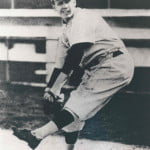
Ouray’s Smoky Joe Wood Once The Best Pitcher in the World

Smoky Joe Wood, who spent his formative years in Ouray, with Christy Mathewson during the World Series of 1912.
(Photo property of Ouray Historical Museum – Used by permission)
29,000 fans crammed Fenway Park on September 6, 1912 to witness the matchup between the Washington Senators’ Walter “Big Train” Johnson and Boston Red Sox’s Smoky Joe Wood. The two fireballers admired each other greatly. Johnson and Wood carried with them impressive credentials, each having set records, winning 16 straight games during that season.
Johnson grew up and learned to pitch in Orange County, California while Joe Wood grew up and played baseball in Ouray, Colorado.
The newspapers loved it. Johnson had remarked, according to The Glory of Their Times by Lawrence Ritter: “Can I throw harder than Joe Wood? Listen, my friend, there’s no man alive that throws harder than Smoky Joe Wood.” Years later in a taped interview Wood said of Johnson: “He was always starting from behind with that ballclub. Walter Johnson was the best pitcher that ever lived.”
That was Boston’s year due in part to Wood’s 34 wins and a .383 batting average by the great Tris Speaker. They finished the campaign with 105 wins and 47 losses. By the time of the historic meeting at Fenway arrived the Red Sox had run away with the pennant.
Back to the game: Both hurlers dominated until, in the third, George McBride hit a lead-off double going to third on an infield out. Wood then walked two batters to load the bases but struck out the next two men to end the threat. In the sixth Speaker doubled down the third-base line and later scored on an error to give the Sox a 1-0 lead. The Senators put men on base in all three of the remaining innings but failed to score. By then Wood’s hummer was blinding. He gave up six hits and struck out nine in the victory. Boston went on to clinch on September 18.
The World Series pitted the Sox against Christy Mathewson and the New York Giants. In the first outing Wood struck out Art Fletcher and Doc Crandall, with the winning run on base, to end the game. In game 4 Wood, facing Jeff Tesreau for the second time, beating him 3-1 while striking out eight. The game ended with a Giant’s victory at the Polo Grounds. The score stood 3 games to 2 favor of the Sox.
On October 15 Joe faced more than the Giants. Due to weather and disruption on the part of Boston fans he finished his warm- ups only to wait 45 minutes before the start of the game. He got clobbered 11-4. The next day Mathewson started the seventh game for the Giants with Wood in the dugout. By the seventh it was tied. By the eighth Smoky Joe was once again on the mound. This time he held the Giants to a run while Boston scored the go ahead runs in the tenth to win the Series. That was his third World Series win that year.

Smoky Joe warming up. His blazing “hummer” caused Giants fan and baseball historian Grantland Rice to write: “Of all sad words of tongue or pen, the saddest are, Wood pitched again.”
(Photo compliments Ouray Historical Museum – Used by permission).
He finished the 1912 season a phenomenal 34-5 after posting 23 wins the season before. He started 1913 on the right track posting an 11-5 record. It was then that he suffered a series of injuries that would ultimately end his pitching career. He went on to a 9-3 record in 1914 and was 15-5 in 1915. Excellent stats for most but not for Wood. Due to arm and shoulder injuries he sat out 1916 saying “I never threw a day after that when I wasn’t in pain.”
In 1918 he got a second wind. A standout in right field for the Cleveland Indians, he batted .298 through 1922. His career batting average was .283 and he was 116-57 with a lifetime ERA of 2.03 holding 51 Red Sox records. Only nine home runs were hit off him during his entire Major League stint.
With accomplishments like these Wood would certainly be inducted into the Hall-of-Fame, but to this day he is not. Insiders point to the brevity of his career although Hall-of-Famer Dizzy Dean played one less season. Others say it’s because he was never fully cleared of charges related to an alleged run-fixing scandal during an gray era when betting was widespread. An oversight on the part of Commissioner Kenesaw Mountain Landis left Joe’s name out of the mess when he exonerated Ty Cobb and Tris Speaker, who had been “implicated in the impropriety.”
Wood went on to coach baseball at Yale and was named to the all-time Red Sox pitching staff along with Babe Ruth, Cy Young and Lefty Grove. He passed away in 1985 at age 95.
The criteria for admission to Baseball’s Hall-of-Fame says: Candidates shall be chosen on the basis of playing ability, integrity, sportsmanship, character, their contribution to the team on which they played and to baseball in general. Wood scores high in all of these considerations and is deserving of honor at Cooperstown.
Said Tris Speaker in 1958: “Joe, there is no question that you belong in the Hall-of-Fame. Unfortunately you hurt your arm at the height of your career. Your all around ability and the fact that you made yourself into a good big league outfielder should count.”
Further information on the life of Smoky Joe Wood are available at the Ouray Historical Museum. Thanks to Joe’s son Bob Wood, and grandson Rob Wood for information on Ouray’s greatest athlete.
– Kevin Haley


