 Author Archive for M. Toole

Bathrooms for customers only
The shame of the Western Slope Tourism Circus
“What would you have them do, Bassanio, water the shrubbery?”
from “The Merchant of Haggis” – William Shakespeare Act II, Scene IV
Restrictive bathroom policies have given a new meaning to the concept of Where to go in Western Colorado. After the passage of meandering civil rights legislation since 1964 one major problem has never been undressed and remains a black mark on the country, more specifically to tourism here.
The right and wrong of privilege is deep-rooted in the American melting pot and cannot be discussed without dredging up old emotions and then flushing them away along with self-evident truths as to equality and the pursuit of happiness.
“It is scandalous, obscene and downright uncomfortable,” said Hector Plunger, a recent victim of the limitations. One would think that in the wealthiest country in the world some accommodation could be made for those who have to pee. I myself was forced to find a bush.”
It is common knowledge that the Bathrooms For Customers Only is perpetuated by concerns of cleanliness, employee time, product and water. Proprietors often feel that unless someone buys something he can just hold it until he gets to a more user-friendly environment.
Concerned citizens have already gathered sufficient signatures to put the issue on the ballot in November. They insist that it is unconstitutional to turn away a fellow human in need, no matter what the fiscal exchange.
“It is shameful that an enlightened society cannot pull itself up from the hateful segregation into a more tolerant atmosphere,” said Plunger. “In many countries the needy are simply charged a small fee to use the public facilities. It’s kind of like mass transit. They all have it and we sit in traffic burning fossil fuel. One begins to reassess the concept of progressive, no?”
The biased tradition may well come to an end after the next election, canned, if you will, through the resolve of freethinking participants in this planetary social experiment. However, much of the harm has been done and will linger for decades, like the embarrassment of wetting one’s pants.
Shall we then, upon out thrones, pass judgment on those who must hold it? Sure this may sound like some more liberal crap but isn’t it time to bring the skeletons out of the water closet once and for all?
– Ben Gamone III
Mr. Gamone is a dedicated tantric pipe fitter and urinal cake broker from Privy, Utah.
Early Swimming Lessons No Help with Bed Wetting say Docs
Ridgway, CO — Yellow River Press – September, 2023
Enrolling toddlers in swimming programs will do little or nothing to relieve the symptoms of bed wetting say physicians at Mao Clinic here. Although the associations are clear and the links are obvious, submerging little children in water in the morning won’t help them make it through the night.
Staying dry in bed and getting wet in the pool have no connection. Often children wet the bed due to juvenile traumas that increase with guilt and fear of repetition. Most will grow out of the behavior and should not be pressured.
“Our kids turn out to be great swimmers,” said Coach Eddie Dunkie Edwards of the Montrose Catfish. “We have never considered any other therapy that may be going on in the pool. Bed-wetting has never been an issue, even with the younger swimmers. Besides, how would we know if the condition was present? Everybody’s soaked here.”
The origin of this kind of thinking has never been clear. Pediatricians remain guarded about any positives that may emerge due to socialization and sleeping structure, or even the affects of cold water on the developing human body.
“Coincidental solutions are valid,” said one medical researcher. “But we can’t rely on them. The rule of thumb here is prevention. Water intake before bed and monitoring can help. Keep the patient in a cool and dry place. Apply behavior modification. Swimming lessons, like flying lessons, salsa lessons or cooking lessons will do little to lessen bed-wetting.
– Tommy Middlefinger
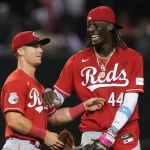
Take Your Base, I’ll Take Mine
A Critical Analysis of the National Sport
by Quentin Parquay, Royal Legion of Sport
(Editor’s note: Mr. Parquay, a literary critic with The London World and former fellow at Oxford University, has been dedicated enough to sit through rain delays, extra-inning games and traffic jams so as to compose this international peek at baseball in 2015. Although well versed, drifting from Kahlil Gibran to Oscar Wilde, Parquay admits he possesses a limited knowledge of the game having experienced his first contest only last week. The following expose is reprinted from The Hamilton Hemorrhoid, a well- respected, often painful British sports bulletin. It has appeared Steamboat Magazine. Unlike golf baseball was never immortalized by George Bernard Shaw as (to paraphrase) “a pleasant walk ruined.)”
Baseball: 1.) a game played with a bat and a ball by two opposing teams of nine players, each team playing alternately in the field and at bat. The players at bat, after hitting the ball in fair territory must then run a course of up to four bases laid out in a diamond pattern in an attempt to score runs. 2.) a questionable competition of North American origin that promotes bad language, hooky, jawing, bad manners, superstitiousness and the spitting/chewing of tobacco. 3.) the ball used in the game of baseball.
My interest in the field of baseball began when I first ran across “Casey at the Bat” in 1990. Although the epic poem had been around for decades it had not circulated through the offices of a man who dissects playwrights and Gothic novelists. I hope the following will be entertaining to the reader and beneficial to the fringe fans and the arts as well.
THE FAN
We Brits cannot afford to be critical of abhorrent fan behavior after the escapades of our cohorts at most football (soccer) matches from Cornwall to Kent. The counterpart American aficionado is actually quite calm and well behaved compared to the football fanatic. He only becomes dangerous toward the late innings after drinking cup after cup of overpriced light beer.
The aesthetic distance between the audience and the main characters is of special interest to anyone wooed by the theater. The left field character, for instance, is closer to the audience and can be more objective about how his lines are perceived in the grandstands. The thrower (pitcher) cannot gather this same kind of feedback. The audience however is well in earshot of various asides mouthed by fielders and the funny-dressed men behind fourth base that you call home plate.
The fan is most often in sympathy with one team or the other. He is most vocal at points of tension between singular characters or sometimes with entire groups of players. He is prone to embracing myths and often makes references to the supernatural as he metaphysically munches on hot dogs with onions and mustard and burnt peanuts, salted in the shell. His metaphors can be figurative, trite and/or utterly classic. His hyperbole is common only to the colonies. In later innings the fan gets swept up in the flow of dramatic monologue that results in comic relief or didactic tragedy.
THE CHARACTERS
Reflecting on the scene behind home plate we see one over-dressed character (the catcher) that carries with him a host of mandatory duties. He must not only catch the ball each time it is flung at him, but he must field difficult “pop flies”, cover his base, backup first base and throw down to second in the event of an attempted steal attempt. (We will discuss thefts and squeezes later in this article). While there is little morality involved in the steal, the catcher is often measured by his pinpoint response to the instant plot. In the local vernacular we hear fans loudly encouraging this catcher to “gun him down” or “nail him with a low throw”. This should not be taken as anything violent. The successful application of these throws and tags can often bring down the curtain for an inning.
The catcher’s associate behind the plate is called the umpire, a living allegory who attempts to impose his own doctrine. This dark character converts acceptable language into persuasive, tight, one-syllable chants with the sacred narrative “Steeerike, Bawww or Yurooout!”. Otherwise most of the communication is in sign language that is reminiscent of Shakespeare that holds the audience in awe.
Amusing reaction to the umpire often dwells on King Lear’s cry: “Thou hast eyes to see…and see not!”
The rest of the extras dress alike so much that it lends an eerie, almost robotic essence to the performance. Each of the two reams is represented by wearing its own costume. It is within the professional ranks that we find strong connection to ancient bestiaries and ethnic euphemisms with names like “Tigers, Cubs, Braves and Giants”. On the local level this practice has been methodically embraced. Long socks may represent the desire to return to simpler days while “softball” fashions clearly illustrate a yearning for a
modernistic, almost impressionist, rendezvous with the keystone future. Significant action generally soils the players’ costumes but adds a delightful descent from the loftiness of pre-game ceremonies.
THE PLOT
Everything happening on the diamond is synchronized into nine innings where one team tries to outscore the other by whatever means available during the scenes that add up to an act. The two teams could play an eternity if the thing reaches extra innings. Imagine a summer day and a pastoral scene in right field where a player is responsible for catching the ball before it hits the ground, then hurling it back into the infield (main stage). He must do this before any players “tag up” and make their way around all four bases and off the set and backstage into the dugout. If the ball is caught cleanly the acting batter is out and has no further lines until he comes up to the plate again in two or three innings. If the fielder misses the ball the hitter gains access to any number of bases while other supporting cast scores runs. The clumsy fielder is often then seen as a goat. Continued performances of this quality will often result in an understudy placed in his position.
The main actor and navigator of the plot is the pitcher since he initiates the action. He delivers his lines while perched on a pompous little hill 60 feet (18.3 meters) from the batter’s box. He throws a variety of pitches to the catcher aimed at confusing, overpowering and terrifying the man with the stick (bat) in his hand. The umpire then watches closely as curves, sliders and fastballs cause negative capability of the part of the person trying to make contact (with a rounded bat) with the little spinning ball. Some of these pitches exceed 100 miles (or 161 kilometers) per hour. The fastball coupled with an array of sneaky pitches often causes the batter to pop up, ground out or strike out (signified by K for some unknown reason). These activities in no way represent literary onomatopoeia since there is no sound emanating from the ball as it travels to the plate. The onomatopoeia magically occurs when the ball slams into the squatting, supporting actor’s round, oversized glove. Here we see the frontline struggle by the designated protagonist to stifle the antagonist by making contact with a fiery sphere chucked in the direction of his head and vital body parts. It is here that we see another character, the manager, wheel out onto the field angered by the exposition of the background.
THE SET
 The set can be universal as well as specific to baseball. The only props are the three bases and the plate, the walls, the mound, the backstop, the dugouts (2) and the scoreboard. The size of the stage varies greatly from set to set but is always characterized by white lines that protrude from home plate to the first or third bases. These are the symbols of the action. It is the actor who brings it all into perspective.
During my last sports melodrama the hero was a young pitcher for the Colorado Rockies. His saga was one of ever-increasing pathos. He quickly extended his poetic license by hurling a “loaded up” ball at the batter’s head. Soon after he balked, a clear sign that he neglected to prepare his lines before taking the stage. By the end of the inning he had reached absurd capacities in low comedy by allowing three other actors to reach untenable positions without exiting the stage. The tone of the play then becomes one of anticipation, bordering on anxiety. The guilt-ridden child actor is sent away by his rigid master to a place called the Minors that was never described by Dante or even the unholy angels. Each summer pantomime contains endless and simultaneous dramas with characters intact. It is this mysterious show and tell that stimulates the lifelong fans of the game. How appropriate in both a literary and mirthful sense. Play Ball!
“The check’s in the mayo.” – famous promise in Dixie.
Thousands Trapped Inside TVs
(Gladstone, CO — Cultural Wastelands Press)Thousands, perhaps more of your favorite broadcast icons are being held prisoner inside television sets it was disclosed this morning. Actors, news anchors, game show entourages, afternoon soap stars, weight-loss gurus and cartoons, held against their will inside the boxes and flat screens are half-starved, deprived of sleep and routinely beaten by media Nazis on both sides of the political spectrum.
“This has little to do with applied politics. It’s more about bondage…bondage and control,” said Edwin Paar, who escaped the clutches of black and white television on the streets of Hollywood in 1956. Paar and others who have returned from depths of a seedy and decadent Television Land tell others of the awful fate that awaits chronic viewers to this day.
“How do you think they get all those fat people onto a flat screen?” asked Paar. “Is something wrong here?”
On-screen slavery followed by internment is more than most can handle. Snippets of information released by sadistic guards, aimed at tormenting already traumatized family members, have indicated that many of the incarcerated do not survive the Spartan lifestyle, expire, and have to be dumped out of the back of the television set in the dark of night.
“The world of bright lights and fantasy seduced them in the first place and now they get a heavy diet of what they thought they were searching for,” quipped Paar, himself a former talk show host who retired before the medium became a monster.
It is feared that many in a position to alleviate the problem are hesitant to take on the powerful television lobby. Several polled insist that a recue would throw the fragile communications grid into a tailspin, one that it may not allow for recovery.
“We think a lot of these personalities, hacks and front men who have gotten themselves into this mess should get themselves out of it,” quacked Paar. “Besides the terrorists (Can we not call them terrorists?) will certainly shoot the hostages if we attempt a archetypal military assault, whatever that is.”
Authorities had considered stepping in when a series of short films surfaced on Who Tube showing talking heads without legs and a network climatologist forced to make meaningless, sweeping hand gestures far into the night.
Anyone who would like to help these poor unfortunates out of the television sets can send funds to Box 1209, Ouray, CO 81427. Cash only. No pledges.
– “Shroom DelFisher
Ouray Making Fortune on Tourist Soup
(Dexter Creek) Progressive marketing icons in this landlocked county seat have developed a recipe for Pahgre Tourist Soup, which is reportedly brewed daily in the town’s municipal swimming pool.
Every spring town workers clandestinely prepare the pool (or potbelly as they call it) for the arrival of the “soup meat”, or tourists, starting in June. The thermal waters must be monitored hourly to insure a proper heat is maintained. The vegetables must be smuggled in and distributed in the now murky broth then the spices and herbs must be added in just the right measure so as not to distract from or dominate the final taste and aroma.
Then the soup is trucked over Red Mountain Pass to be sold to brokers in Durango for distribution, mostly to unsuspecting Third Whirled Countries and Grand Junction.
Our cookie-cutter little tourist economy is nothing more than a front for this more lucrative operation,” said Jimmy Scoggins who has gone so far as to serve the soup in his lavish Ridgway hardware emporium.
“In rare instances a complete tourist ends up in the final concoction but we go to great pain to avoid this due to strict county ordinances on cannibalism, which he called reactionary.
The soup itself, canned under the jurisdiction of Alf Bisque, comes in a wide variety of flavors including Okie, Texan and Kansas Chowder. Gourmet versions are available using Californians and Front Rangers.
Authorities became suspicious last season after a Utah man reported several masked men dumping industrial loads of vegetables into the deep end after dark. He claimed that carrots, potatoes and onions were boiled live in the curdling waters in direct violation of another county ordinance. He shared his concerns with police and has not been heard from since.
“The soup cartels are making too much money for some nosy flatlander to ruin everything,” said a former executive now mouthpiece for the Vegetarian Curmudgeons, a militant garden club. “Just wait until the little ice climbers show up this winter. We’ve got to keep up with supply and demand and there are a lot of people out there who want more of Ouray than an RV slip and a personalized license plate.”
The entire episode appears earmarked as just another version of the same old story: “Cooking with a hundred is always more difficult than cooking with a few” Bon Apetite!
caption:
Trusting tourists from all over the world frolic in the Ouray Hot Springs Pool, unaware they are up to their necks “in the soup”. A widening investigation has linked almost every able-bodied citizen in the mountain burg with what police are now calling a conspiracy to produce and export tourist soup. No arrests have been made at depress time.
TOOTH FAIRY SHOT IN L.A.
(Los Angeles) Local police arrested Guy LeRoy Cuspid, 99, of Redondo Beach, charging him with menacing and assault in the shooting of the Tooth Fairy at his residence last night. Cuspid’s son Slim, 74, had reportedly lost a tooth earlier in the day and had not informed his father that he was summoning the Tooth Fairy. As is the custom, he simply put his lost tooth under his pillow and went to sleep.
When Cuspid arrived home from his job at a local slaughterhouse, he walked smack dab into the Tooth Fairy in the hallway and opened fire. Neighbors say they heard a series of shots at about eleven-thirty.
When police arrived on the scene, they found Cuspid standing over the bleeding Tooth Fairy and his kid, Slim, crying his eyes out. The senior shooter was transported to jail, the Tooth Fairy rushed to Conquest of Paradise Mission Hospital and Slim was handed a chocolate bar by the arresting officer.
At press time, the Tooth Fairy, in stable but guarded condition, is expecting a complete recovery and should be back at work by Monday according to a union representative.
– Fred Zeppelin


